
An estimated 640 Afghans, comprising mostly women’s rights activists, judges, journalists, and others specifically targeted by the Taliban, will be affected by the latest decision of the German government regarding resettlement of Afghans at risk after the takeover of the Taliban in 2021.
Germany’s policy toward the resettlement of at-risk Afghans, waiting in Pakistan, has undergone yet another significant shift. The country’s conservative-led coalition announced this week (December 10) that it will terminate certain admission routes for Afghans who had previously been promised resettlement in Germany.
This latest decision, where two major German humanitarian admission programs, the human rights list (Menschenrechtsliste) --designed for those who might be at risk from the Taliban because of their human rights work, and the 'transitional' program (Überbrückungsprogramm) -- designed to deal with the people who were still waiting in Pakistan and had received a promise of admission from Germany's previous government but no actual visas, would be shut down, marks the most sweeping rollback yet.
Effectively, hundreds of Afghan nationals who had already received resettlement confirmation will be forced into limbo status in Pakistan, where they had been waiting for their entry to Germany.
Sonja Kock, spokeswoman for the Federal Ministry of the Interior, told journalists that there was "no longer any political interest in their admission" as an explanation for the termination of the two programs.
Protection granted, but not entry
An estimated 640 Afghans, comprising women's rights activists, judges, journalists, and others at risk of persecution by the Taliban, are said to be affected by the termination of the two admission program tracks.
These Afghans had already fled to neighboring Pakistan under assurances that they would be given protection and allowed to resettle in Germany. Many gave up homes, jobs, and sometimes hiding places in Afghanistan in anticipation of beginning a new life in Europe.
The government says the coalition’s policy change reflects the new government’s priorities. The conservative CDU/CSU union parties and their coalition partners, the social democratic SPD, agreed in their coalition pact to wind down Afghan admissions "as far as possible," before they took office in May this year.
The promises, originally made by the previous center-left coalition after the Taliban takeover in 2021, are now described by Interior Minister Alexander Dobrindt as "legacy issues."

Rights groups slammed the latest government decision as cold and unacceptable.
"Alexander Dobrindt coldly demonstrates what he thinks of humanity and human rights: nothing. The previous government only promised these people asylum for one reason: they campaigned for women's rights, human rights, and freedom in Afghanistan. Dobrindt is now abandoning them permanently in Pakistan, where their lives are in acute danger. They now face the threat of falling into the hands of the Islamist Taliban regime, the new partners of the Federal Minister of the Interior. It is truly unacceptable that Dobrindt announced this policy of harshness and callousness on Human Rights Day [December 10]. For the new government, this shameful treatment of people in mortal danger is a moral bankruptcy," Karl Kopp, Managing Director of the pro-migrant association in Germany Pro Asyl, said in a statement.
Read AlsoMore than 250 organizations urge Berlin to admit stranded Afghans into Germany
Local staff from German ministries in Afghanistan
Apart from the two admissions tracks already mentioned, a third local staff resettlement program is also reportedly impacted by the latest government decision. Last week, the German development agency GIZ was reported to have emailed local staff and their families who worked directly for German ministries or the German Armed Forces in Afghanistan.
According to the international German public broadcaster, DW, the notice was served to former employees: "Following a further detailed review, it was decided that the basis for a commitment to accept the applicant into Germany under Section 22 of the Residence Act does not exist." No explanation was given for the revocation.
Sonja Kock, spokesperson for the Federal Ministry of the Interior in Berlin, confirmed that this means only 90 of the remaining 220 local staff can still rely on a commitment to accept the applicant.
Time running out in Pakistan
After the takeover of the Taliban in 2021, thousands of Afghans took refuge in neighoring Pakistan. For years, Pakistan welcomed Afghans exiled from their country by war and political repression. However, amid rising militant attacks at the Pakistan-Afghanistan border, Kabul has pushed for the removal of Afghan nationals and Pakistan has also been keen to deport large swathes of the Afghan community resident there.
Pakistan had given Afghans waiting for entry to Germany until the end of the year to relocate. Time is now running out for the estimated 1,000 to 1,800 Afghans with German admission promises.
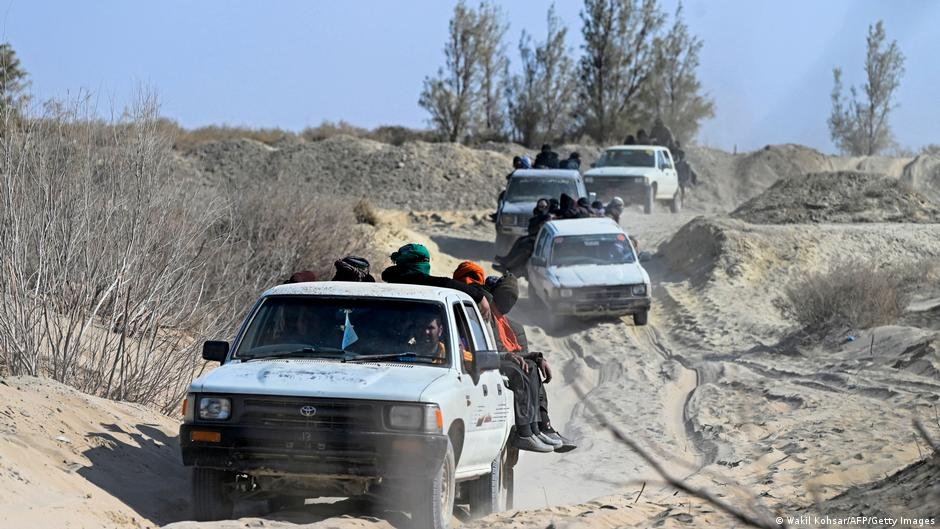
Despite the cuts, Germany has continued to bring small numbers of Afghans to safety. Last week, a charter flight carrying 192 people landed in Erfurt. Additional commercial flights have brought in smaller groups in recent months, and another charter is reportedly scheduled for next week.
Human rights groups are sounding the alarm, however. In early December, 250 organizations, including Human Rights Watch, Pro Asyl, and Bread for the World, signed an open letter urging Interior Minister Dobrindt to bring all people with valid German commitments to safety before the year’s end.
Taking it to court
The courts have become the last remaining doorway to Germany — but the cases have begun forming a legal bottleneck that could take months to resolve, even as Pakistan prepares to begin deportations after December 31.
According to the NGO Kabul Airlift, which has been working to connect stranded Afghans with German lawyers, 84 Afghans have successfully sued Germany for backtracking on its commitments and were subsequently admitted. About 195 cases are still pending, with dozens more being prepared.
Germany says that following agreements reached with the authorities in Pakistan, people whose admissions have been revoked can remain in guesthouses in Pakistan — at least until the Afghan-Pakistani border fully reopens. Officials have also offered to arrange flights back to Kabul, though aid groups say this is effectively asking people to return to those they fled.
For the hundreds still waiting, the future remains uncertain.
Read Also192 Afghans arrive in Germany on charter flight from Pakistan
Snapshot: Germany’s Afghan admissions since 2021
August 2021
- The Taliban seize Kabul and take over ruling Afghanistan. Germany evacuates thousands, including embassy staff, soldiers, NGO workers, and at-risk Afghans. Many cannot reach the airport and are left behind though.
Late 2021 – 2022
- Partly to deal with this, Germany launches a humanitarian Federal Admissions Program for vulnerable people, offering resettlement to Afghan nationals who are under threat of persecution under the Taliban rule. This was in addition to one offering sanctuary to many of those who had worked for German government agencies or with the military when they were stationed in Afghanistan.
- Under the terms of the Federal Admissions program, Afghan nationals still living in Afghanistan might be considered for the program if they met the following criteria: Individuals who "have exposed themselves to particular risk through their commitment to women’s/human rights or their work in the spheres of justice, politics, the media, education, culture, sport or academia and are thus vulnerable"
- And, or: "Due to the special circumstances of their individual cases have experienced or are experiencing violence or persecution based on their gender, sexual orientation or gender identity or religion and are therefore at concrete and personal risk. In particular, these are victims of serious individual women’s rights violations, homo- or transphobic human rights violations or vulnerable representatives of religious groups/communities."
Read AlsoWho is eligible for Germany's Afghanistan reception program?
2023 – 2024
- Political disputes stall departures and the suspension of the Federal Admissions Program.
- Two male Afghan nationals are the first to enter Germany under the Special Federal Admissions Program for vulnerable people.
2024 – early 2025
- Pakistan begins deportations of Afghans without legal status, including some listed for German admission. Pressure grows on Berlin to accelerate evacuations.
May 2025
- The newly elected Merz government moves to suspend the Federal Admissions program.
August 2025
- The government lifts the freeze on the admission programs for at-risk Afghans.
December 2025
- Germany announces it will halt admissions for people on the human rights list and the transitional programs.