
British and Danish leaders joined together to publish an open letter calling for a reinterpretation of the European Convention on Human Rights. They say it is needed to align more pragmatically with migration management policies to address the current situation. The letter was published ahead of a meeting of European leaders in Strasbourg on Wednesday.
"This is our strong message to our friends in Europe. Unless responsible governments reflect their citizens' concerns, populists will win," state British Prime Minister Keir Starmer and his Danish counterpart Mette Frederiksen. Both leaders are calling for a reinterpretation of the European Convention on Human Rights (ECHR) to allow for better protection of borders as well as more effective deportations.
Starmer and Frederiksen lead social democratic parties in their respective countries and come from the left on the political spectrum, although the governments they lead and the policies they have introduced have been more centrist and pragmatic than past iterations of their parties, particularly when it comes to their response to migration.
Under Frederiksen’s rule, Denmark’s coalition government has implemented some of the toughest migration policies in Europe and has been held up as an example for apparently delivering the results desired.
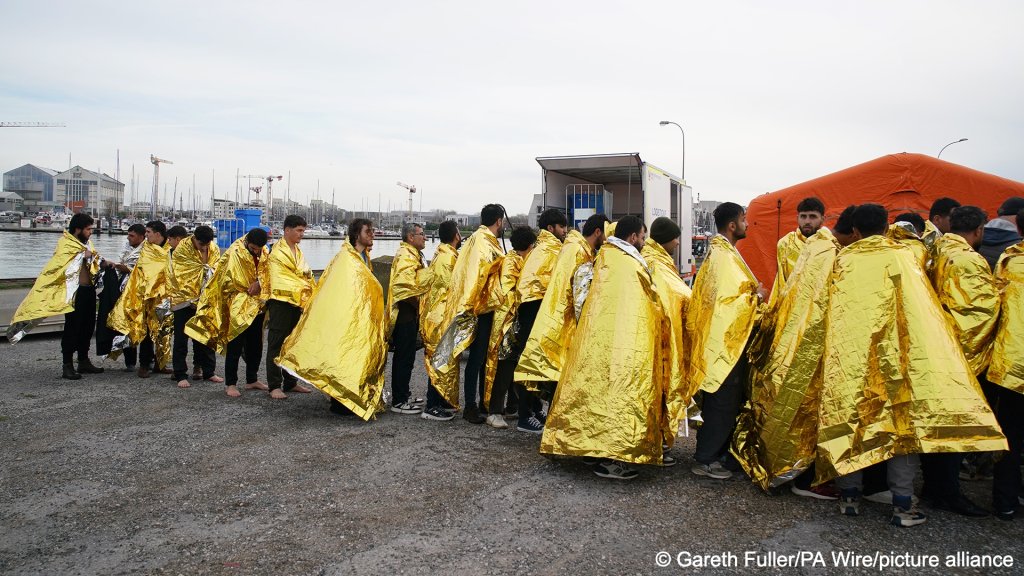
Starmer’s rhetoric towards migration has also toughened since his party took office in July 2024. As he and his party have battled approval ratings in the polls and the number of migrants crossing the Channel in small boats has increased, his party's policies and immigration bills have begun to resemble the previous conservative government.
Earlier in November, Britain’s Labour government already announced that it would be introducing the toughest new reforms on migration, modelled on Danish policy.
Read Also
UK: Irregular migrants and children may be subjected to mouth searches
'Reponse must match the scale of the challenge'
The letter authored by both leaders argues for a remodeling of the European Convention on Human Rights, which provides the basis governments across Europe need in order to introduce the tough new policies, without the risk of facing appeals in the courts.
The letter, published in the left-leaning daily newspaper The Guardian, begins by acknowledging that trust in governments appears to be "faltering." The two leaders say that when this happens, only "a sense of shared belonging can begin to crack." This is something neither leader wants.
They say that the way a country "deals with irregular migration is at the heart of this." They add that "the response must match the scale of the challenge."
They say there needs to be support for communities and asylum should only be granted to those "genuinely fleeing persecution." They add that "controlling who comes [to a country] is an essential task of government."
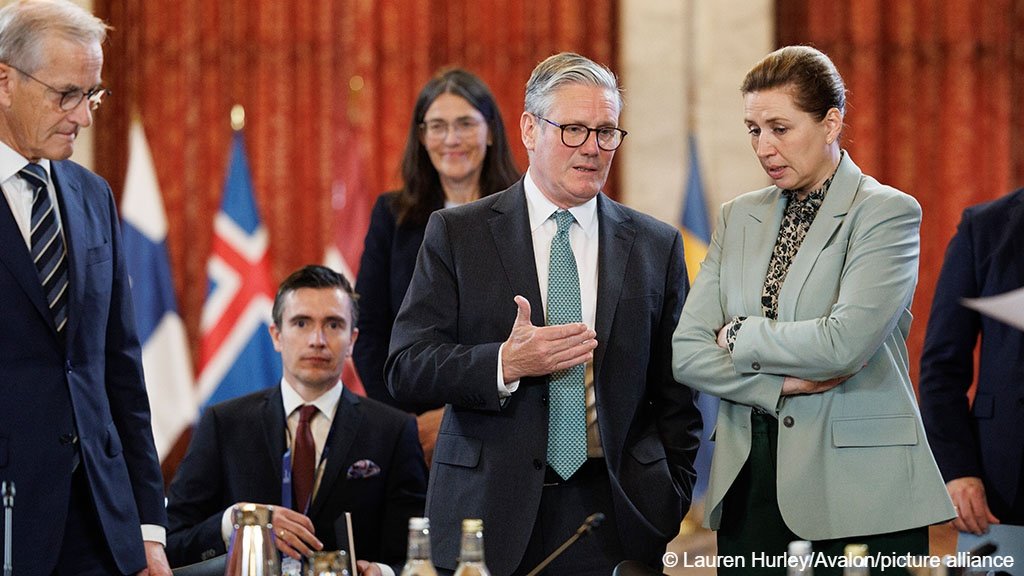
Starmer takes the opportunity to underline that Denmark’s "tough but fair" reforms "have delivered results." He underlines that "the number of people being granted asylum in Denmark was the lowest in 40 years," (excluding a year during the COVID-19 pandemic in 2020).
The UK, Starmer writes, is following Denmark, "surging removals of those with no right to be here and making settlement reliant on integration and contribution." Frederiksen and Starmer write in the letter that they believe "the current asylum framework was created for another era." Today, in a world of "mass mobility, yesterday’s answers do not work," they write.
Read AlsoUK: Two young Afghan asylum seekers sentenced for rape offense
Millions 'in search of a better future'
Millions are "on the move" not just because their lives are in danger, think the authors, "but because they want a better future."
They say they want to counter the hate and division, which politicians like them feel is being both fostered and fanned by parties of the far-right, and show that "progressive politics can fix this problem."
Frederiksen and Starmer are hoping that as European leaders sit down to meet in Strasbourg on Wednesday (December 10), they will join them in pushing for "modernization of the interpretation of the European Convention on Human Rights – so that the convention system, which we believe in, can evolve to reflect the challenges of the 21st century."
At least 27 countries agreed following the meeting in Strasbourg, reported the French news agency Agence France Presse (AFP), citing diplomatic sources that a rethink of the treaty's interpretation was needed. Those countries included the UK, Denmark, Italy and the Netherlands, but notably not France or Germany.
"We are facing real and big challenges and migration issues are one of those concerns," said Alain Berset, General Secretary of the Council of Europe, the body that implements the regulations stipulated by the convention and the person who convened the meeting.
Berset added that this wasn't about "changing" the convention, but that he saw the ECHR as a "living instrument" that had evolved since it was first written.
The convention was set up 75 years ago and was intended to protect fundamental rights by enshrining them in law. 46 countries are signatories to the agreement, which includes the right to life, protection against torture, right to privacy, marriage, religion and free speech. Representatives from these countries will be meeting to discuss it today. Britain was the first country to officially sign it in 1951. It was hoped at the time that such a convention could prevent a return of the horrors of the Second World War and a leader like Hitler rising to dominate parts of Europe once again.
Read Also'I've come too far to stop now': In Calais, new UK laws do not deter people from crossing Channel
'Pragmatic response'
The letter is not the first to call into question the ECHR. Nine EU nations, led by Italy and Denmark, have been proposing changes.
The call for reinterpretation, commented the BBC’s Home and Legal Correspondent Dominic Casciani, could be interpreted as a pragmatic response, since actually changing or rewriting the ECHR would take years and require the sign-off of all signatories to the convention.
Casciani told BBC Radio 4’s Today Programme on Wednesday (December 10) that a reinterpretation could be signed off more easily, by May next year, and would then be ready for EU member states to start implementing the new EU Pact on Asylum and Migration, including some of the new proposals like return hubs, without the potential hinderances of a strict interpretation of some of the articles contained within the ECHR.
One of the ways in which Starmer hopes a reinterpretation would help is in making it easier to deport migrants who entered the country without papers and have not been granted asylum.
Read AlsoFrench police to be given powers to stop migrant boats at sea
Sticky clauses?
Currently, an ECHR clause on the "right to family life" is often used to appeal deportation orders in the UK. Starmer hopes that if some of these clauses are reinterpreted, the courts would have less of a legal basis to issue these challenges.
Some supporters of the current ECHR, the BBC points out, say that the convention’s role in migration cases, or hindering migration policies, has been exaggerated.
However, in many successful legal challenges to date, Article three from the ECHR, the ban on inhumane treatment, as well as Article 8, the right to family life have been used effectively to halt a deportation or policy before it got under way.
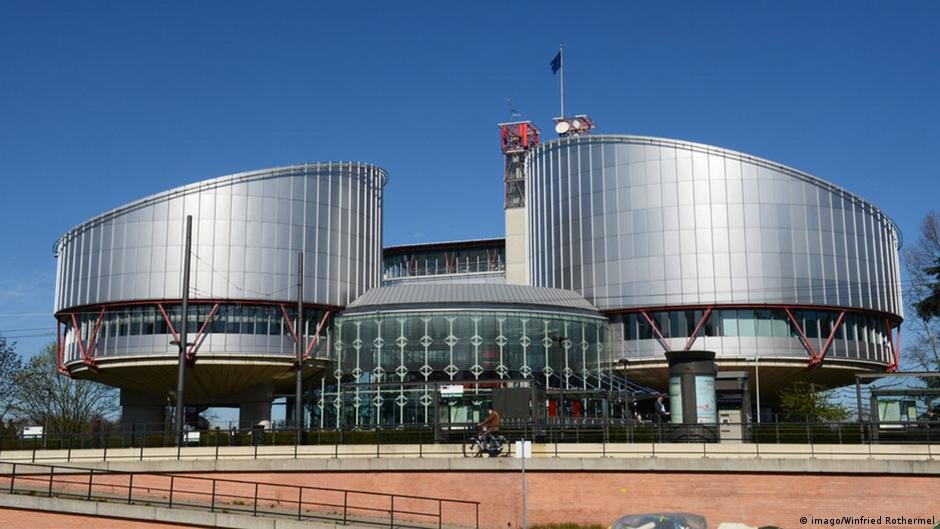
The broadcaster’s home and legal correspondent Dominic Cascini also points out in his analysis that the current Franco-British 'one in, one out' scheme "includes ECHR-related rules of human treatment," which he says has prompted many judges to back continuing with the convention as is, because any changes could have a legal bearing on future judgements or schemes.
Britain’s Justice Secretary David Lammy, as well as the UK’s Attorney General Lord Hermer, will be present at talks in Strasbourg today. According to the BBC, Lammy is expected to say that the "definition of 'family life' can’t be stretched to prevent the removal of people with no right to remain in the country."
He is also expected to argue that "the threshold of ‘inhuman and degrading treatment’ must be constrained to the most serious issues…and states must be able to take proportionate decisions on the removal of foreign criminals."
Read AlsoEuropean nations join calls to alter ECHR to enable sweeping asylum restrictions -- but how?
Implementing 'return hubs'
This week, the EU confirmed that as part of the implementation of its new treaty, it is hoping to create so-called "return hubs," to both process asylum claims faster and to accommodate those who need to be sent back more quickly.
Although no concrete details have yet been released about where these hubs might be, Starmer is hoping that tweaking the ECHR would also allow the return hubs to be more easily implemented.
Italy set up a version of a return hub in Albania, which in theory began functioning in October 2024. It was based on the idea that the asylum processing centers built on Italian soil would function under Italian law and would process non-vulnerable migrants rescued in international waters by Italian officials.

In practice though, the hubs in Albania have barely processed anyone at all. Several groups of migrants rescued in that way were sent to Albania by Italy, but almost all of them were ordered to return to Italy by Italian courts.
Italy then began sending migrants who were already in repatriation centers in Italy to Albania, but even there, the practice has faltered and been challenged at both the Italian and European legal level.
Italian Prime Minister Giorgia Meloni has insisted that she will eventually make the idea work and has also expressed interest in making changes to the ECHR in order to remove some of the legal objections that have been lodged against her Albania plan.
Read Also'Not our problem…ask the Italians': Albanian PM Edi Rama says of Italian migrant hubs
'Absolutely ready to discuss reform'
Opposition parties in the UK, including the Conservatives and Reform UK have both called for a total withdrawal of the ECHR, even though experts say this could be more complicated than these parties imply. It would mean that many of Britain’s current laws, which are based on being a signatory to the ECHR, would also have to be rewritten, requiring lengthy parliamentary processes, and the need for a majority to push them through.
The Liberal party leader, Sir Ed Davey, has said he believes the ECHR is something that helps to "uphold our freedom" and that leaving it would do "nothing to stop the boats or fix our broken immigration system."

If after today’s meetings, European states reached agreement on how to reframe the ECHR, it could be "one of the most important reforms to how human rights law is applied in the 75-year history of the convention," commented the BBC.
In October, the head of the Council of Europe, Alain Berset, the body that essentially implements the upholding of treaties and conventions like the ECHR across Europe, told the BBC that he was "absolutely ready" to discuss human rights reforms.
Berset added that he believed "our task is not to weaken the convention, but to keep it strong and relevant –to ensure that liberty and security, justice and responsibility, are held in balance."
The Council of Europe's Human Rights Commissioner Michale O'Flaherty urged the ministers at the meeting to keep any reinterprettions "assiduously evidence-based." He expressed concern, reported AFP, over inaccuracies and assumptions currently in circulation," in particular the notion that changing the convention would "impact irregular migratory flows."
O'Flaherty warned the delegates present: "You are embarked on an extremely consequential pathway in terms of the well-being of Europe's human rights protection system."
Read AlsoBritain plans radical changes to immigration law amid far-right pressure
This article was updated on December 11 to reflect additional comments and agreements to emerge from the Strasbourg meeting.