
State authorities are due to take over the running of migrant camps in Bosnia and Herzegovina. The State Minister for Internal Affairs will take over the management of the camps from the UN Migration Agency (IOM) in 2026, amid an increase in the number of arrivals.
A camp for migrants in Bosnia and Herzegovina’s (BiH) Una Sana Canton in the north of the country is in a transition phase. Soon, it is due to be taken over by the Service for Foreigners’ Affairs in the country, which answers to the Interior Ministry, reported the English-language local news portal Sarajevo Times.
Up until now, the camp has been managed by the UN Migration Agency, IOM. The transfer of management is due to an "increased influx of migrants from the African region," reported the Sarajevo Times. The camp is reported to house 440 inhabitants this week, according to that news portal.
New management for temporary reception centers across BiH is due to begin in 2026 under the EU’s Migration and Asylum Strategy of BiH and Action Plan, confirmed the IOM on the social media platform X in mid-November. The new action plan is due to run between 2026 and 2030, and IOM, in partnership with various European ministries and embassies in BiH, has been offering training, funding and strategic support to the Bosnian authorities ahead of their eventual takeover.
Read AlsoWestern Balkans: Managing migration and return hubs discussed at London summit
Over 100 million euros investment
According to the IOM, the EU has invested more than two million Bosnia marks (around one million euros) for the rennovation of this particular center, and has invested over 100 million euros in BiH to help with migration management overall. The funding helped establish and operate the camps in the country, as well as help state institutions and local agencies involved in migration management.
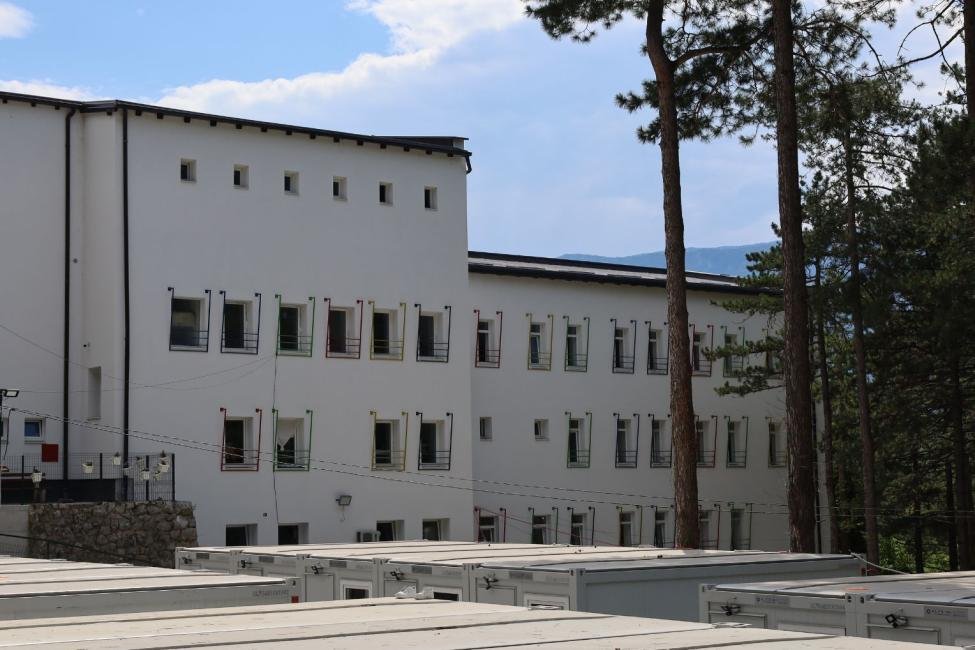
In November, IOM spotlighted the transformations effected at one camp ahead of the transition, a camp for families and children in Una Sana Canton. Ervin Čaušević from the IOM communications team in BiH has been tracking progress of the rennovations and transformation, reporting on them for IOM's BiH website. He told the IOM: "It was remarkable to see how much changed, renovated rooms, new facilities, families sharing meals, children studying, and everyday moments that finally felt safe. Thanks to sustained EU support, Borići became a place where dignity was restored, and residents could experience normalcy again."
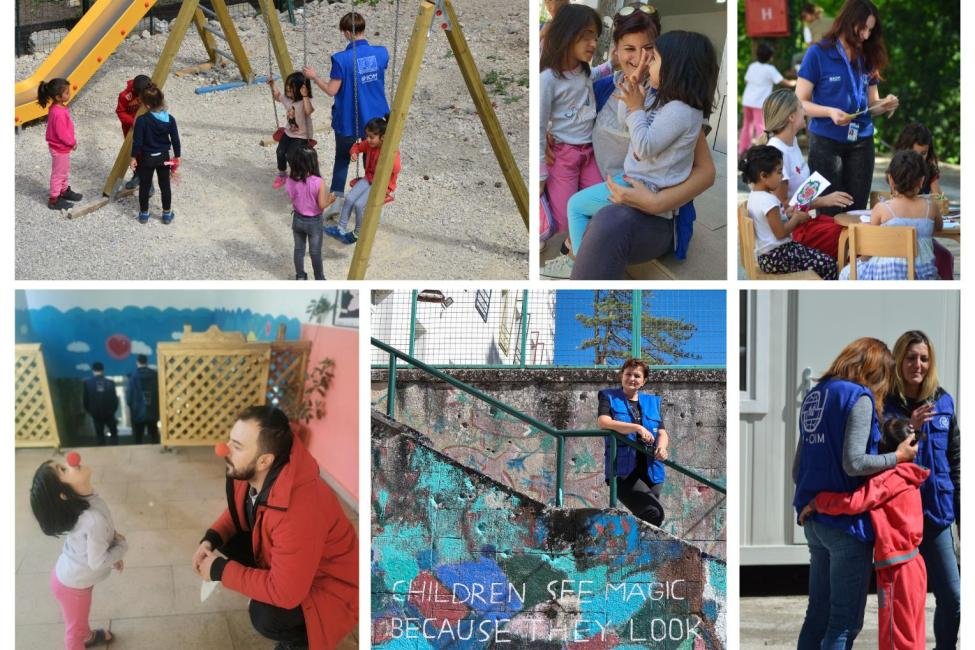
Bosnia’s Minister of Internal Affairs visited the Una Sana Canton and the camp at the weekend, reported Sarajevo Times. He also spoke to the Inspector of the Service for Foreigners’ Affairs at the camp, Iris Zeric, as well as the camp coordinator Kenan Keserovic and Amir Msirevic from the Directorate for Coordination of Police Bodies.
On December 3, IOM Bosnia and Herzegovina posted on the social media platform X that it had helped renovate a temporary reception center in Borici with EU support and the new buildings had been transformed into a "safe space for families and children." They confirmed that this temporary reception center had been "returned to the city of Bihac" for the day-to-day migration management.
Read AlsoIOM and Italian business association forge agreement on migrants in Bosnia
Migration situation update from IOM
The last available update from the IOM, for the week from November 10 to 16, stated that the occupancy in the Lipa camp was 316 and that the camp’s full capacity was 1,512. During that week, the IOM registered a 41.7 percent increase in the number of new arrivals compared to the previous period, so it is possible that if this trend continued, the number of new residents in the camp could have increased to 440.
There are two other camps in Bosnia and Herzegovina, in the Sarajevo Canton, Blazuj and Usivak, also run by IOM. In those camps, 543 and 138 migrants were recorded as residents respectively. The Blazuj camp, stated the IOM has a capacity of 1,700 and the Usivak camp has a capacity of 800. Overall, during the week of November 10-16, 997 migrants were resident in the camps, and 813 new arrivals were registered at the camps.
IOM states that it "works closely with the authorities in Bosnia and Herzegovina to ensure humane, dignified and well-managed migration in the context of the Western Balkans." IOM said its priority is the "provision of direct assistance in temporary reception centers, including standard reception and shelter conditions."
The majority of migrants in the IOM camps near the beginning of November came from Afghanistan and Egypt, with 21 percent each, stated the IOM. This was followed by Moroccan nationals, accounting for 14 percent, and then seven percent of Syrian nationals and seven percent of Sudanese migrants.
Read AlsoWestern Balkans: Europol teams arrest four accused of smuggling over 600 migrants
Arrivals in 2025
According to data from Bosnia and Herzegovina’s Ministry of Security, arrivals in 2025 to the Balkan state are fewer than half those who arrived during the whole of 2024. In fact, arrivals to Bosnia and Herzegovina have been declining since 2023 when a total of 34,409 people were registered as arriving throughout the year.
In the period from November 10 to 16, the IOM noted fewer departures as well as more arrivals. In all three camps operated by IOM in Bosnia, there was a 24.3 percent increase in arrivals and a 17.7 percent decrease in departures compared to the previous week.
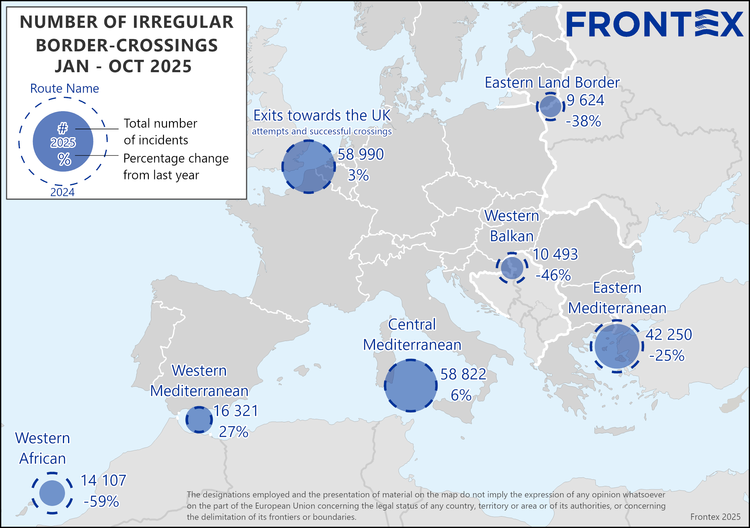
Last year, the European border agency Frontex registered a decline in the number of irregular border crossings detected on the Western Balkan route. In fact, detected cases numbered 21,520, a 78 percent decrease on the previous year, 2023.
The trend has continued into this year. Frontex reported a decline in irregular border crossings on the Balkan route for the first ten months of 2025 -- 10,493 crossing attempts. This is not equal to the number of people traveling the route, since the same person might be detected several times at one or several borders along the way.
According to Frontex, the top nationalities of those traveling the Western Balkan route are nationals from Turkey, Syria and Afghanistan.
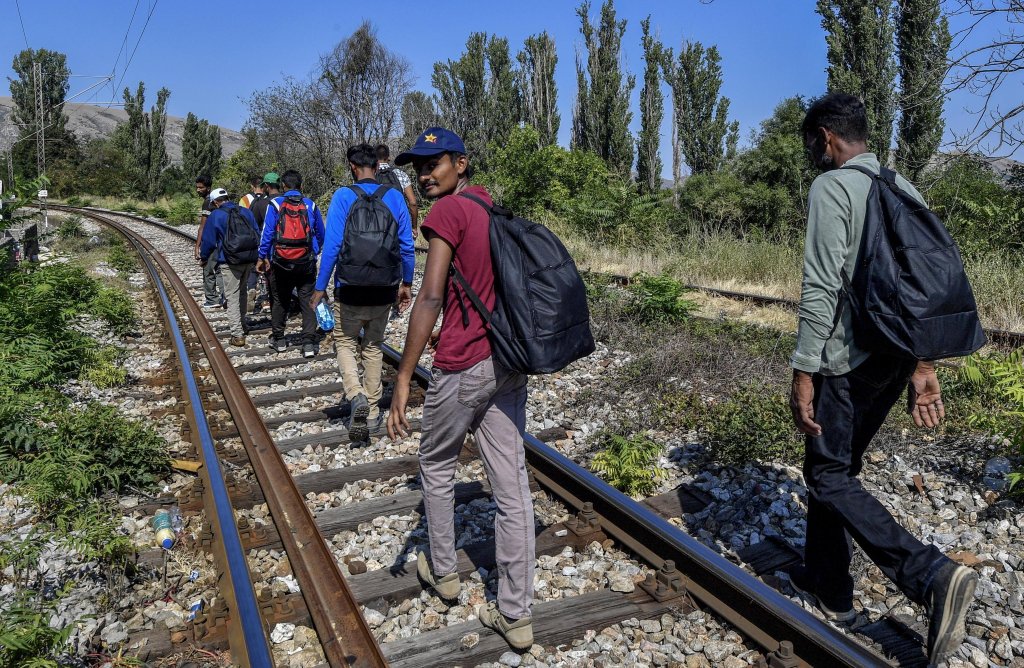
However, some experts working in the field further down the route, in Slovenia and Italy, have told InfoMigrants that they believe these numbers do not represent the true number of people still traveling the route towards Western Europe.
Italian jurist Gianfranco Schiavone, who works with the Italian Association for Juridical Studies on Migration (ASGI) and is the director of an NGO working with migrants in Trieste, told InfoMigrants that he believed that many of the migrants his organization and others see arriving in Italy are traveling along the route undetected by the authorities. He says his organization and a partner organization in Slovenia have not noticed a substantial decrease in the number of arrivals.
Schiavone believes that this is because smugglers have become more organized and are not only smuggling migrants but also organizing their accommodation away from the authorities’ eyes.
Read AlsoIrregular EU entries down as new routes emerge
Training and support
The IOM has long been supporting the Ministry of Security and the Service for Foreigners’ Affairs SFA to run the camp. They also work with the local primary health center authorities to provide medical units within the camps. PHC medical teams in Bihac work four days a week in two medical units to help migrants at the camps. One team works with the single male migrants and another team works in the family zone.
In 2025, PHC medical teams have conducted 1,262 medical consultations, stated IOM at the Lipa camp and provided 409 specialized health care services by referral.
IOM also helps carry out voluntary returns from Bosnia Herzegovina for anyone who applies for it. Since the beginning of 2025, they have carried out 153 voluntary returns and had 181 applications.
IOM Bosnia, in conjunction with Italy and Denmark’s Ministry of Foreign Affairs, recently completed an IOM-facilitated study in Bosnia and Herzegovina to "help support BiH’s efforts to strengthen migration governance and align with EU standards." The study, stated IOM on X, gave course participants insights on digital services, residence procedures and labor mobility.
The IOM has also opened two migration information points at TRC Lipa and TRC Blazuj. These, say the UN agency, "offer essential information and tailored support for migrants in irregular situations, foreign workers, students, locals and diaspora – helping ensure safer and informed migration." The information points were launched at the end of November.
Read AlsoEU and Bosnia sign border deal to stop irregular migrants