
In most asylum contexts, persecution is thought of as a collective term, with civil war, oppressive regimes, or intolerant ideologies pushing entire populations out and away from their homelands. But for some people, their public persona is a much more important reason to flee their homes. InfoMigrants spoke to several refugees who could face serious repercussions if they were to return home, as they simply are too famous to go back.
"I'm not feeling great today, to be honest with you. I just learned that another journalist I admired from back home just died in prison. It just reminded me of my journalist friend who also was killed in 2020."
This is not the answer you expect to hear when you ask someone the simple question, "how are you today?"
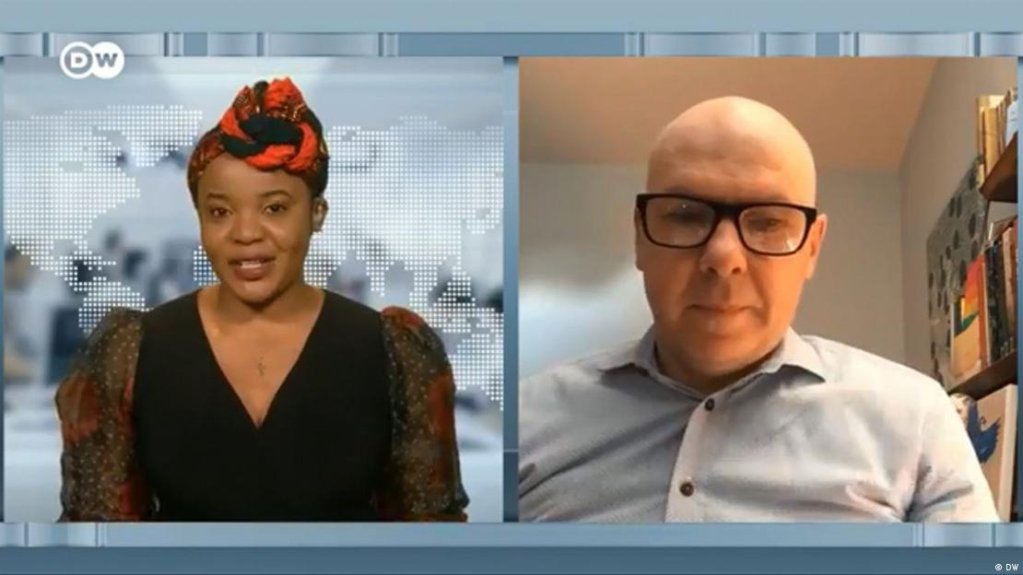
But for Mimi Mefo, a recognized, award-winning journalist from Cameroon, fearing for those she left behind in her home country is a daily reality.
Having fled her home country in 2019 to come to Germany, Mefo continues to reflect on developing events in Cameroon from a safe distance now.
"My people are definitely hungry for real news, real information. The institutions and the judiciary of the country have abandoned them. Only a few select people in the media are there for them. I am there for them. I have to be the voice for those who do not have a voice. And I would not trade that for anything else," she explains, highlighting what her role in exile means to her.

"Everyone in Cameroon knew who I was. I made friends and allies easily, but also made many enemies. I didn't choose this path. That was never my thing: to be visible. I would have loved to live a free life as a person," Mefo tells InfoMigrants.
"But I didn't have the kind of life where I could move around freely anyway. The government in Cameroon controls everything. So I got into journalism, and before I knew it, I was a celebrity. All I ever wanted was to just get the job done."
The Cameroonian journalist adds that from the beginning of her career, she faced repercussions for simply wanting to do her work -- not only coming directly from the government
"Time and again, the government tried to stop me, to silence me. I think I could be killed if I went back. Maybe not directly by the government but by the few people who support this government. I have received many death threats in my life, and most of them were not from the government."
Muted sighs in exile
Working in Germany for Deutsche Welle (DW) since 2019, Mefo's life is suspended somewhere between here and there, between her old home and her new one, as she still reports on politics and current affairs from West Africa and beyond, thousands of miles away.
"The [Cameroonian] government definitely know what I'm up to now, and I have to constantly question who might be a government agent working for them," she says, as if to probe whether even this interview might be an act of government sabotage from African shores.
"Can you imagine how much more the government is keeping tabs on me now than what they did back then? I really do want to return home, but home remains unsafe for me," Mefo tells InfoMigrants, which is followed by a deep, prolonged sigh.
For many people around the globe, who have had to move countries or even continents in defence of their self-expression, their art, their political positions or simply their dissident voice, the idea of returning home is an elusive one -- one which often is followed by such a woeful sigh.
Haunted and taunted by the Taliban
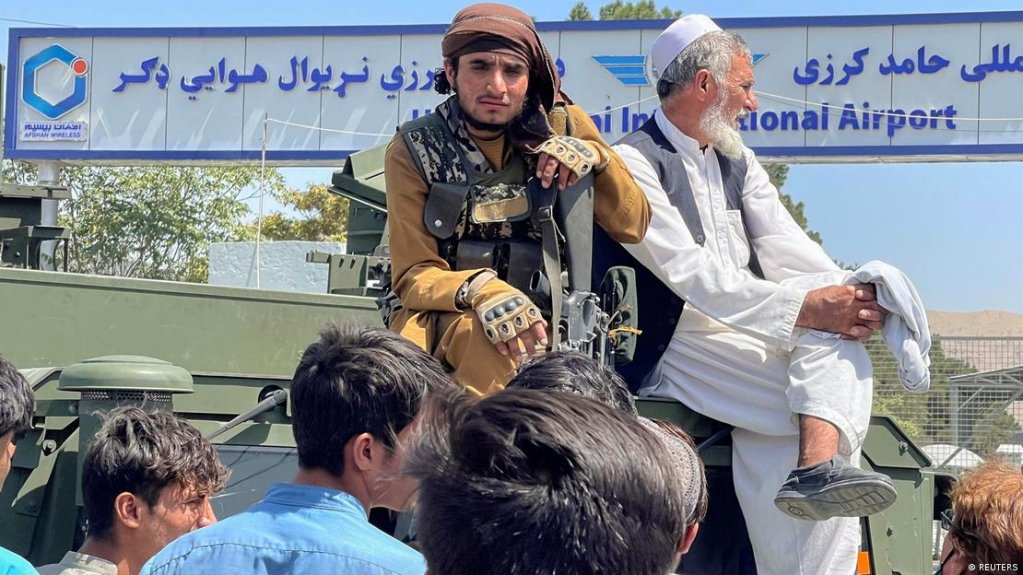
Like Mefo, Afghan journalist Azita Nazimi is another well-known name in her home nation, who however now has to live with the consequences of being persecuted; like Mefo, Nazimi equally could not simply decide to board a flight and travel to the Afghan capital, Kabul -- no matter how much she wanted to.
"Most people in Afghanistan will know my name. And they will know my face because, in addition to my years of working for renowned Afghan media outlets, I was also one of the first women to join protests against those misled misogynistic beliefs of the Taliban on the streets of Kabul."
Since the violent return of the Taliban regime to Afghanistan in 2021, it has become nearly impossible to spot any woman in Nazimi's home country in the public eye -- particularly on TV; for a household name like Nazimi to return to Afghanistan could be akin to suicide.
"If I were forced to return to Afghanistan, I would undoubtedly face certain death, because I am a well-known woman and a staunch opponent of the ideology and mindset of the extremist terrorist Taliban. It is very likely that I would be arrested and killed by the Taliban as soon as I entered the country," she tells InfoMigrants.
Still, Nazimi tries to continue her fight against the Taliban from the relative safety she can get to enjoy in exile, using social media to reach out to women who are in a similar situation as she is -- or even worse.
Read AlsoAfghanistan's 'consulate general' reopens in Bonn under new management: the Taliban
Persecution cast into stone
Different people who have made a name for themselves in their field of self-expression may suffer from different degrees of notoriety in their home countries. Not every person in the public eye will necessarily have to fear for their lives like Nazimi does; however, societal and tribal pressures as well as ongoing extremist undercurrents make some people more reluctant to return to where they came from than others.
Saman Hidayat is likely one of the most recognized names in Iraq for his contemporary sculptures, having worked as an artist for years in his home region of Iraqi Kurdistan. In 2015, amid growing insecurity in the country due to the rapid expansion of the sphere of influence of the so-called "Islamic State" (IS) terror group, Hidayat and his wife left their country, seeking asylum and starting from scratch in Germany.
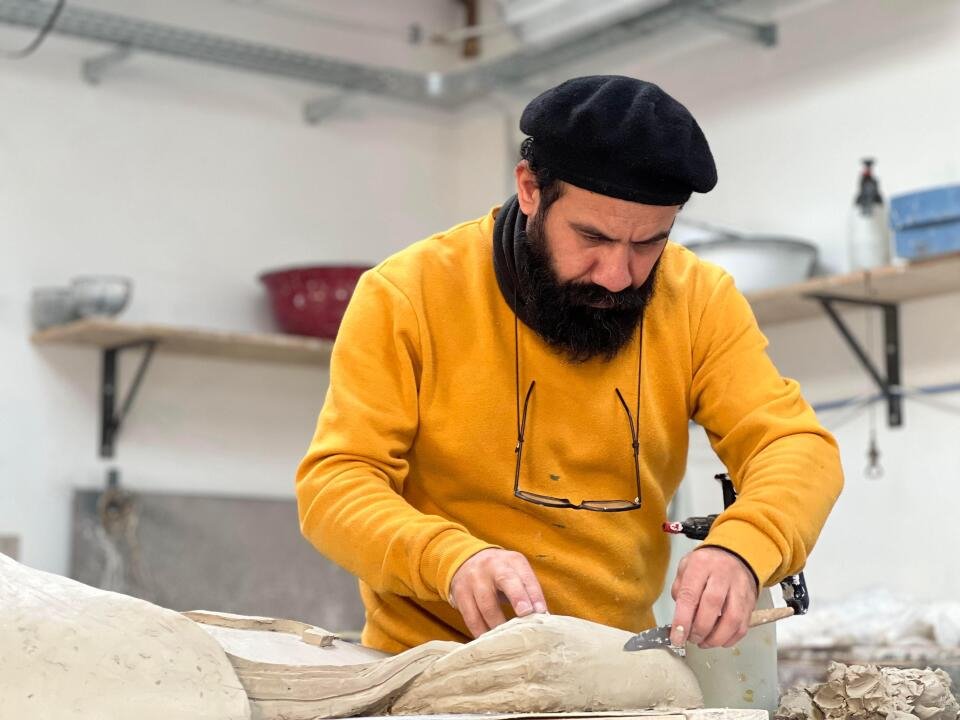
"I was a well-known sculptor there, in my homeland of Kurdistan. In a way, life was actually much easier than here in my new homeland of Germany. Being recognized brought opportunities, and a predictable flow of work," Hidayat remarks on his past life.
"But I do feel very comfortable in my new home," he tells InfoMigrants, adding that in the course of the past decade, he had not only made it his mission to master the language and integrate fully into the local culture, but that he even forced himself to start to think "like a German."
"Sometimes I even think I was born in Germany. Nevertheless, there is a lasting spiritual connection between me and my first homeland -- like the bond there is between a child and its mother."
Hidayat has embraced his new life, and has even become a German citizen by now; although he has no plans of returning to Iraq, he says he is ready for whatever the future may hold:
"I'm not really afraid of anything. But I am cautious. Just as I came here from Kurdistan and started a new life, I could also build a life there all over again. But whether I would feel welcome there is another question."
Read Also'There is no future here': Iraqi Kurds look to migrate to Europe
The search for a sense of purpose in exile
In comparison to Hidayat, Azita Nazimi appears to feel a much greater sense of frustration over her own fate. For her, it is not just a simple question of whether she would be welcome in Afghanistan; it is a matter of life and death.
Even if she didn't have to fear for her life, Nazimi nevertheless feels crushed by the reality that she can no longer return and continue to pursue her career as a woman in broadcasting.
"There is no place for a woman," in the new media landscape under the Taliban, she explains, adding that for as long as she can remember, she "had always dreamed of working as a television presenter."
She finds the fact that she has no opportunity to use her skills and experience to improve the quality of people's lives even more heartbreaking than simply not being allowed to follow her career passion.
"You must realize that Afghans were severely traumatized by war and displacement for years, and they had very few opportunities for entertainment, which is why many simply turned to television," she highlights, giggling at how wonderful it was for her to bring people together that way.
Hidayat has a similar perspective on how much his work meant for him in Iraq; even when his sculptures would polarize people strongly and challenge their views, he could still revel in the fact that his vocation in life nonetheless brought individuals with opposing views and stances on all kinds of social issues together over the same thing, using art as a channel, as a medium for transformation.
"I knew that as a sculptor, I could make a difference for people through the language of art. And that's how -- within seven years of completing my studies in 2009, I became one of the most famous Kurdish sculptors in the country. I wanted people to talk and even disagree over my work."
"It had always been my dream to use my art to exert a positive influence on societies so that people's lives and futures can be peaceful and harmonious again, and so all these bloody wars can come to an end."
Attacks on womanhood and morality
Nazimi recalls having had similar hopes, and remembers also having had a measurable positive effect on people's lives in Afghanistan through her line of work: "In particular, I loved producing and hosting family programs for women. It made me happy. It made them happy. Walking through Kabul, lots of women and girls would always just flock around me and would want to have their picture taken with me."
Today, she adds, she knows that many of the same women who opposed the Taliban and fought and protested alongside her against the violent group's ascent to power on the streets of Kabul were "at the very least arrested and being tortured."
The way she says "at the very least" perhaps betrays the fact that there are also some darker instances which she personally knows about but does not want to share publicly.
Nazimi just gazes into emptiness -- as if she were the one looking out from behind the bars of an Afghan prison cell.
Mimi Mefo meanwhile is also all-too-familiar with the concept of women being targeted by the government as perceived "weak links" in the chain of opposition to government control, oppression and censorship:
"I was jailed, I was arrested in Cameroon. They wanted to make an example of me. They attacked my womanhood. They tried to make me look bad as a woman, like as if reporting is not a moral thing to do for a woman. Meanwhile, several of our opposition leaders have died in detention. It is awful. It is so painful.
"Therefore, all I want from life is for my work to not have gone in vain. And on top of that, I hope I can help restore the dignity of my colleagues who have lost their lives. And if on top of all that, I can see those who currently are behind bars released -- there's nothing more I can ask for from this career. Then, I will be fulfilled as a person, as a woman."
Read AlsoGermany: Afghan women and girls almost guaranteed to receive asylum
'Dead journalists cannot tell stories'
For the most part, the concept of persecution within the context of asylum is a collective idea or term, which is applied to entire populations and demographics which are proven to uniformly suffer internationally established forms of oppression.
But for some people, there is no choice but to escape the threat of oppression even well before it becomes tangible -- like Afghan refugee Azita Nazimi.
"I did not flee. I was forced to flee. I love Afghanistan more than my own life. I could never have imagined that one day I would be forced to leave my country," Nazimi laments.
"When death hangs over your head as a threat at every moment, you have no choice but to flee -- not for yourself, but for the future of your children and your loved ones. I did not flee Afghanistan but rather, I escaped a bloodthirsty, terrorist, and misogynistic group called the Taliban," she stresses, with powerful emotions noticeably welling up inside her.
Read AlsoAfghan women's rights activists in Pakistan fear deportation
That scenario is somewhat different for Mimi Mefo; she feels that with her fame -- or notoriety -- she might have a certain amount of leverage available if she did ever decide to return to Cameroon, a country, which despite its abysmal human rights record is now actively promoting the voluntary return of migrants and refugees even after yet another highly disputed election result in 2025, and despite ongoing divisions and violence in the country.
"Maybe, if I stayed silent or sung the government's praises, that would guarantee my safety. But I've never been in the good books of the government anyway. They would not want me to continue on this path in media," she adds, highlighting that nonetheless she regards it her duty to hold those who are in power to account.
"With all the horrible things that are happening to innocent people, to my colleagues, to my country, how can I stay silent? I will always stand for justice. I will always stand for the truth."
After five decades of authoritarian rule under the leadership of Cameroonian strongman Paul Biya, Mefo represents the anger, resentment and fear of nearly every Cameroonian. She doesn't feel like she is part of a minority that is against his leadership, stressing that "even his daughter, she has turned against him, telling people not to vote for Biya."
But having popular sentiment on her side is not enough to protect Mefo. Simply staying alive to keep fighting Cameroon's corrupt political elites from her place in exile is enough reason for Mefo to wake up with a sense of purpose each morning.
"You can be killed for doing your job as a journalist. The government will kill you before they ever try to take away your pen as a writer. I don't know how life-threatening my return [to Cameroon] would be exactly if it indeed came to that, but if it indeed is life-threatening, it is not only so for me but for my family, my friends, and my journalist colleagues," she underscores.
"So I have to stay alive. A dead journalist cannot tell a story," Mefo says, barely joking.
Read AlsoCameroonian transgender activist arrives in Belgium after receiving asylum
Art and expression as tools of liberation
Mimi Mefo and Azita Nazimi have never crossed paths; yet, they appear to have much in common as refugees, as journalists, as public figures -- and as women.
But while Mefo has managed to have a fully regularized status in Germany, allowing her to work from exile, Nazimi is still waiting to be allowed to return to her career.
"I was employed in the media for many years. But I have not been able to work in the three years that I have now been living in Germany because I have not yet been able to fully meet the requirements here," she highlights.
Even if -- and when -- she does finally receive confirmation of full asylum status, things will never be the same again for her, as the career she had once built up now lies in ruins -- much like her home country.
"Although I am extremely grateful to every single person in Germany who treats us kindly and am equally grateful to the German government, I am seen here as an ordinary person," Nazimi stresses.
"My former fame no longer exists," she adds, explaining that some doors will likely remain closed to her in the future because of this.
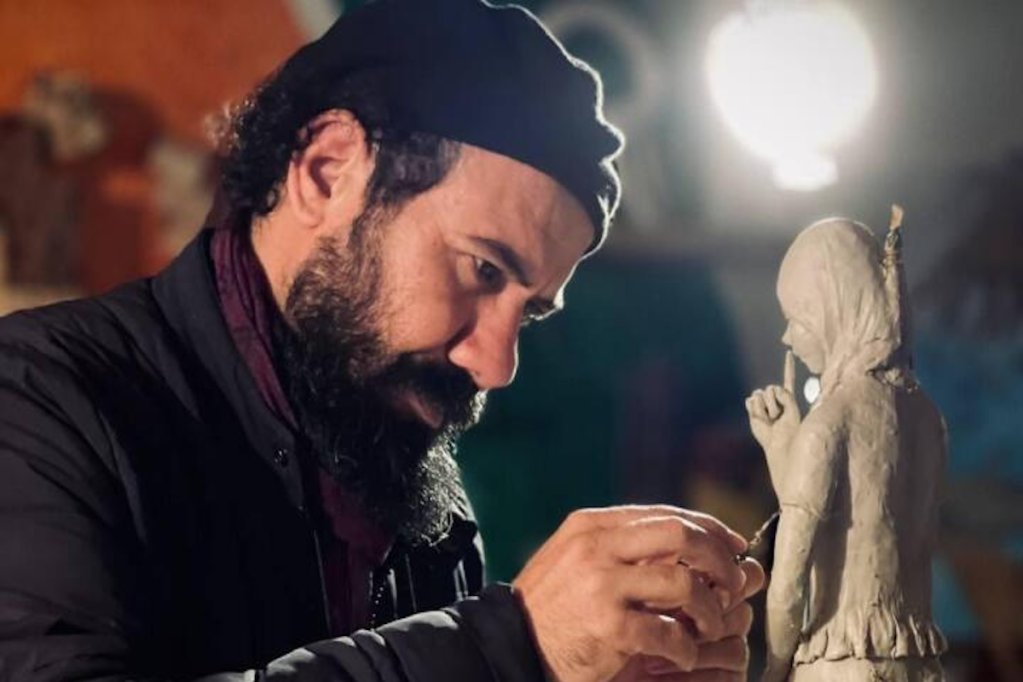
However, Saman Hidayat's story might perhaps serve as an inspiration for people like Nazimi, who face the daunting task of starting from scratch but have nevertheless managed to reach new heights in their careers.
"Before, I was only known in Iraq, in Kurdistan. Now I'm recognized in my field here in Germany. I'm also doing international exhibitions. I love bringing my ideas and artistic works to every corner of the world," Hidayat told DW, expressing no regrets whatsoever over any of his decisions. "If I had to do it all again, I would. I would come to Germany and choose the same path," he says -- in fluent German, of course.
For Nazimi, who went from being a national treasure of what once was a democratic republic in Central Asia to persona-non-grata in the administration that succeeded it within the span of just a few short years, there's also only the hope of realizing new dreams in the future that still keeps her going:
"I really hope that one day Afghanistan will be freed from the rule of this terrorist group that thrives on abusing human rights, and that the people, especially the women and girls of my country, will be freed from this oppression and fear, and will be able to rise up to live free and without fear."
Mimi Mefo shares a similar vision for the future of her country, but also explains that she is beginning to see her personal and professional struggle as part of a far bigger narrative, as she, too, continues to grow from strength to strength:
"I'm blessed by so much recognition by major institutions around the world. I had never embarked on this path to be recognized. And this humbling experience of the past few years has allowed me to realize that the desire to see change is not unique to Cameroon. It is not even unique to Africa, though that's where most of my work is.
"It is a desire I see everywhere. It cuts beyond borders -- the way I had to move across borders just to get to safety to be just one voice, one tiny light in the darkness," she says, doubling down once more on her message that life never dealt her any other choice but to call out the corrupt forces in the world while using journalism -- and perhaps her fame -- as her tool.
"If there are enough of us who take that courage and trust in God, believing that we were put here for that reason, there's just no stopping us. Doing what we do, we can and will change the world."
Read AlsoFootball: Afghanistan women take big step toward recognition
InfoMigrants team members Nabila Karimi-Alekozai and Majda Bouazza contributed interview material to this reportage.