
The independent voluntary organization Donk Humanitarian Medicine odv operates in Trieste, offering help treating the visible and invisible wounds of migrants and others who cannot access public medical care in Italy. InfoMigrants met one of its leading volunteers, Francesco Zanuttin, to find out more.
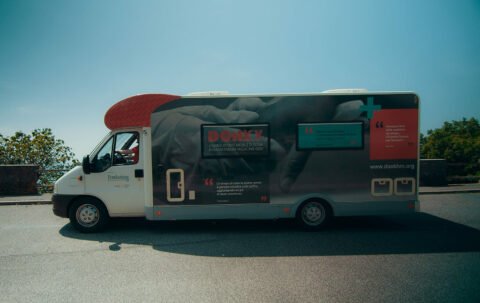
The association Donk Humanitarian Medicine began life in the southern Italian city of Naples in 2005 and transferred to Trieste alongside its founders in 2012. Its staff also work at a first reception center for asylum seekers, between Trieste and Monfalcone, known as Campo Sacro, near the town of Prosecco. Since 2023, Donk has offered a mobile clinic too, to provide help and advice to people who cannot reach the stationary clinics.
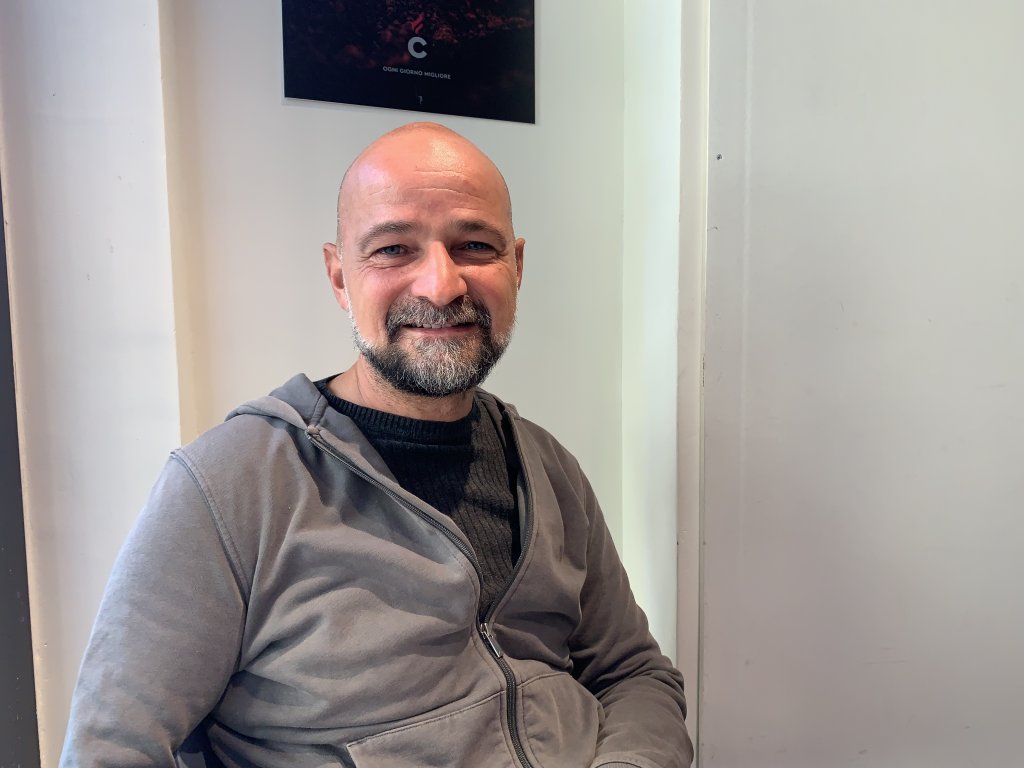
Francesco Zanuttin is a nurse and one of around 80 people who volunteer with Donk. He is in charge of the mental health projects and works on a collaborative project with the University of Trieste.
"The aim of the organization is to offer medical assistance to those who do not qualify to receive state medical aid," explains Zanuttin over coffee in a bar in Trieste.
"At our clinics, you can get a medical checkup even if you are in transit, and you can also have psychological counselling as we have a mental health team based at our clinic. Migrants are the main users of our services," explains Zanuttin.
Medical checks for those in transit
In fact, the association staffs ten clinics in the area of Trieste, two of which, the Donk headquarters and a consultation room in the day center for migrants, are in Via Udine, not far from the central station.
Since 2012, according to the Donk website, volunteers have carried out 20,000 consultations and offer seven days a week telephone support. The organization is also part of the network in Trieste of various organizations that offer help and support to migrants and other marginalized groups, alongside ICS, Caritas Diocesana in Trieste and the Community San Martino al Campo.
"The phenomenon of migration is something that is constantly evolving, and so our services have to evolve to respond to those changing needs too," says Zanuttin.
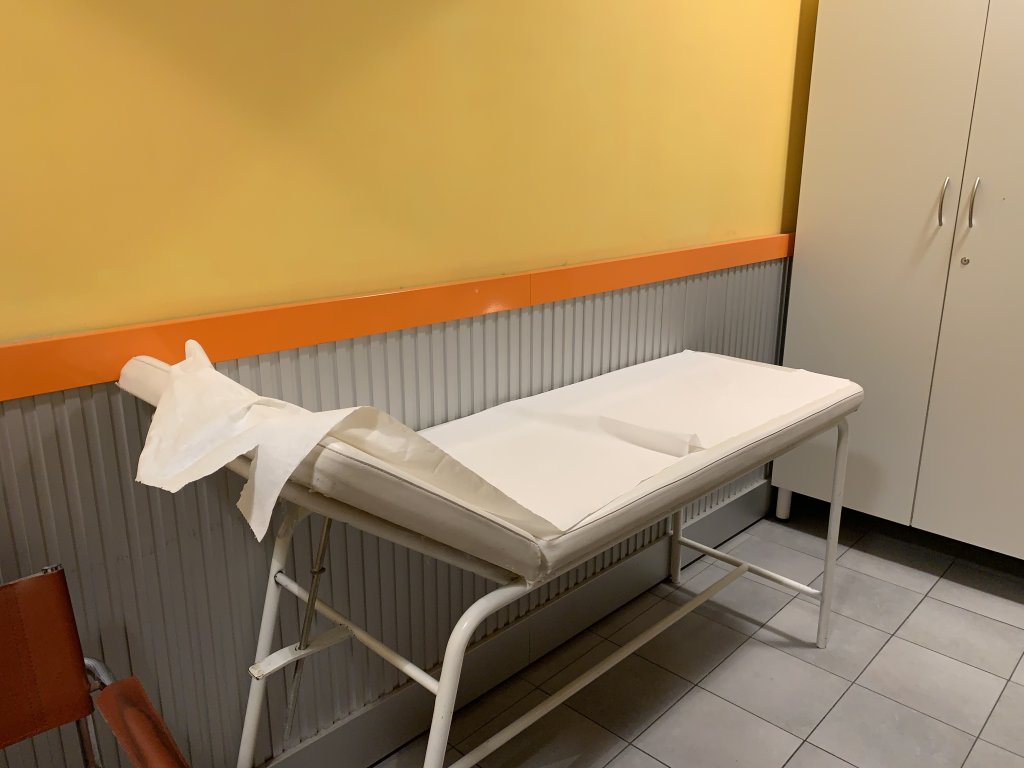
The changes begin with the people who are using their services, he explains.
"Five years ago, for instance, we had a lot of people coming from Bangladesh. Since 2021, the number of people coming from Afghanistan has begun to increase, as well as those from Egypt.
"Now in Trieste, I would say the two most numerous groups of migrants are people from Pakistan and Afghanistan, with Egyptians not far behind. We do still have a lot of migrants from Bangladesh, but mostly adults. In terms of unaccompanied migrants, they tend to be from Afghanistan, Syria, Kurdish regions, so they are people from Iran, Iraq, Turkey and Syria."
Read AlsoThe psychiatrist's tale: 'I try and introduce myself as a person, not as a doctor'
Follow-up visits can be difficult
Trieste is part of the Balkan route into Europe -- many people who pass through Trieste have no intention of staying but want to get on to northern Europe without registering in Italy. They often only have time for one medical visit, which can be hard for the medical volunteers when they clearly see a need for follow-up visits.
"Most of the migrants might come and see us with skin problems, dental problems, infections, gastro-intestinal problems. Most migrants tend to be pretty healthy; there are not so many chronic problems. At least that is the case for those who first arrive."
Zanuttin says that one of the biggest problems they are seeing is a rise in mental health concerns, including post-traumatic stress issues, which can result in psychological problems. "This stress is caused by several different factors. The change of cultures, having left their home countries and maybe their families, and due to violence they suffered either before their journey started, which perhaps caused them to flee, or during the journey."
Physical violence
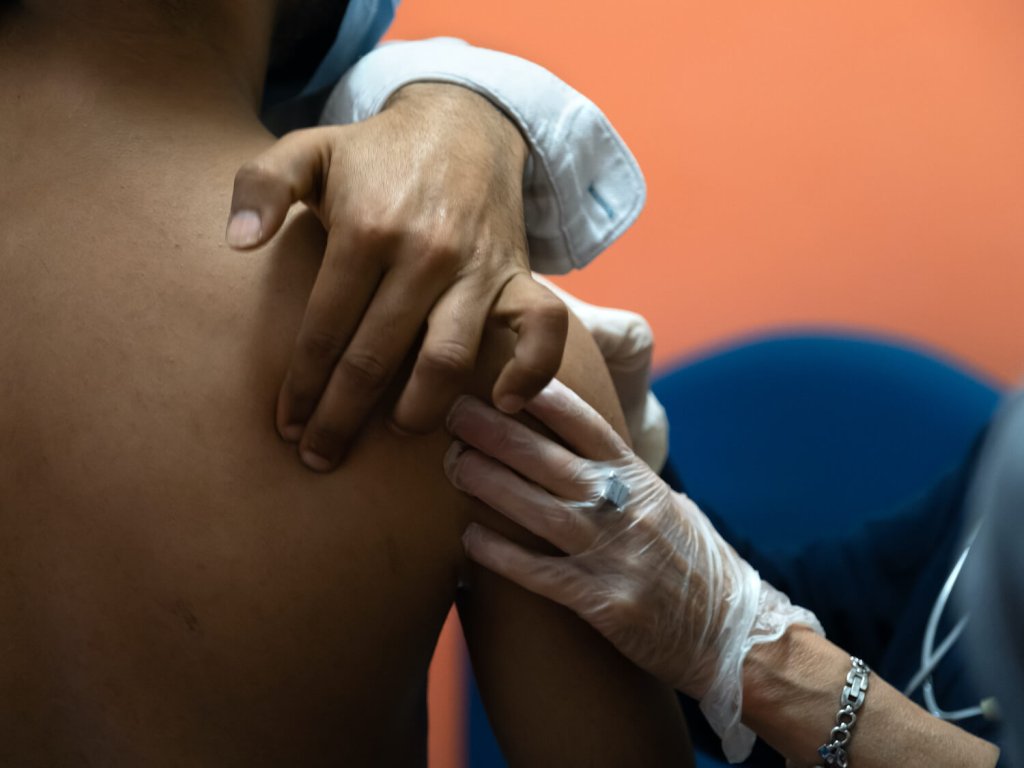
Many migrants will have been subject to physical violence while on their journeys. Sometimes at the hands of the criminal gangs which are smuggling them, and at other times maybe at the hands of border authorities along the way. Then they are often exploited at work along the way too, so they are doing jobs for which they have no papers and are unregulated. All this causes huge stress, explains Zanuttin.
"This unregulated work and exploitation will be present all along the route, so people might be doing jobs in Iran, Greece, all through the Balkan countries. And often the unaccompanied minors are particularly subject to this."
Working in this field, Zanuttin says the volunteers will regularly hear about migrant experiences, often in relation to the medical problems they present with. Some of these wounds are visible, and others might be invisible, but for those, says Zanuttin, you have to tiptoe very carefully, and treat the situation with enormous tact, before someone feels safe enough to open up and talk.
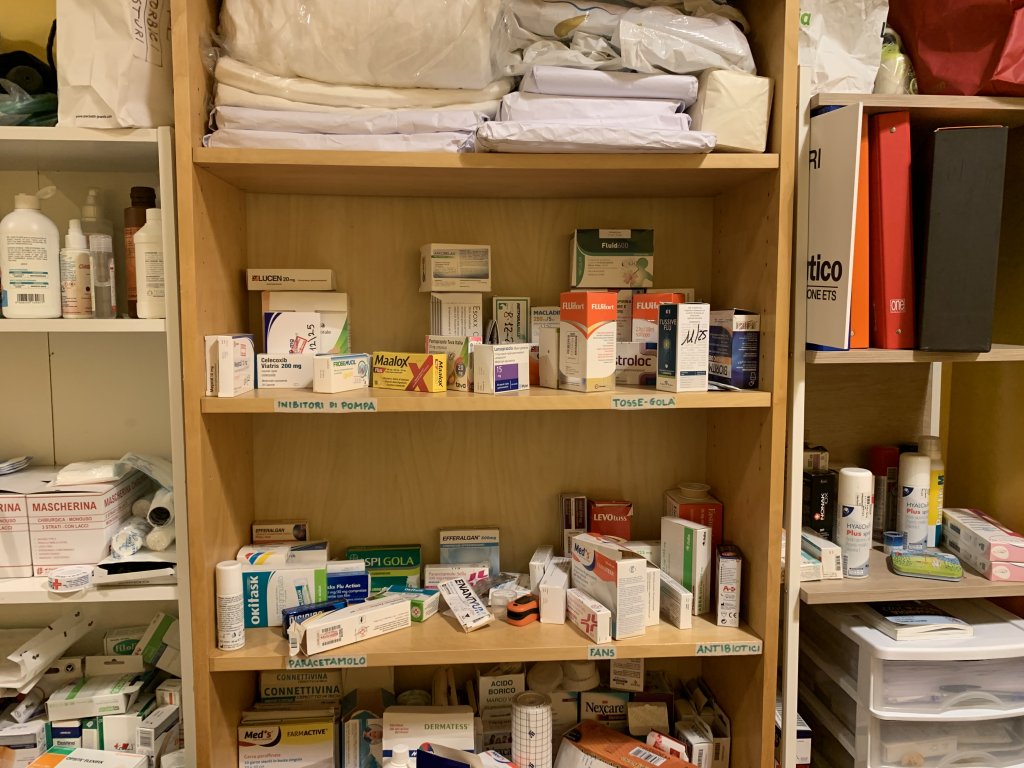
What they do often hear though, is where incidents of violence might be occurring and at the hands of whom: "When I first started, most migrants would say they were suffering violence on the Croatian border. Now, over the last two years, more migrants are saying that it is the Bulgarian police. But both forces are often still accused of committing violence towards migrants.
"We don’t really hear much about Hungary anymore as most migrants don’t even try to cross that route anymore. Some migrants do say that they were hit in Turkey or Greece by the police too. This is not a hard and fast rule, but what I have heard from most migrants is that they feel better treated by the police forces in Italy, Slovenia and Bosnia Herzegovina. They believe they are treated more humanely in these countries. Some of them might say they have been expelled from these countries, but not in a violent manner."
Read AlsoItaly: Medical charity's clinic in Tuscany closes due to funding cuts
Mental health and Afghan migrants
Zanuttin partly attributes the worsening of migrant health to the greater prevalence of Afghan migrants now arriving.
"Other migrant populations had a bit more money to complete their journeys. They were still poor, but because many of them already had someone in Europe who was already working, they were able to manage the journey, even if they were also often exploited along the way. This extra money bought them a bit more help from the traffickers and smugglers, and that made their journeys a bit easier. So, they saw the journey as just a transitory phase in their lives. They came from poor economic contexts but not necessarily violence."
This is not the case with most of the Afghans arriving, he says, who "already tend to come from a violent context per se. Many of them are very young, so they have often been subjected to violence before they even left their country, either because of political or ethnic discrimination. They generally have less money, so their journeys take longer, and so they are subjected to even more exploitation."
This is made worse by the exploitative conditions of illegal work, which some might take up. "I feel like this population has skewed the experiences, and there are more migrants suffering from mental health issues now."
Even before the Taliban took power, says Zanuttin, Afghan migrants tended to have greater needs on arrival. He explains that according to statistics from the University of Trieste, which works with Donk on a project, Afghans accounted for about 11 percent of arrivals, and yet required around 50 percent of the cases of emergency medical attention. Since the Taliban took power, "things have got worse," says Zanuttin.
Read AlsoMigrants help migrants at Rome's Sant'Egidio community
'You must go very carefully through this kind of minefield'
"The biggest problem for them is not so much the visible wounds that need medical attention, but the invisible wounds that need attention. You must go very, very carefully and really tiptoe through this kind of minefield."
"We might ask someone very gently how they might have come by certain wounds that we can see, or why they came here for problems which are clearly the result of violence of some kind. Maybe they have wounds on their chest, and we will just stick to talking about that with them and treating the things we can see.
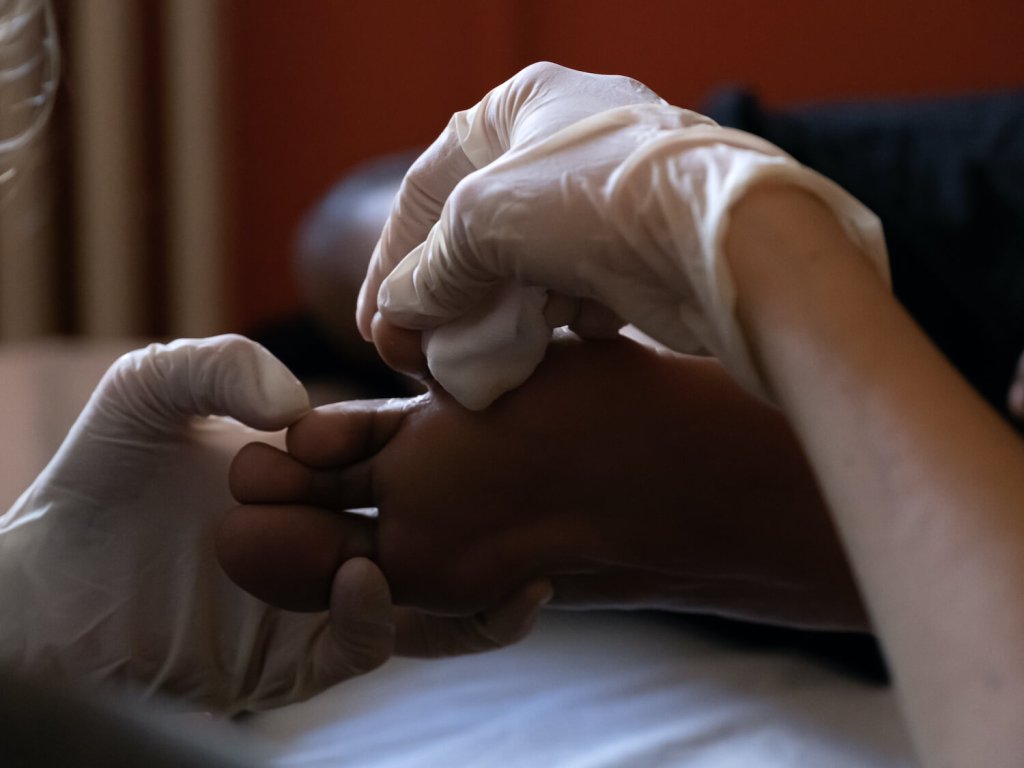
"But often we realize that people might want to talk about what happened in a bit more depth if asked with tact. But if you just go in there and ask people direct questions, they will often clam up and not want to speak out about it at all."
Davide Leonardo is the coordinator of the mental health project at Donk. He told InfoMigrants via text that when Donk created its mental health service, it was aimed exclusively at unaccompanied foreign minors. These still form the majority of the patients using the service, but Donk has made sure that the service is available to all those who need it, both to migrants and asylum seekers already in the reception system, and those outside of it.
There are three psychologists, two psychotherapists and two psychiatrists working at Donk. "With regard to unaccompanied foreign minors, the service is committed to ensuring quality support through close collaboration with educators and representatives of the facilities where the minors are housed, as well as with volunteer guardians."
'Traumatic experiences, often linked to physical violence'
Most of the issues that Donk staff see when working with them during the support process, according to Leonardo, are issues "related to traumatic experiences, often linked to physical violence perpetrated by border police and smugglers before and during the journey, as well as forms of institutional violence."
The practice of "so-called refoulements" are particularly problematic Leonardo told InfoMigrants. This is where migrants might be pushed back across the border to another country, where the authorities pushing them back know they might not be safe. It is a practice which is against the Geneva Convention.
These kinds of experiences, thinks Leonardo, are very destabilizing for migrants. He says, sometimes a migrant may have spent years in a European Union country "where many of them have built relationships, put down roots, learned the language, and started training courses," only to be forcibly transferred can be very hard. Each time, they have to start over again and again.
Read AlsoNew MSF report addresses how Italy can help migrants who have experienced torture
Read AlsoMobile clinic offers services to migrant workers in southern Sicily
New projects for resident migrants
Although much of the services that Donk has provided up until now have concentrated on the transient populations, he also sees in the region the need for more outreach towards the resident migrant populations.
Bangladeshi migrants, he points out, account for around 17.5 percent of the population of neighboring Monfalcone, and making sure that those communities know which services they can access, like mass screening programs and mental health services, Zanuttin thinks, would contribute hugely to better integration and better health for the whole of society in the future.
He talks excitedly about the possibility of future projects, where Donk could be crucial in helping to overcome cultural barriers and making sure everyone is able to access the medical help that is often available to them, if only they knew how to and where to come forward.
Elasticity needed
After years of working in this field, Zanuttin advocates that organizations and societies learn to be a bit more elastic when dealing with the phenomenon surrounding migration.
"Migration is a complex problem, and pragmatism is needed. Mass migration is a problem both for the countries of departure because it impoverishes those countries even more from the point of view of economics and human currency and the host countries, because it often represents a certain destabilization, especially in certain parts of society. There can be competition with the host country population for accommodation, for resources and for jobs, and for access to social services. So, it creates tensions that can be difficult to digest.
Nevertheless, I believe that we must learn how to digest these problems, because migration is going to keep happening; it is not just an opinion, it is a fact. This is a global issue, and so it is not resolvable just with small local measures. ... You have to be elastic and flexible because that is what migration and migrants are."
Read AlsoClinic for migrant torture victims opens in Palermo