
Hundreds of migrants arrive in Calabria, southern Italy, to work in the citrus groves during harvest season. While their working conditions have improved over the past several years, other issues like poor housing and exploitation persist.
Unusual cyclists have been appearing since the beginning of November on the streets of Rosarno and San Ferdinando, two towns in southern Italy. They wear reflective vests and mud-stained boots, while balancing small bundles hanging from their handlebars. These are the seasonal migrant farm workers who come to work in the citrus groves of Calabria during peak harvest season. They ride their bikes to the groves every morning at dawn, where they labor the entire day, until their hours are up.
Some of the seasonal workers have come to southern Italy to try their luck for the first time. "I was working in a hotel in Milan, which is now closed. They told me there was work here and that I could make more money," said Abdoulaziz, a 22-year-old from Senegal. Others come every year, before leaving for other harvests, in other regions. "I harvested tomatoes for five months in Puglia before coming here," said Youri, a 31-year-old Malian, back in Calabria for the second consecutive year.
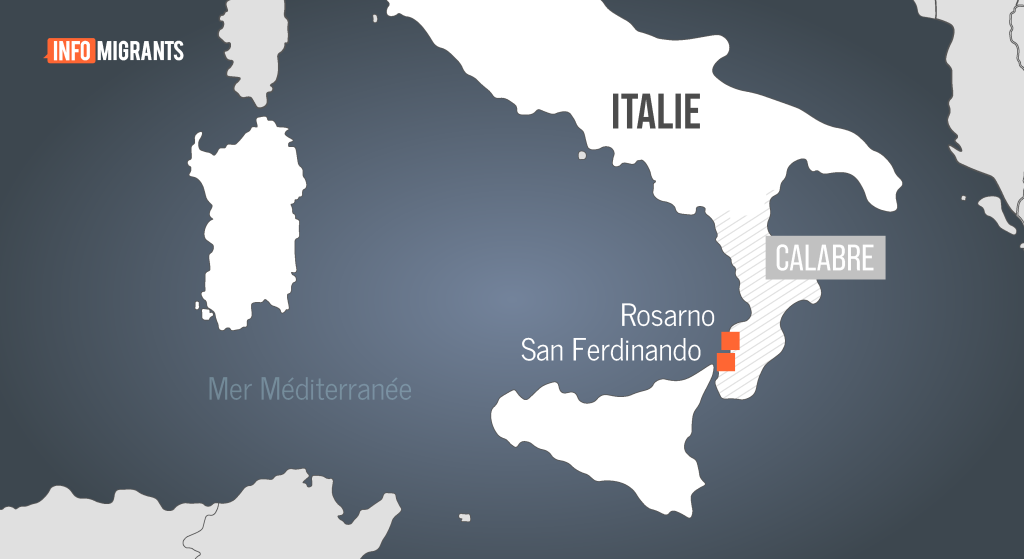
Calabria is an agricultural region; it provides a quarter of Italy’s national citrus production. A significant workforce is needed to harvest the clementines, mandarins, oranges, and bergamots, which are cultivated in the region's numerous groves. The province of Reggio di Calabria employed in 2022 over 3,000 non-European immigrants out of a total of nearly 10,000 migrant agricultural workers present in the entire Calabria region, according to figures from the Observatory on Agromafia. The majority of workers come from West Africa (Mali, Gambia, Guinea, Senegal, Nigeria and Burkina Faso).
Despite being essential for agriculture, migrants in southern Italy are often victims of exploitation. The Rosarno riots of 2010 brought this form of modern-day slavery into sharp focus. The living conditions of foreign workers were extremely precarious because of informal recruitment, unpaid wages, and grueling working conditions. The situation has significantly improved fifteen years later, with the efforts of local and community organizations, as well as government initiatives to combat informal labor and implement municipal projects for migrants.

'There are almost no undocumented workers left'
"There are almost no undocumented immigrants among the seasonal migrant workers anymore," said Gianluca Gaetano, the mayor of San Ferdinando. "With the political changes, these people were able to obtain residence permits."
Nearly all the migrants that InfoMigrants encountered while reporting indeed possessed a "permisso di seggiorno" (residence permit). The workers all confirmed that the permits were easy to obtain; one simply needed an employment contract. Yet the permits remain precarious because of their limited duration, ranging from six months to two years.
Read AlsoExplainer: Italy’s 2026-2028 'Flow Decree' (Decreto Flussi)
This growing flexibility of the job market is part of a broader vision in Italy. Italian Prime Minister Giorgia Meloni in June authorized the entry of 500,000 foreign workers for the next three-year period: 2026 to 2028. Around 267,000 visas will be issued to seasonal workers in sectors like agriculture and tourism.
Another 2016 law called anti-caporalato, named after the illegal system of recruiting workers through informal recruiters (caporali), also played an important role in the fight against the exploitation of workers and the protection of migrants. The legislation strengthened penalties for worker exploitation and granted residence permits to victims of forced labor.
"These legislative advances have been supported for about five years by the increased inspections at companies and farms," said Gaetano.
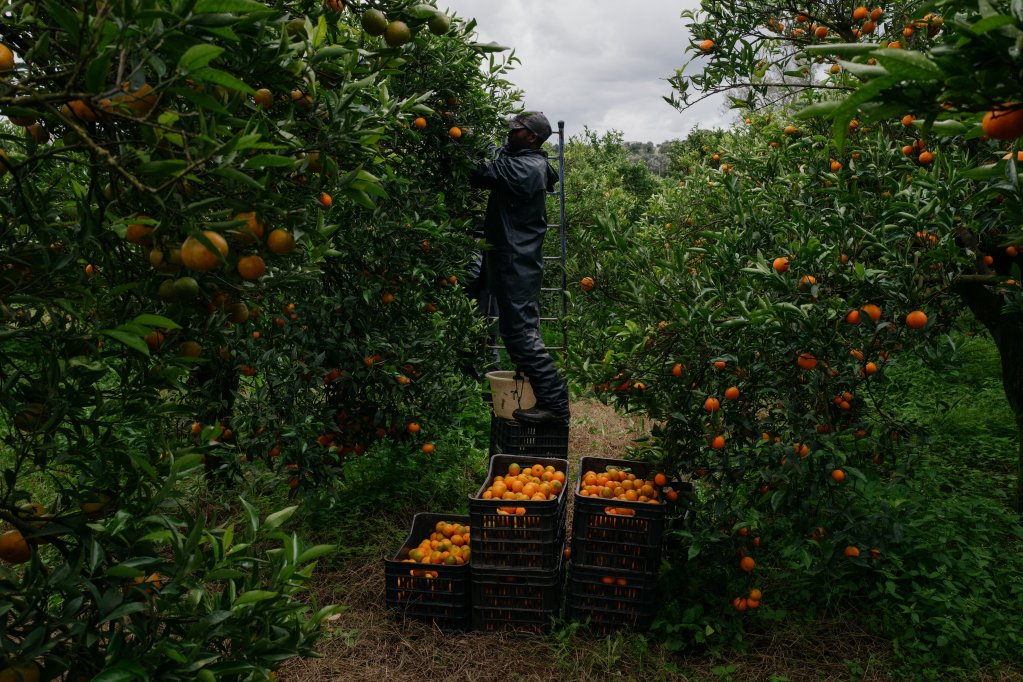
Workers in the fields still face harsh conditions. "It's difficult: the full crates are heavy to carry. Some farmers have tractors, but my current boss doesn’t have one. It's very hard on the back, but we don't have a choice," said Bamba, a Senegalese man who has been in Italy for 23 years, who talked while cutting clementines off the tree with his pruning shears. Harvest season is in the winter, so workers must contend with cold weather and precipitation. In these conditions, ladder accidents and other injuries are not uncommon.
"There is still just as much need for labor among farmers, but there are fewer migrant workers because of the difficulty of the work," said Giuseppe Pugliese, co-founder of the cooperative Mani & Terra, an initiative that emerged after the Rosarno riots. The cooperative has about 100 producers and strives to offer fair and dignified working conditions to the migrant workers it employs.
It must also be said that the wages in Calabria are lower than in other Italian regions: in northern Italy, a day of harvesting can be paid 80 euros, compared to about 47 euros in Calabria.
‘People don’t want to house Black people’
Despite judicial and social progress, major problems persist in the region, like unacceptable housing conditions. Most seasonal migrant workers live in an insalubrious camp, on the outskirts of San Ferdinando. The camp is called tendopoli, literally "the village of tents".
"It’s very difficult to live here: there are a lot of flies and rats because of the dirtiness. I am here because I have nowhere else to go,” said Bakary, a 36-year-old Gambian, back for a fourth harvest season in Calabria.
Read AlsoIn Italy, 10,000 migrant farm workers live in 'informal settlements'
Set up in 2019 by the Minister of the Interior as a temporary solution, this "village of tents" has become an informal camp, abandoned by the authorities. Some 500 migrants are currently surviving there in insalubrious and precarious conditions, according to the non-governmental organization (NGO) Caritas, which operates in the shanty town. The number can reach up to 1000 people at the height of the season. The tents have become makeshift huts, covered by plastic tarpaulins to block the rain. Fires are frequent and are responsible for several deaths every year.

Field workers have few decent housing alternatives. Since the Salvini decree of 2018, they can no longer benefit from housing in reception centers, now reserved for recognized refugees.
Several migrants say they have tried to rent apartments – without success. "People don’t want to rent to Black people. I can’t understand," said Abdoul, a Sudanese who had to fall back on Tendopoli. This refusal to rent illustrates the underlying tension between the locals and migrants. The rejection is also expressed through violence and racist attacks on foreigners. "Young people have already hit workers riding bikes or opened their car doors to make them fall on the road," said Ibrahim Diabate, co-founder of the Dambe social center (“house of dignity" in Bambara), which welcomes migrant workers during the harvest season.
‘Migration is a source of wealth’
The housing crisis worries the region’s elected officials. "We are trying to improve the situation," said Pasquale Cutri, the mayor of Rosarno, who said he needed workers in his town. "Migration is a source of wealth. These people work in the fields: without them, these lands would be abandoned." He also underlined the demographic importance of migration for his municipality, whose youth has been leaving the area in massive waves.
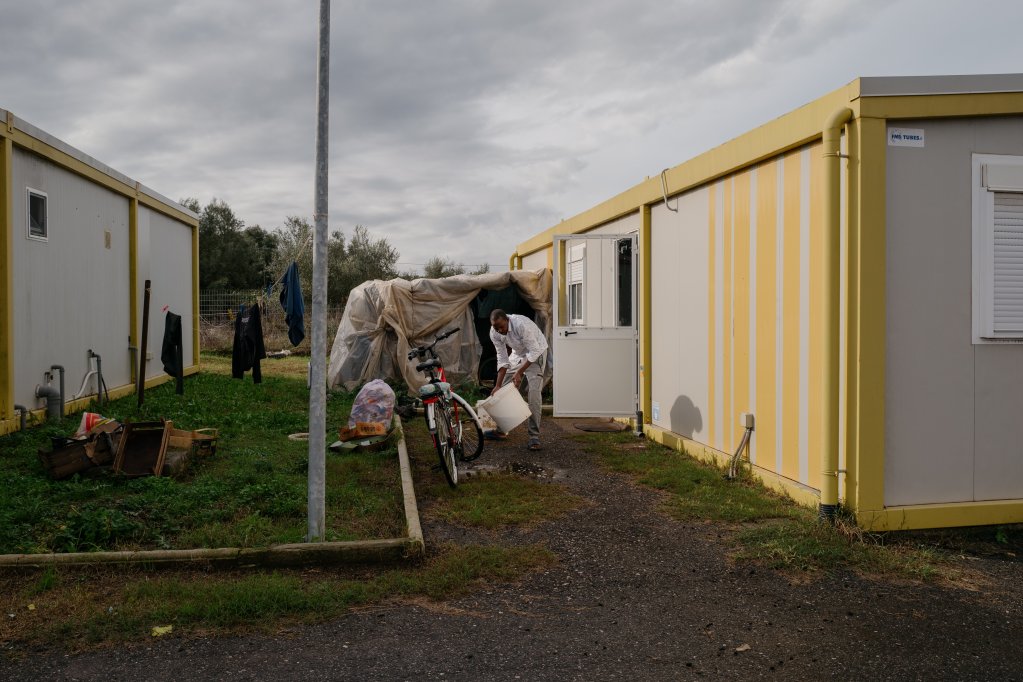
Several projects, supported by local political authorities, have recently emerged, such as a "village of solidarity" in Rosarno. The village, financed with three million euros by the Italian Ministry of Interior, and built in 2024, can house up to 100 workers with a residence permit in exchange for a monthly rent of 80 euros. "We are trying to find solutions to offer dignified housing to these people," said Catri, who acknowledged that the 2010 riots raised the alarm on poor housing conditions.
The initiatives are also flourishing in San Ferdinando. Gaetano, the mayor of San Ferdinando, is working on a project which combines farming, a market and housing. The project is located on three hectares of land that was confiscated from the mafia. "It’s about giving a house and a job to these migrants, so they can go from the condition of ‘simple hands’ to being ‘people in their own right’. It’s a project that moves beyond charity and toward economic sustainability," said the official. "Integration happens through sharing daily life and public resources. Distance perpetuates exclusion," he said.
Read AlsoDeath of migrant farm worker in Italy highlights limbo of illegality
In Taurianova, south of Rosarno, a container village opened in May 2024 to respond to the necessity of housing migrant workers. The colorful barracks, named after international capitals, can accommodate up to 100 people with legal status. "I took the place of a friend who went to Mali for a few months. When I lived in the Tendopoli for two months in 2015, I suffered a lot, and I was exhausted. It's better here," says Seydou, a 46-year-old Ivorian who has lived in Italy since 2014.
Finally, the NGO Mediterranean Hope founded the "Dambe So" shelter, which accommodates over 60 migrants during the harvest season. In addition to the apartments, which are managed by the migrants themselves, the shelter offers medical checkups, legal support, and Italian language classes. In this context, residents can continue along their path to integration in a safe environment.