
A year after the Assad regime fell in Syria, the EU has updated its asylum guidance for Syrian refugees on the continent. Changes announced may influence the result of asylum requests of around 110,000 Syrians who are still waiting for decisions on their claims.
The European Union Agency for Asylum (EUAA) has published a comprehensive update to its country guidance on Syria, it announced in a press release on December 3.
The new guide "represents an assessment of international protection needs arising from the changed situation in Syria,” stated the press release. The guidance is intended to assist national authorities assess the asylum applications of Syrians and to "foster convergence in asylum decisions at the EU level."
The guidance builds on interim guidance issued in June 2025 and is then updated by recent "country of origin" information.
One of the main changes in the guidance is that "risk profiles associated with military service, such as draft evaders and military deserters, as well as other opponents of the former Assad regime are no longer at risk of persecution."
Read AlsoSyrian refugees in Germany face pressure to return
Categories of people who may remain at risk
There are, however, some categories of people who do remain at risk and therefore would be eligible for refugee status, depending on the assessment of their individual status. These include:
- Persons with diverse sexual orientation, gender identity, gender expression and sex characteristics
- Individuals who were associated with the former Government of Syria
- Members of ethno-religious groups such as the Alawites, Christians, Kurds and Druze. However the guidance makes clear that each case would be assessed individually as “acts of persecution against Christians and against individuals perceived to have transgressed religious/moral laws, norms or codes seldom occur.”
- Persons fearing forced or child recruitment by Kurdish-led forces
- Persons perceived to be opposing the SDF/YPG (Kurdish People’s Protection Units)
- Journalists and other media professionals
- Women and girls
- Children
- Palestinians who no longer benefit from the protection or assistance of UNRWA in Syria should continue to be granted "ipso facto refugee status."

Read AlsoReturning to Syria — between loss and hope
Categories of people who probably won't qualify for protection
There are also categories of people who probably wouldn’t qualify for protection status any longer. These are:
- People who are applying for protection to avoid being conscripted into an army they don’t believe in
- Sunni Arabs, "for the mere fact of being Sunni Arab."
Read Also'I need to stay strong for my son': Syrian families search for their loved ones in Libya
Security situation is 'improved but volatile'
According to the new guidance, the security situation in Syria is now "improved but volatile."
Indiscriminate violence is still present but is considered to be "not at a high level" in most of Syria’s governorates. The guidance believes there is "no real risk of serious harm in the Damascus governorate."
Syrians applying for asylum since the fall of the Assad regime have dropped significantly. In October 2024, there were over 16,000 applicants and in September 2025, so almost a year later, there were just 3,500.
However, at the end of September 2025, there were still around 110,000 pending cases of Syrians waiting for their first decisions across the whole of the EU+ bloc. That means that these people’s cases could be the most affected by the new guidance.
Read AlsoEuropean states widen pursuit of Syrian war crimes
Challenges remain
The guide also acknowledges that poverty affects around 90 percent of the population and that around 16.5 million people require aid in the country. "Infrastructure damage, unemployment and limited access to services hinder recovery."
Around 1.9 million internally displaced people have returned, many more, 7.4 million remain displaced according to the UN Refugee Agency UNHCR, and new displacements "continue due to ongoing violence and unresolved housing, land and property issues."
On September 18, 2025, UNHCR estimated that almost a million Syrians had returned from abroad since December 8, 2024. The majority returned from Turkey (41 percent), Lebanon (32 percent) and Jordan (20 percent). Most returned to Damascus, Aleppo, Idlib and Homs.
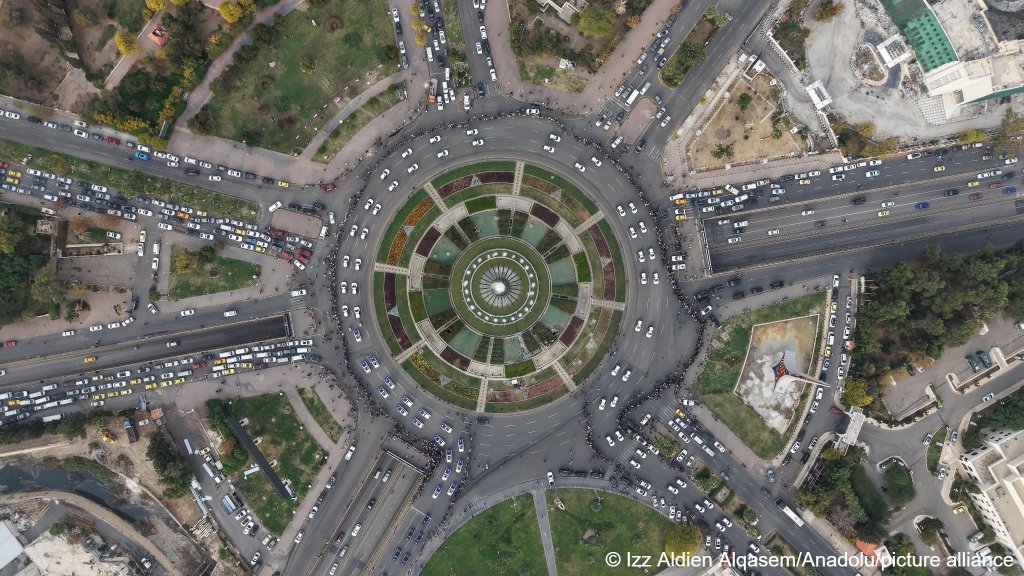
The guide notes that the "sustainability of these returns is severely limited." That is because "many returnees encounter major obstacles in accessing basic services, legal documentation and livelihood opportunities."
Unemployment is one of the main challenges faced by returnees; 77 percent of those surveyed cited that as the main problem; 74 percent cited "high cost of living" as an obstacle and 57 percent talked about poor infrastructure and living conditions, with 52 percent citing lack of humanitarian or development support as a hindrance.
Anyone wanting to return has to be able to present a valid identification document, including a national passport or ID card. Documents issued by the former government remain accepted.
Read AlsoSyrian migration to Germany drops to almost half, UN warns of ongoing abductions in Syria
Transitional government assessed
The guide also provides an assessment of the Syrian transitional government. In its view, while the government "has made progress in consolidating formal structures and integrating some armed groups, it cannot be considered a unified actor. Its authority is fragmented, its control over armed factions is incomplete and regional / local autonomy persists in many areas. The government’s legitimacy and effectiveness are further challenged by ongoing violence, sectarian tensions, and the presence of powerful non-state and external actors."
The EUAA guide points out that "security forces affiliated to the transitional government have committed numerous serious human rights violations such as arbitrary arrest, incommunicado detention, killing, torture and abuse of individuals, such as persons associated with the former government of Syria and persons with perceived links to ISIL (The Islamic State of Iraq and the Levant.)"
Hundreds of civilians have been killed as a result, most of whom were Alawites, the sect that former president Bashar al-Assad belonged to.
Read AlsoTwo Syrians face deportation after German court ruling
Other threats
ISIL continues to pose a threat in certain parts of the country, mostly in the north-east. There have also been reports of sporadic ISIL attacks against the transitional government forces and civilians in Deir Ez-Zor governorate.
There are also networks of former Assad senior military and intelligence officials who have formed "new groups…aimed at fighting the transitional government." Some of these factions have been operating in Syria’s coastal regions.
Foreign powers are also named as carrying out military attacks and activity in Syria. These include the Israeli military, Turkey and the US.

In addition, criminal gangs, unaffiliated gunmen and other armed groups are also reported to have committed human rights violations and revenge killings. There have also been reports of trafficking of women and girls, "including for the purpose of sex exploitation."
Read AlsoMerz: It's time for Syrian refugees to "return home"
Assessing risk and protection needs for individuals
The guide then goes through a three-part question exercise for each potential group that could be at risk, asking: "Do the reported acts amount to persecution? What is the level of risk of persecution? Is there a ground for persecution?"
You can look at the guide here for your specific category, but each case would be taken on an individual basis.
Finally, the guide points out that although the transitional government in Syria has expanded its areas of territorial control over the last year, there is still no functioning transitional justice process to address past human rights violations and courts are largely non-operational.
Reports of extrajudicial killings continue to surface and large portions of the country remain under the control of various armed groups and some external actors.
Security forces under the transitional government are judged to “struggle to respond effectively to revenge killings, kidnappings and looting.” And criminality is reported to be widespread even under its control.
However, the requirement of safety is mostly satisfied in the city of Damascus, except for anyone who might have a "well-founded fear of persecution or real risk of serious harm by the transitional government."
It is also possible to fly into Damascus International Airport as well as Aleppo, and so travel to the safe zones without problem, declared the EUAA. Freedom of movement within the country has also improved since the fall of the Assad regime and no violations regarding freedom of movement have been reported.