
A dispute between an Islamic cultural center and the municipal authorities in the town of Monfalcone in northeastern Italy has meant that Muslims in the town have no place to meet and pray together. InfoMigrants met one of the members of the community, who used to act as Imam, before praying at the center was banned.
"My name is Mizanur Rahaman. I was born in Bangladesh, and I now live in Monfalcone, in the province of Gorizia, Italy. I arrived in Italy on June 10, 2014, so I have been here for around 11 years."
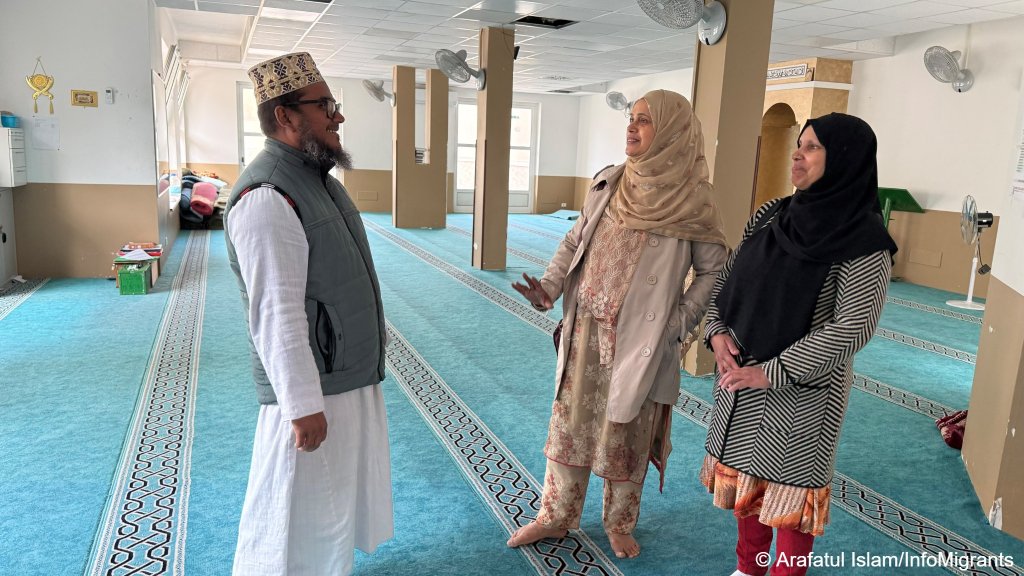
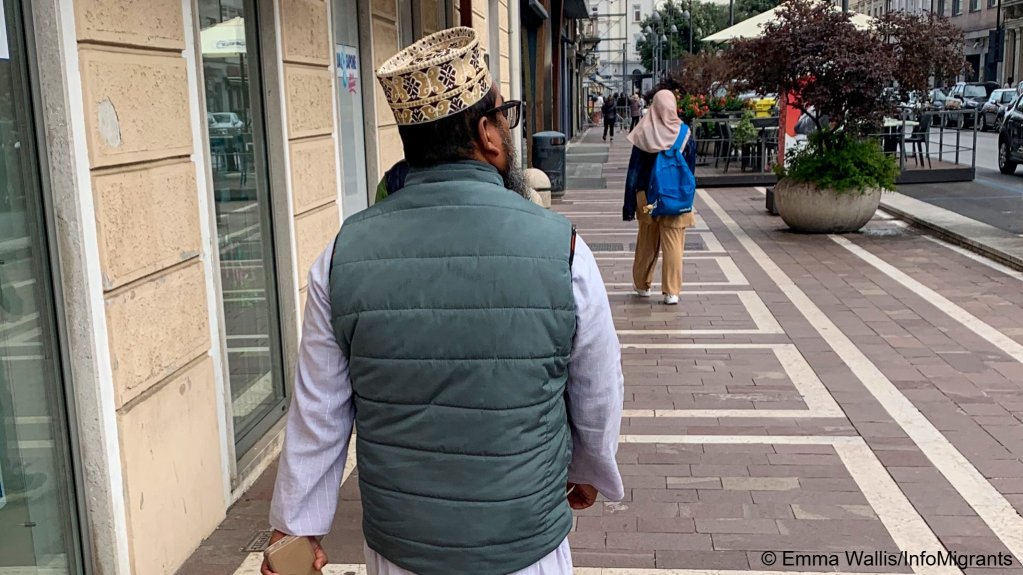
To the outside observer, Rahaman might look like an Imam, his intricately embroidered black and gold kufi hat and his long white Punjabi robe are not untypical for Muslim men, but coupled with his beard and the place where we are standing, in front of a golden arch, in a long empty room that looks perfectly set up for Muslim prayers, he might appear like an Imam.
But Rahaman is keen to point out that that is not his title and that he cannot be described as such, even if he used to work as a religious leader in the cultural center when it was still functioning as such.
Today, Rahaman works once again in the shipyards in Monfalcone, alongside many of his fellow migrants from Bangladesh. His family is all still in Bangladesh; he proudly shows us a video of his daughter speaking English on his phone as he is showing us around what used to be known as the Darus Salaam cultural center in the heart of Monfalcone.
Read AlsoMuslim migrants in Monfalcone look for a place to pray
Checks on the cultural center
On the day in early October when we visit, the center is eerily empty. Trouble started in around 2023 for the Muslim community who used this center.
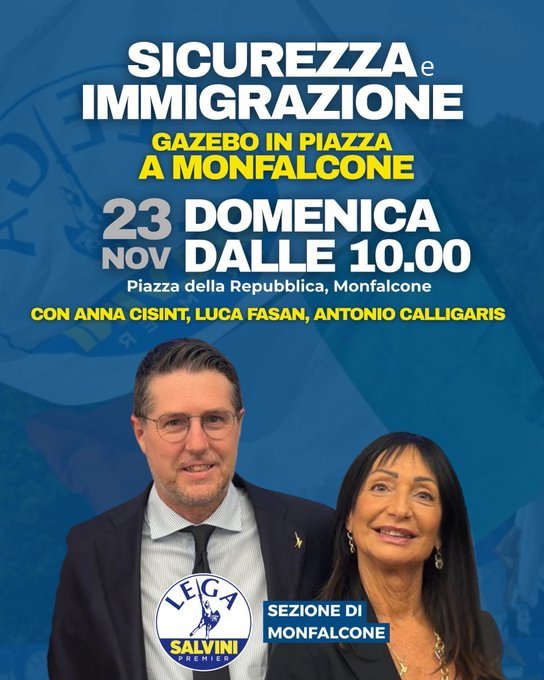
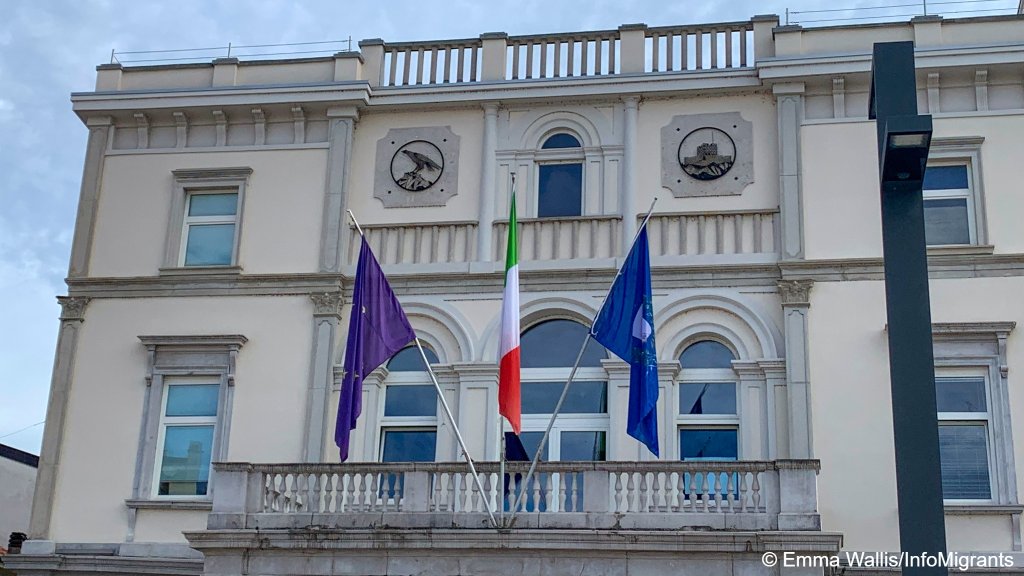
The municipal authorities, at the time led by mayor Anna Maria Cisint, a member of the anti-migrant League (La Lega) party, and now an MEP in the European Parliament, objected to the center being used as a place of prayer and began a series of checks on the cultural center.
As she herself explains in an interview on Facebook in July this year, through the checks, the town council discovered that the property was registered and intended for commercial use and therefore it could not be used as a place of prayer.
During the various checks, the authorities also highlighted what they said were potential failings with security and fire hazards.
The case was heard before a tribunal in Trieste in July this year, which declared that the Monfalcone municipality was within the law to issue a sanction and to be able to repossess the property because it was being used for purposes for which it was not registered or intended. Monfalcone is now led by Mayor Luca Fasan, who was supported by the center-right, including the League.
'Defending Italian culture'
Cisint, who holds a similar political line in her campaigns from Brussels, frequently attacks what she calls "philo-Islamic policies" mostly coming from the left-wing and wages a "war on woke."
Her latest posts on X from December 2 and 3 refer to claims that "nativity scenes are being cancelled" and that there are "abusive mosques" springing up -- this time in Padua (Padova), and that "Christmas is under attack."
In interviews, like the one given to the program Ring on Antenna 3 (a regional TV station serving the north-east of Italy), Cisint talks in terms of "battles" against "radicalization," and advocates defending "Italian values and culture."
Cisint has also called for "remigration" in posts on X, including in one on November 27 in which she refers to an allegation that a "Bangladeshi [migrant] raped a 10-year-old girl in a reception center and made her pregnant." In comments above this post, Cisint makes the case of one person about the whole community using the plural "these characters/animals rape girls in reception centers!"
'It was never intended to be used as a mosque'
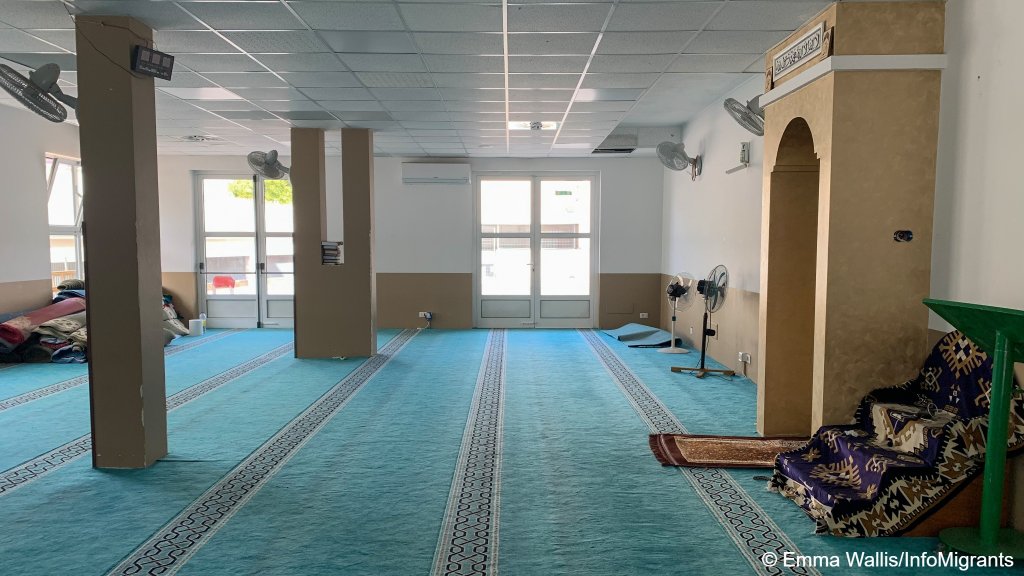
Following the Trieste tribunal's decision, the Monfalcone authorities served the center's organizers with notices saying that, as a commercial property, it could not be used as a place of prayer. The Muslim community has sought recourse and is waiting for a decision from a court in Rome, as well as the European court. Meanwhile, the center remains empty.
Perhaps because of these long years of accusations and court proceedings, Rahaman appears keen to try and outline what happened from the point of view of the Muslim community. "Let me take you back to the beginning of all this," says Rahaman, "because I am worried about the story getting mixed up."
"This place began as a community center for the Bangladeshi community, even before I came to Italy. It was a place to pray, but it also provided religious education for children and an after-school club. It began in 2002 and was known as a cultural center.
"In 2012, we bought this property to build an Islamic Cultural Center, but not a mosque. I repeat, it was never intended to be used as a mosque. We teach children about religion. We teach them Bangla and English, Italian, all the things that any after school club might help children with.
"We do marriage preparation courses, we teach people about our religion yes, but also our culture. We cover everything here," he explains.
Read AlsoRahim's tale: 'In Libya we spent 14 horrible months'
A place for the community
Rahaman says the idea behind the center was to create a place of community for Muslims. Before they opened up the center, "there was no space for Bangladeshi Muslims in Monfalcone." Bangladeshi migrants make up about 17 percent of the population of Monfalcone and number around 6,000 people according to Italian statistics provided by the website Tuttialia.it. Other Muslims also attended the center, including the Senegalese-born Bou Konate, who ran for the post of mayor in the last elections but lost to Luca Fasan. Konate was among the group of organizers at the cultural center.
"We bought this property to create a space for that. We got a permit from the Comune of Monfalcone for an Islamic Cultural Center. We paid 17,000 euros to get a permit for this place. We got the permit in around 2015…. I can’t remember exactly."
When asked if the permit for a cultural center would allow you to pray in that space too, Rahaman nods his head vigorously.
"Yes, you can do everything, prayers, working on our culture, teach children about religion, education, behavior, Bangla, English, other languages."
Read AlsoRefugees and Ramadan in Sicily
Security issues?
According to Rahaman, for about eight years, things were going well, but in 2023, the municipal authorities sent a team to check up on activities at the cultural center and declared it had problems with its security.
Rahaman gestures to the five big doors out onto the yard at the side of the center, and says that he believes they have plenty of entrances and exits, and he can’t believe it could constitute a danger or a fire risk.
Italian newspapers reporting on the issue over the years cite the municipal authorities saying that more and more people were allegedly going into the center to congregate and pray and that was "disturbing the peace" of the town’s other residents.
The town then said that since the property had been formerly used as a shop and for commercial use, it could not be transformed into a place of prayer or even a meeting space for the community. They refused to change the use and have now asked for the property back.
"They said we can’t pray here," says Rahaman sadly. "Now they want to reclaim the entire property. This year, they said that. They say it is illegal. I don’t know. When they sent the decree to repossess the property, we took the case to court in Trieste, and then to Rome, and let’s see what they decide.
Read AlsoIgnorance and stereotypes foster hatred in Italy : report
Waiting on a court decision
"We also got it referred to the European court, because they say that there is no space in Monfalcone to pray. We live here, we work here, we pay our taxes here, we do everything here and yet they tell us there is no space for us to pray here. This is part of our culture, I don’t understand it, I just don’t know."
In Trieste, according to reports in the left-leaning Il Manifesto from July this year, the court authorities upheld the municipality's decision to ban prayer and close the center. This decision, explains Rahaman, has been hard on the Muslim community in the town.
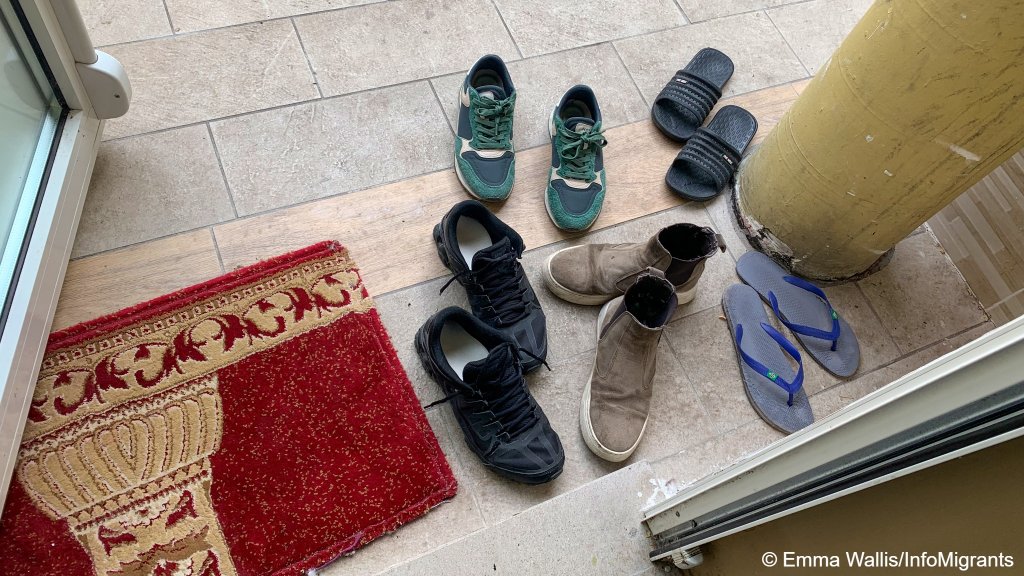
"There is no space anywhere in town now for us. Many people don’t have a car; if you want to go to Trieste to pray, you might need 10 euros to get there and back. If I go to Gorizia, it is the same. It is not easy, we work here, it is hard to get to the prayers in another town after a long day at work. For instance, Friday is a very important day for us and yet we can’t gather to do our Friday prayers at all. We call that Jumma. Of course, you can pray at home but Jumma is traditionally something that needs to be done together, as part of a community. The other prayers, I can do them on my own, but on Friday, we should be able to come together. For Jumma, you need a place to pray together. Those are the rules of our religion."
Read AlsoThe push from Europe's young new right
Not being able to pray on Friday (Jumma) 'really hurts my heart'
Rahaman says that not being able to join others in his community to pray on Friday, "really hurts my heart."
He is keen to underline that his community is obeying all the rules. Not only are they not using the community center, but also, he has also returned to work at Fincantieri, the shipyards that are Monfalcone’s biggest employer and also full of Bangladeshi migrant workers.
"It is forbidden to pray at Fincantieri, and we respect the rules, so we don’t pray there. Work is work and then we pray when we get home," explains Rahaman. He explains the decision has had a hugely negative effect on the whole Muslim and Bangladeshi community in the town.
"Because no one can meet up. All the Muslims have a heavy heart because of this. A place of prayer, a place for our culture, is so important to have. And that has been taken away from us. You don’t just come to pray, you find out how someone is, now we have no place to gather, these things have also fallen by the wayside. It is as if you banned Christians from going to church on a Sunday, and seeing their fellow citizens, that is what it is like for us. You greet people, you find out how people are doing, if we can’t meet, it is harder for us to find those things out too. We are separated and isolated, and that is how it is at the moment."
Arafatul Islam contributed to reporting.
InfoMigrants sent an email in October to the municipal authorities for a comment on the reasons behind their court case and decision to get the cultural center closed down, but they have not yet replied.
We followed up again at the beginning of December, but have not received a response from the town.