
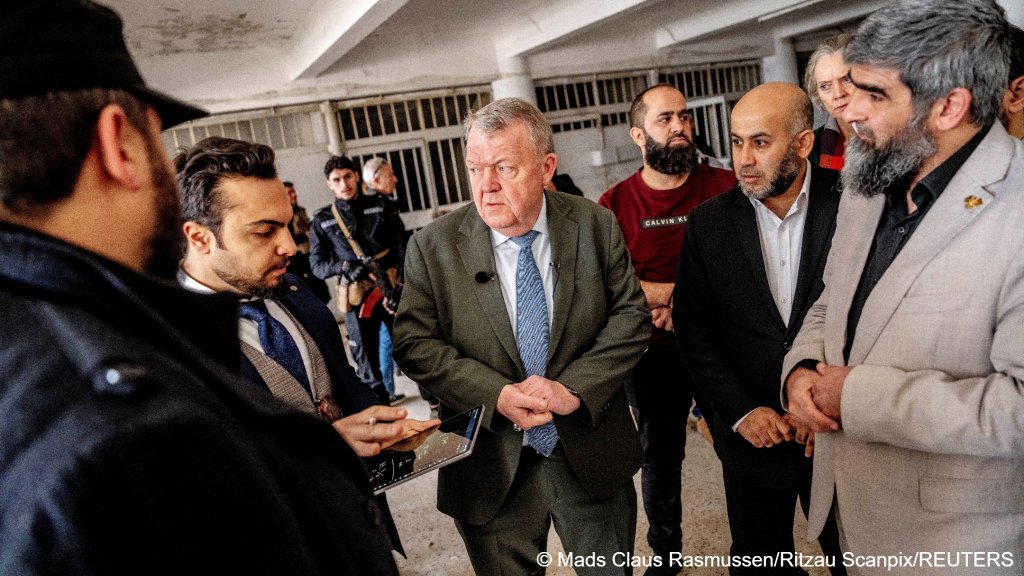
The Danish Foreign Minister Lars Lokke Rasmussen visited the Syrian capital Damascus on Saturday (November 29) to discuss returns and development aid with his counterpart Asaad al-Sahaibani.
Danish government officials are the latest European country to visit the Syrian capital Damascus almost a year after the fall of the Assad regime.
In keeping with its neighbors Sweden and Germany, Denmark is also keen to discuss the issue of returning Syrian migrants to their country now that it is under a new government, as well as the ongoing issue of development aid and stabilizing Syria, which even almost a year into its new government, is still experiencing huge challenges and is still governed by an interim administration.
According to a press release from the Danish Foreign Ministry, Danish Foreign Minister Lars Lokke Rasmussen met his counterpart, Syrian Foreign Minister Assad al-Shaibani, on Saturday (November 29) during the visit to Damascus.
The two government officials visited the infamous Sednaya prison, where thousands of political prisoners were imprisoned and tortured for decades under the Assad regime, stated the press release.
Read AlsoDenmark's EU Presidency puts migration reform center stage
Funds for stabilization and peace
During the visit, Rasmussen announced that his government was keen to launch a new phase of a "peace and stabilization program" for Syria and Iraq, contributing 420 million Danish Kroner (around 56 million euros) over the next three years.
The funds in Syria are intended to be used to help with the political transition following the fall of former president Assad, as well as for clearing mines and other stabilization efforts, including offering support for camps for displaced people in northeastern Syria.
Both the Danish Ministry of Foreign Affairs as well as the Ministry of Defense will manage the project.
The latest round of contributions comes on top of a fund of 660 million Danish Kroner (around 88 million euros) that Denmark offered to Syria this year. This money has been channeled through the UN Humanitarian Country Fund for Syria, which supports various initiatives, including resettlement and food production.
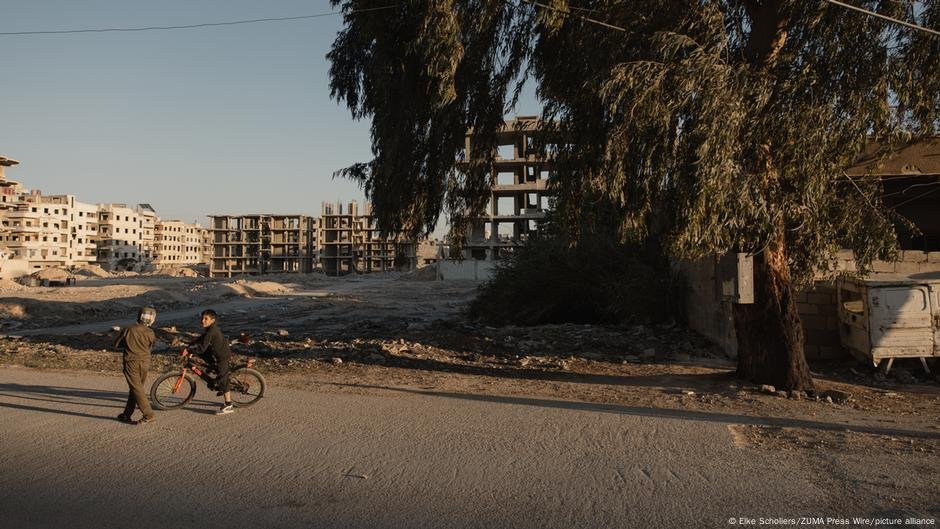
The UN estimates that about 90 percent of the Syrian population in the country currently lives below the poverty line, and that the humanitarian needs are enormous.
Read AlsoDenmark: Unprecedented measures to signal to migrants they are not welcome
Returns
In the press release, Rasmussen was quoted as saying: "The Syrian people have endured enormous suffering over the past decades. Now there is a window for change that we must do what we can to support. Partly to improve the daily lives of the Syrian people, but also to create more stability in the region and enable Syria to accept more returning Syrian refugees."
This issue of returns is one of the main motives for the visit, the Danish government underlined. Rasmussen reportedly told the interim Syrian government officials that Syria needed to accept rejected asylum seekers and criminal Syrian nationals without legal residence in Denmark.
The Danish government said it was also in dialogue with other "like-minded countries" on this issue, "like Sweden." Denmark said it was hoping to spearhead discussions between Denmark, Syria and the rest of Europe on how to "strengthen Syria’s ability to receive and integrate the refugees who have left the country in recent years."
Rasmussen’s visit was the first time that a Danish minister had visited Syria in 15 years. Last week, Swedish government officials visited Syria, also for the first time in more than a decade.
According to the left-leaning Iraq-based news portal Shafaq.com, Danish officials also called for the lifting of sanctions on Syria to enable Danish companies to invest in the country and to allow Copenhagen to appoint an ambassador in Damascus.
Read AlsoGermany urged to follow Denmark's lead on migration policy
Syrians in Denmark
According to the Danish organization Refugees Welcome, there are currently 35,000 Syrian immigrants living in Denmark as well as 10,000 people with some Syrian origin living in the country.
Syrians who have a residence permit in Denmark, either as refugees or via family reunification, can apply for “a fairly significant amount of repatriation support from the Danish state” if they decide to move back to their home country. This applies whether you have temporary or permanent residence or whether you have obtained Danish citizenship.
However, recipients of such aid would have to give up their residence permit in Denmark. Refugees Welcome note that there is a grace period available for those who regret their decision. Currently, the basic amount of state help is around 160,000 Danish Kroner (around 21, 422 euros) per adult, with additional support available for travel, school and medicine. The total amount available to whole families is between 500,000 and one million Danish Kroner (between 66,946 euros and 133,893 euros).
Refugees Welcome writes that recipients will receive the first installment of the money upon departure and the second installment after a year. It is also possible to get your health insurance paid for up to four years and in some cases, there is a possibility to receive certain forms of pension for even more years. However, if you have savings of more than 50,000 Danish Kroner (around 6,692 euros), then that amount will be deducted from any payments made.
Read AlsoNordic states to tighten collaboration on migrant deportations
Advice on returning to Syria
According to Refugees Welcome, you can ask for advice from their organization at any time. About one in ten Syrians who applied for the money and returned has ended up regretting the decision, states the organization. And it is then difficult to return, unless you change your mind very quickly. Even if you do regret it and want to return to Denmark, you then must repay all the money paid to you, which could put you in debt for “many years.”
If you want to visit Syria to see how things might be if you return, you have to apply to the Danish Refugee Council for a clarification trip. They will then get a temporary removal of the travel restriction and a return permit from the Danish Immigration Service. You are allowed to be away for a maximum of eight weeks and neither the DRC nor the municipality will pay your travel expenses. If you receive benefits in Denmark, that money will be kept for you during your visit and paid to you once you are back in Denmark.
According to a recent UNHCR study, results from which are published on the Refugees Welcome website, where 3,700 Syrian refugees in Europe were questioned about their plans following Assad’s fall, 81 percent of respondents were not considering returning to Syria in the next 12 months and wanted to remain in their host countries.
Read AlsoDenmark plans to tighten citizenship rules again
Regrets and obstacles to return
Only three percent of respondents said they had concrete plans to return to Syria. Most of the people cited "security risks" as a reason not to return. Others said they feared the "poor economic and social conditions."
Almost half of respondents (44 percent) said they would however be keen to return for a visit if they could do so without losing their residence status in their home country. An equally large proportion though said they were not keen even to visit.
As well as the poverty and instability and lack of infrastructure, the UNHCR study underlined that many Syrian refugees in Europe support remaining family members who are still in Syria or neighboring countries financially. So, a decision to repatriate would affect more than just themselves.
Denmark’s Refugees Welcome organization comments that Syrians who are best integrated in Europe, who have jobs, citizenship and speak the languages of their host countries are often the least likely to return, even if conversely, for those who have citizenship in a new country, it might be easiest for them to do so without the risk of losing their new citizenship.
Women are among the most vulnerable group of returnees, notes Refugees Welcome, because they "rarely own property themselves and they often do not have an independent income." Some Syrian women have used their time in Europe to get an education or get divorced from their husbands, but these things can make it difficult for them to return.
Older Syrians can face the greatest number of problems. They are often the group who most want to return, but they often have poor health, and trauma from the war, and have often not been able to support themselves in Europe.