
The French police are to be given powers to stop migrant boats at sea in the Channel. According to reports, the boats -- sometimes described as 'taxi boats' -- could be stopped by police in the water, as long as they have not yet taken migrants on board.
France’s Maritime Prefecture (PREMAR) announced on Friday (November 28) that they will soon begin what they are describing as "control and intervention operations" in the English Channel against migrant boats.
The boats could be subject to stops by police, as long as they haven’t yet loaded migrants on board, reported the French newspaper Le Monde. This would mark a major change in strategy if implemented regularly.
The latest tactics used by smugglers on the French coast has involved the deployment of so-called ‘taxi boats’ in the Channel. These are boats which set off much farther south down the French coast with no migrants on board, and then gradually make stops as they travel north toward the shorter crossing points to the UK, near Calais and Dunkirk.
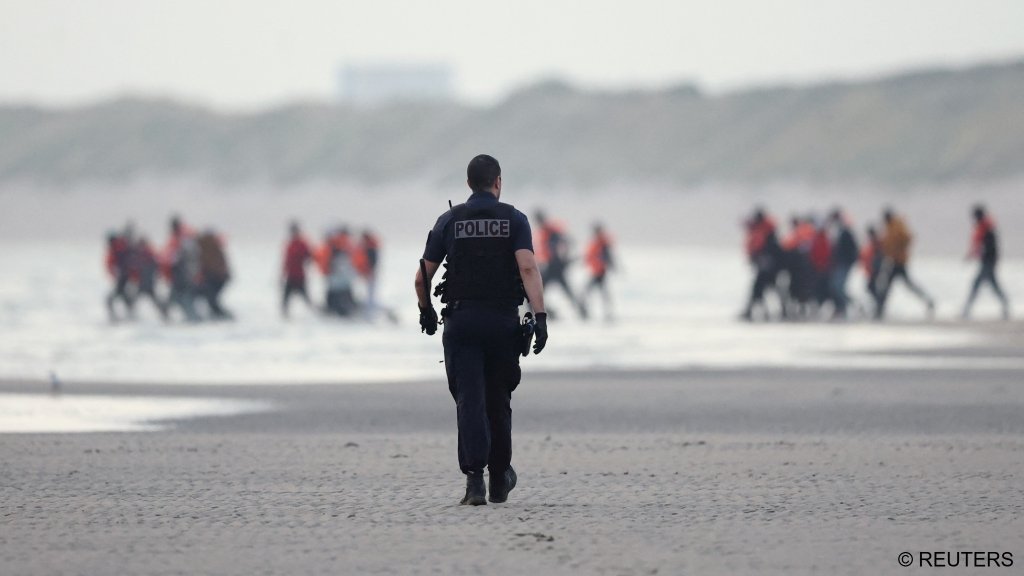
A spokesperson for the Maritime Prefecture told the French news agency Agence France Presse (AFP) that the idea was to move in before passengers began boarding the boats, to avoid endangering their lives.
Read AlsoUK: Inside Labour's most radical asylum overhaul in modern times
Changing tactics
Previously, boats would be hidden in the dunes around the beaches of Calais and Dunkirk and the migrants and smugglers would attempt to carry the vessel towards the sea, before boarding in shallow waters. But, as the authorities began to puncture the boats they found hidden in the dunes, the smuggling gangs appear to have evolved their methods, setting off to sea from beaches much farther south and then travelling up the coast.
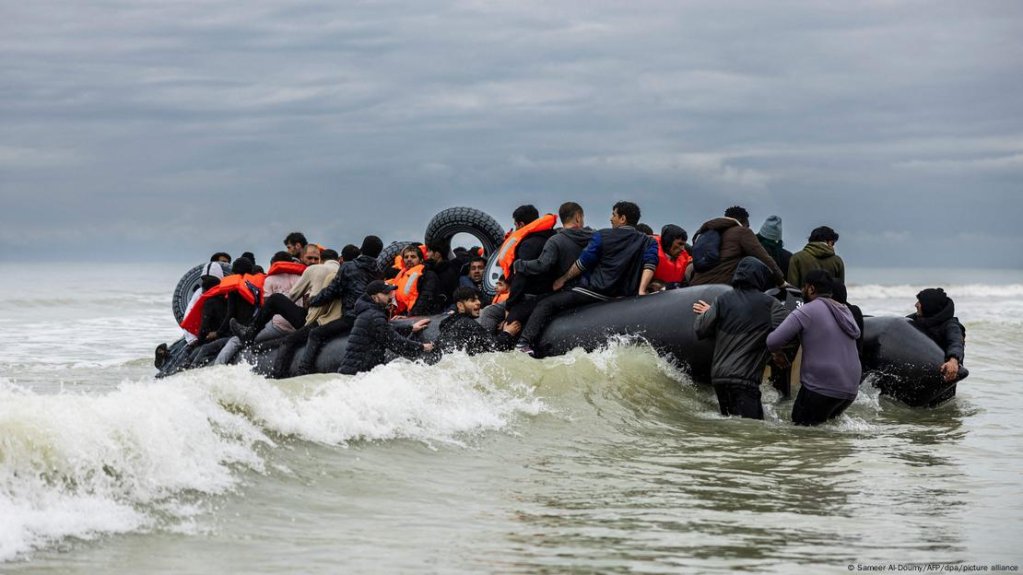
The migrants hoping to cross are then forced to board in much deeper waters, which has resulted in more deaths and panic, as they attempt to climb on board already crowded boats several meters out from the shore. The new departure points have also meant that sometimes migrants are staying in what are becoming known as "base camps" around Calais and Dunkirk, until they are given the signal by a smuggler to head to the dunes, where they might have to spend the night in the open but in hiding, before hoping to board the boat as it comes past the beach.
Some experts say they expect the tactics will evolve once more if the new measures are to be introduced, in order to try and evade controls still further.
Read Also'Injustice pursues me': Ibrahim A. goes on trial for English Channel shipwreck
Review of maritime rules
The new measures appear to be a result of UK Prime Minister Keir Starmer writing to French President Emmanuel Macron, reported the left-leaning British newspaper The Guardian. Although the number of people crossing the Channel in small boats accounts for about ten percent of the overall number of migrants who arrive in Britain each year, the growing numbers of arrivals have caused a political problem for the Labour government, which like its Conservative predecessors, had promised to do everything in its power to tackle the smugglers and stop the boats.
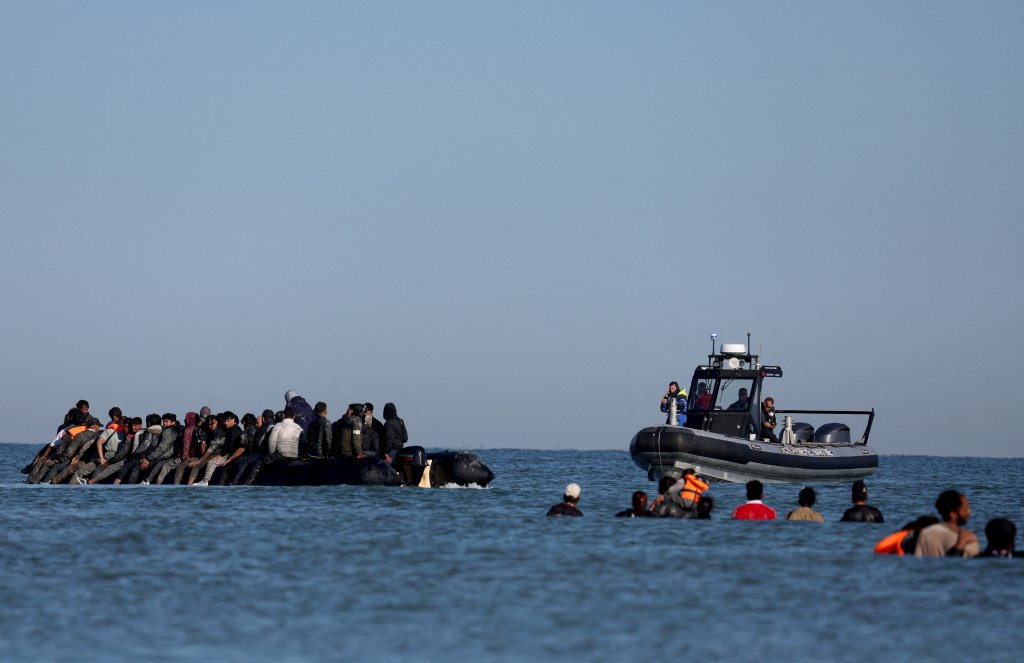
The French government already pledged in June this year to review its maritime rules to allow for more intervention in shallow waters. Last month, the UK Border Security Commander Martin Hewitt reportedly told MPs he found it was "frustrating" that this promised review appeared to be taking time to actually change any rules.
NGOs working with migrants and refugees in the UK are expected to launch a legal challenge to the new policy, saying these tactics could increase the dangers for migrants.
The French police were already filmed attempting certain interventions in shallow waters as migrants boarded boats just off the beaches, but those interventions were stopped in August amid complaints from NGOs and the French police union.
On Friday, it remained unclear whether French unions would approve the latest reported tactics, reported the Guardian.
Read AlsoOn the trail of migrant smugglers 1/3: The fall of Calais trafficker Idrees G.
Deaths in the Channel
Since the beginning of the year, at least 27 migrants have died attempting to cross the Channel, reported AFP, citing official French data. Most of those deaths have occurred near the beaches, with most people either drowning or being crushed on the overcrowded boats.
There have also been reports that French authorities were considering using nets to try and stop the boats, but PREMAR told Le Monde that “the use of nets to stop the small boats is not being considered at this stage.”
Since January 1, more than 39,000 migrants have successfully crossed the Channel to the UK. This is already more people than during the whole of 2022, but still fewer than in 2022, when a record number of 45,000 people crossed.
According to the Guardian, the new funding cycle, whereby the British pay the French to implement tougher policies towards the boats, is due to conclude in March 2026. The release of more British funds has so far "been contingent on Paris giving assurances of a tougher maritime security presence."
A legal challenge?
Care4Calais' Chief Executive Steve Smith, whose NGO has already brought legal challenges against several policy measures designed to stop migrants boarding boats, told the Guardian he believed that “this is a dangerous moment that will cost more lives. Intercepting boats whilst they are in the water has never been done before, because quite frankly, it puts people at risk.”
Smith added that he believed "the only way to stop Channel crossings is to create safe routes for people to claim asylum in the UK."
A spokesperson for the UK government told the Guardian that although they would not comment on whether or not the measure had come from a letter sent from Starmer to Macron, the two governments’ "close cooperation…continues and has prevented over 20,000 crossings this year. That close cooperation obviously includes our landmark ‘one in, one out’ scheme and, for the first time ever, we’ve secured agreement from the French to review their maritime response so their border enforcement teams can intervene on shallow waters."
Read AlsoWhat happens to migrants removed to France under the 'one-in, one-out' deal?
'Sharp fall' in net migration to the UK
Last week on Thursday, the UK Home Office confirmed it had sent back 153 migrants to France under the 'one in, one out' deal and that 134 people had arrived in Britain from France under the same scheme.

Last week, the UK’s Office for National Statistics revealed that there had been a "sharp fall" in net migration to Britain. In the year to June 2025, net migration stood at 204,000, representing a 69 percent decrease on the figure from the previous year, which was 649,000.
The main cause of the drop, reported the news agency Associated Press (AP), was largely due to fewer people from outside the European Union arriving in the UK for work or study, along with an increase in people moving out of the country.
Britain’s Home Secretary Shabana Mahmood welcomed the figures but declared the government needed to go even further "because the pace and scale of migration has placed immense pressure on local communities."
With AFP, dpa, AP
Read AlsoInvestigation examines why Channel crossings remain high despite punitive UK measures