
The Balkan Route is a major pathway into Europe for asylum seekers, including those fleeing wars in Syria and Iraq. Its use dates back to 2012, when the EU eased visa restrictions for several Balkan countries.
Officials from six Western Balkan nations met with European officials today in London on Wednesday (October 22), to discuss migration, security, and economic growth. Western Balkan countries that attended the talks include Albania, Bosnia, Kosovo, North Macedonia, Montenegro, and Serbia.
German Chancellor Friedrich Merz and European Union Foreign Affairs Chief Kaja Kallas were also present at the meeting.
While no longer a part of the European Union, the UK government under Prime Minister Keir Starmer has prioritized methods to reduce irregular migration via a myriad of measures that include an intention to set up 'return hubs,' bolstering security at border control touch points, and establishing local development and economic projects in areas where the migrants come from.
Sanctions and travel bans
Following the meeting, Starmer's government announced that he would be placing sanctions on Balkan gangs and financiers known to be working on people smuggling routes. The British government promised to apply a series of travel bans and asset freezes on these people.
The Foreign Office said they had a network known as the Krasniqui network and its leaders, describing this gang as a "Kosovo-based organized crime group, responsible for producing false documents and supplying them to criminal gangs."
The British government also announced that it would be sanctioning Nusret Seferovic, an alleged leader of a Croatian gang, accused of supplying false Croatian passports to Balkan gangs, to "facilitate entry into European countries," reported the French news agency Agence France Presse (AFP).
Finally, curbs were put on a network known as ALPA and the individuals known to be working within it. This gang, said the British government, is accused of procuring small boat components for peole-smuggling gangs.
During a state visit to Albania in May, Starmer announced his government's plans to draw up agreements with several third countries that could host return hubs for asylum seekers refused the right to stay in Britain.
In the case of Albania, which is designated as a safe country by the UK, Albanian nationals cannot seek asylum in the UK.
Breaking up criminal gangs
The UK is already working with North Macedonia, Montenegro, Serbia, Albania, Bosnia and Herzegovina, and Kosovo to dismantle smuggling networks and bring down the number of small boat arrivals across the Channel.
Some 22,000 people were reportedly smuggled by gangs along routes through the Western Balkans last year.
According to the UK authorities, the last three years saw a 95 percent reduction in Albanian small boat arrivals, while the number of Albanians returned to the country has also doubled in the past two years.
Official government data indicates that in 2022 Albanians were the top nationality detected arriving by small boat, with 12,658 arrivals, but have declined to only 626 small boat arrivals in the year ending March 2025.
The number of recorded detections at UK ports in the year ending March 2025 has also decreased by nearly 75 percent since 2018. The most common nationality in this category was Albanians.
Parallel to strengthening security forces in the region, the UK is also seeking countries willing to host 'return hubs' where rejected asylum-seekers could be held until they can be deported.
Read AlsoUK seeks to draw up agreements with third countries for return hubs
Albania and Montenegro reject return hubs
However, leaders of Albania and Montenegro have openly rejected the idea of establishing UK return hubs in their countries.
"When it comes to the hubs, or whatever they are called, I've said it, and I repeat -- never in Albania," Albanian Prime Minister Edi Rama said on Tuesday.
Under a deal that has been widely criticized, Albania already hosts migrant detention centers on behalf of Italy, where non-vulnerable people intercepted in international waters in the Mediterranean Sea are brought for the processing and evaluation of their asylum claim.
Since the Italian-Albanian scheme began though, very few migrants have actually been processed in these centers, let alone sent home from there.
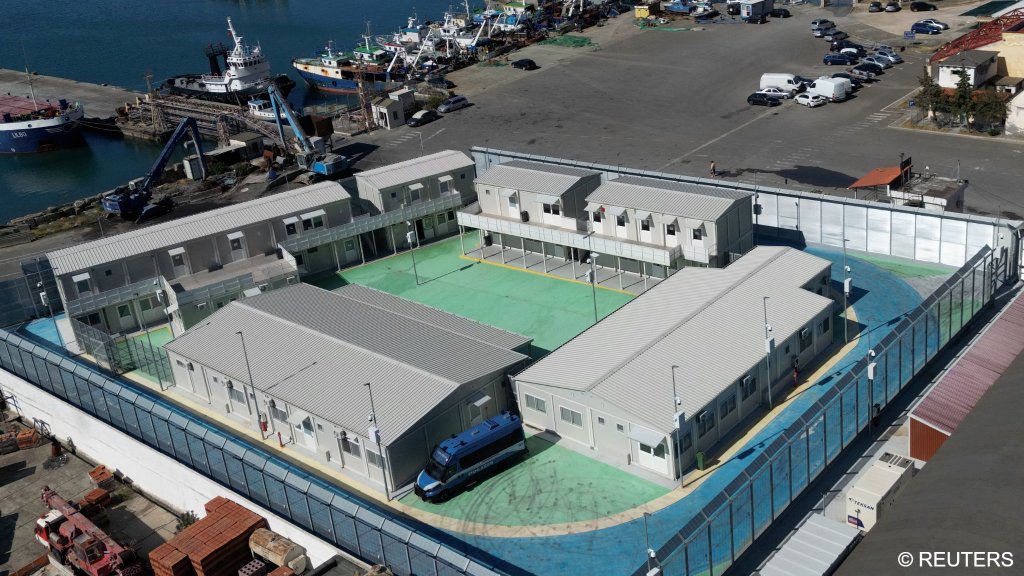
In July, NGOs forming the national asylum and immigration coalition (TAI) called for the immediate suspension of the deal. The TAI alleged that 132 people were taken from Italian migrant detention centers (known as CPRs) and transferred to Albania. TAI further claimed that the people were handcuffed with cable ties and in the majority of the cases, were not informed where they were being taken to.
Meanwhile, Milojko Spajic, Prime Minister of Montenegro, said he would possibly consider a return hub deal with the UK, if that country agreed to invest "10 billion euros into building railways.
According to Spajic, Montenegro is not part of the Balkan Route because its railway infrastructure is not developed enough.
Read AlsoReport finds Italy's migrant centers in Albania are 'costly and inefficient'
The Balkan route
The use of the Balkan Route, to access Western Europe to seek asylum can be traced back to 2012 when the European Union loosened visa restrictions on Balkan countries such as Albania, Bosnia and Herzegovina, Montenegro, Serbia, and the former Yugoslav Republic of Macedonia.
The Balkan Route is the path that usually begins in Turkey and makes its way through either Bulgaria or Greece. People, among them those escaping wars in Syria and Iraq, travel further north until they reach Slovenia or Hungary.
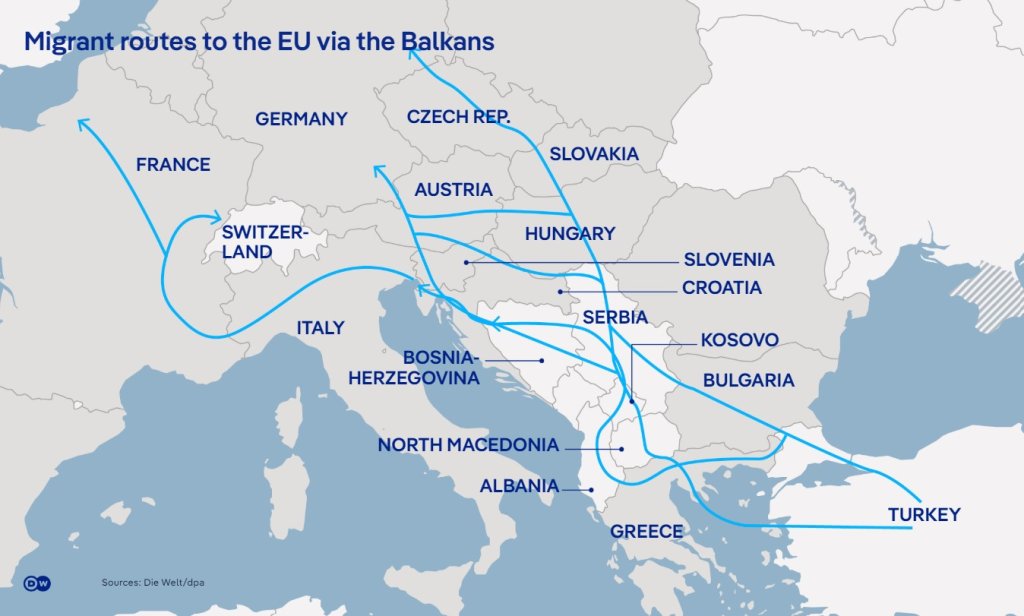
More recent reports show how the Balkan migration route has been taken over by criminal networks and smugglers. The closure of border camps, which had once offered transit shelter, has not stopped the migratory path in the Balkans. Rights groups have argued that the closure, together with increasingly restrictive EU border control policies, has transformed the route into a dangerous pathway of criminal activity.
The borderlands of Serbia, Bosnia, and Hungary are reportedly riddled with abductions, extortions, and other forms of abuse perpetrated by smugglers, who are often members of larger organized crime networks.
At the Berlin Process Foreign Ministers' Meeting in Belfast earlier this month, the Balkan Route was a key topic of discussion. The Berlin Process, launched in 2014 by former German Chancellor Angela Merkel, supports the Western Balkans’ efforts toward Euro-Atlantic integration and includes six aspiring EU members alongside several EU countries and institutions as sponsors.
Read AlsoBalkan Route: Migrants for ransom
This article was updated on Thursday, October 23 to reflect statements coming out of the summit regarding travel bans and asset freezes placed on alleged criminal gang members in the Western Balkans.