
Germany’s new government is reshaping migration policy with tougher asylum rules, renewed deportations, and the rollback of accelerated citizenship. Supporters call it a 'necessary correction,' while critics say it risks violating rights and worsening labor shortages.
Germany's Interior Minister Alexander Dobrindt announced a sharp u-turn in migration and asylum policy. In a week of heated parliamentary debate, Germany's lower house of parliament, the Bundestag, discussed both the implementation of the reform of the Common European Asylum System (CEAS) and the reversal of the fast-track citizenship route, which had been introduced under the previous government.
Dobrindt and the governing coalition of Christian Democrats (CDU/CSU) and Social Democrats (SPD) argue that these measures will restore control over migration amid public calls for a more conservative approach, while critics warn of humanitarian and economic costs.
Read AlsoGermany considers border checks a 'success' despite low rate of asylum rejections
Dobrindt: Returns cooperation with Afghanistan
Dobrindt told the Bundestag that Germany will resume deportations to Afghanistan, including using regular commercial flights.
Several officials from his ministry had recently held "technical talks" in Kabul with Afghan representatives, he explained, adding that these discussions were "well advanced."
The minister emphasized that Germany will regularly deport criminal offenders back to Afghanistan, signaling a tougher stance on removals after several years of deportation suspensions to the central Asian nation.
Dobrindt argued that Germany's tougher policy would also benefit neighboring EU countries and declared that the country was "no longer acting as a brake, but rather a driver of the migration turnaround in Europe."
Since 2021, Afghanistan has been ruled by the Islamist Taliban, which Germany does not recognize as the legitimate government of the country.

Read AlsoAfghanistan: Germany 'close to reaching deportation deal' with Taliban
Implementing the EU asylum reform
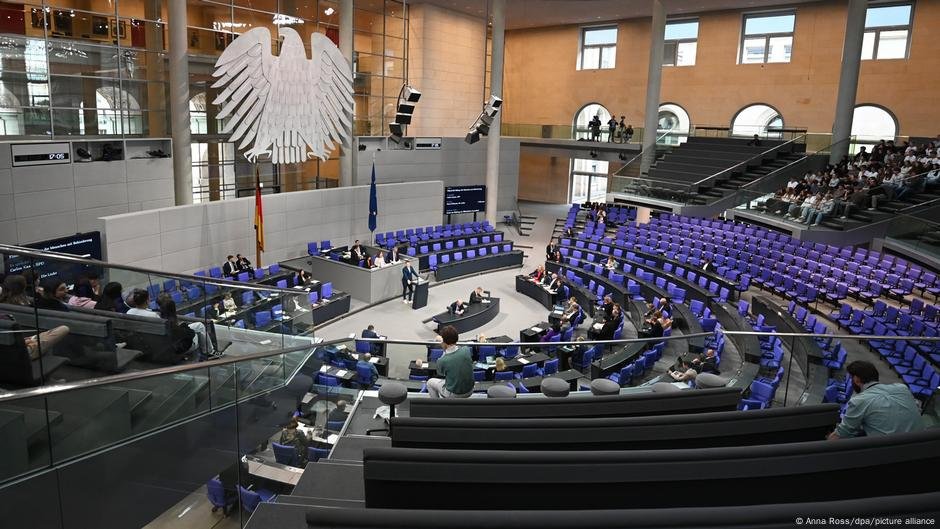
On Thursday, the Bundestag meanwhile also debated details on how Germany will adopt the CEAS reform into its national law.
The reform aims to better organize the entry of refugees and ensure a fairer distribution among EU states, but has also faced criticism from rights group for being too heavy-handed.
Under the new system, asylum applications from people with little chance of protection are to be decided directly at the EU's external borders; in Germany, this will mainly apply to airport procedures.
EU member states must implement the CEAS reform by mid-2026, but Dobrindt told the Bundestag that parts of Germany's legislation should take effect earlier.

Read AlsoGermany moves to implement EU asylum reform
Deportation, deportation, deportation
Dobrindt meanwhile also tabled a bill, which aims to create legal grounds for facilitate the deportation more refugees, whose cases fall under another EU state's responsibility as part of the so-called Dublin Regulation.
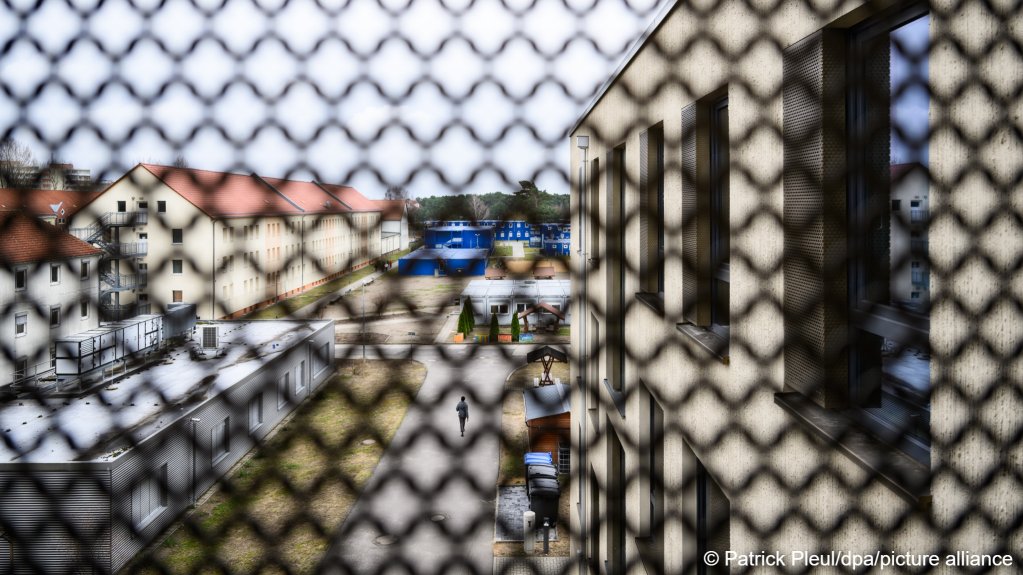
The bill would make it easier to house Dublin returnees in separate facilities in order to speed up transfers back to the EU states, which are responsible for their cases.
"There is no right to choose a country of one's own preference for the asylum procedure in Europe," Dobrindt told the Bundestag, adding that as part of Germany's change in course, asylum seekers who have already received protection elsewhere in the EU should be quickly returned to that country.
There are already such "Dublin centers" in operation in the German states of Brandenburg and Hamburg.
Dobrindt also mentioned plans for the introduction of "return hubs," or deportation centers, for rejected asylum applicants who cannot be sent back to their home countries but could be transferred to third countries near their region of origin.
Read AlsoGermany's Dublin centers cause 'mental stress' and anxiety, experts say
Criticism from opposition and civil society
The proposed measures sparked sharp criticism from opposition parties and human rights organizations.
Green MP Irene Mihalic accused the government of "abolishing humanity and solidarity" while warning that the coalition government was on "constitutionally shaky ground" with its "frontal assault on people seeking protection."
Her party colleague Lukas Benner said that the CDU/CSU and SPD were using every possible loophole to "add further tightening" as Germany embarks on implementing the EU asylum reforms.
Clara Bünger from Die Linke (The Left) party called the move a European "competition over who can propose the harshest laws against refugees," describing the government's course as an "authoritarian turn."
"You are detaining people, you are detaining children who have fled war, even though they have done nothing except apply for asylum," she told the Bundestag.
Refugee, human-rights, and child-protection groups -- including Pro Asyl, Amnesty International, and the German Children's Fund -- warned that these reforms could lead to families and children being held in at least partially closed centers, amounting to a new form of de-facto detention.
Germany's two major churches, the Catholic and Lutheran-Protestant churches, also criticized the plans, saying they could result in unduly restricting freedom rights.
Read AlsoGermany wants to deport migrants 'regularly and systematically'
Abolition of fast-track citizenship
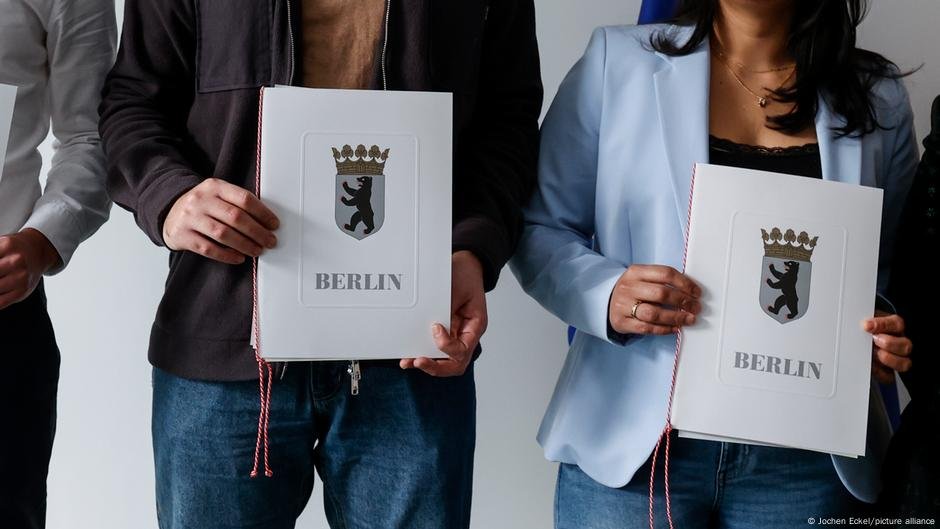
Earlier this week, lawmakers also considering abolished the fast track to citizenship in Germany, which had been introduced by the former government only last year.
Since early 2024, gaining German citizenship had been possible after five years of residence instead of eight, and -- in cases of special integration achievements such as outstanding school, work, or volunteer performance -- after only three years.
Dobrindt and the coalition scrapped the accelerated three-year option, referring to it a "pull factor" that could encourage further irregular migration.
According to research by German public broadcaster ZDF, only a very small number of naturalizations -- mostly in single or double-digit figures per state (and triple digits only in Berlin) -- occurred via this fast track path, representing less than one percent of all naturalizations in 2024.
Read AlsoBundestag nixes fast-track naturalization in Germany
Balancing control and human rights
Government migration commissioner Natalie Pawlik (SPD) defended the new legislation as an attempt to unite "humanity and order" in Germany's asylum policy while fulfilling the country's obligations in the EU.
She conceded, however, that parts of the law "go to the limits of what the Basic Law, the EU Charter of Fundamental Rights, and the Geneva Refugee Convention permit."
Her remarks highlight a widening legal and moral debate across Germany: Human-rights organizations and church groups warn that border-procedure detentions and secondary migration centers could lead to prolonged confinement of asylum seekers, including families with children.
They argue this risks undermining Germany's constitutional commitment to personal liberty and due process.
Supporters within the government coalition counter that the new framework is vital to restore credibility in asylum decisions and ensure fair responsibility-sharing within the EU.
Read AlsoGermany's Dublin centers cause 'mental stress' and anxiety, experts say
Economic pressure and labor shortages
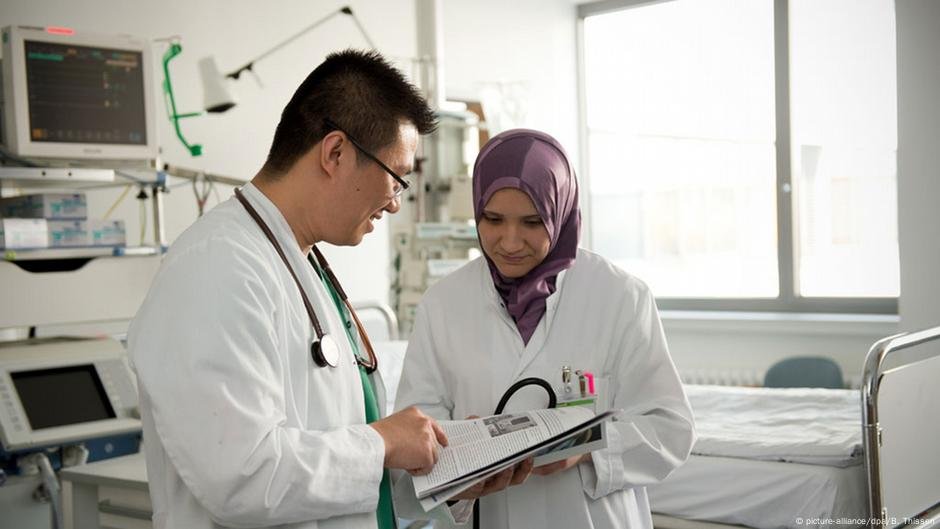
The reform debate comes amid slow growth and a severe shortage of skilled workers in Germany. The Institute for Employment Research (IAB) reports that roughly 45 percent of skilled-worker positions remain vacant in key industries such as healthcare, construction, logistics, and IT.
Economists estimate that Germany must attract 280,000 - 400,000 qualified migrants each year in order to stabilize its labor force in the long run.
Business associations warn that tougher citizenship and asylum rules could deter international professionals from choosing Germany, especially as competing countries around the world have been simplifying their immigration pathways at the same time.
The Federal Statistical Office projects that Germany's working-age population will decline by about five million people by 2035 without sustained immigration.
Yet integration outcomes from the 2015 – 2016 refugee cohort show that migration can strengthen the economy when managed effectively, as more than 60 percent of those immigrants are now employed.
Read AlsoWhy Germany struggles to attract African skilled workers
with dpa, epd, KNA