
Now in the third year of the war, a mounting regional crisis is unfolding in Sudan as millions of refugees face acute hunger, critical funding shortfalls, and rising desperation. UN agencies warn of soaring malnutrition and protection risks, with some Sudanese now attempting perilous journeys to Europe as aid collapses.
As the humanitarian fallout from Sudan’s conflict stretches into its third year, aid agencies are warning of a rapidly escalating regional food and nutrition crisis, with millions of Sudanese refugees facing acute hunger, soaring malnutrition, and worsening conditions across seven host countries.
The United Nations World Food Programme (WFP) said on Monday it is running out of funds to support Sudanese refugees across the region, forcing drastic cuts to food assistance. With more than 4 million people having fled Sudan since April 2023, WFP said its capacity to provide lifesaving food, cash, and nutrition support is reaching a breaking point.
"This is a full-blown regional crisis that’s playing out in countries that already have extreme levels of food insecurity and high levels of conflict," said Shaun Hughes, WFP’s Emergency Coordinator for the Sudan Regional Crisis. "Millions of people who have fled Sudan depend wholly on support from WFP, but without additional funding we will be forced to make further cuts to food assistance."
Read AlsoUNHCR estimates 2.5 million people need resettlement in 2026
Children especially affected by malnutrition
The crisis is particularly devastating for children, many of whom are already severely malnourished. According to the UN Refugee Agency (UNHCR), Sudan is now among the countries with the highest prevalence of global acute malnutrition, with alarming rates seen among new arrivals to neighboring countries.
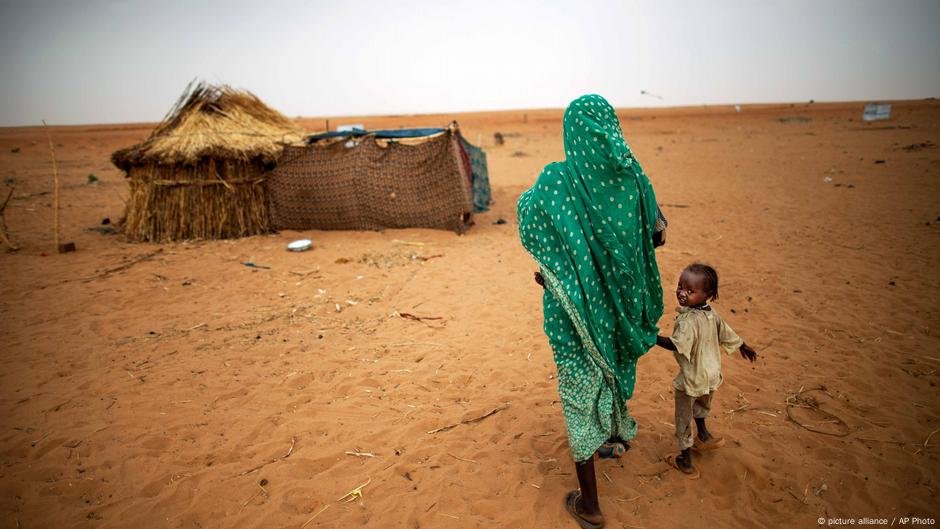
During a press briefing in Geneva this week, UNHCR spokesperson Babar Baloch stated that newly arrived children in places like Chad and Uganda, are already suffering from severe levels of malnutrition. "For instance in Chad, recent assessments show extremely worrying rates of malnutrition above emergency thresholds," said Baloch. Accoding to the refugee agency, among children aged 6-59 months, 11.2 percent are suffering from severe acute malnutrition and 30.5 percent are affected by moderate acute malnutrition, while 10.5 percent of pregnant and breastfeeding women are affected by moderate acute malnutrition.
Baloch said malnutrition levels in transit and refugee centers are also "critical," including in Uganda’s Kiryandongo settlement, the Central African Republic, and South Sudan’s Renk transit center. "Nearly a third of children screened in [Kiryandongo] are malnourished and in South Sudan’s Renk transit center, malnutrition rates among children under five have exceeded the 15 percent emergency threshold."
Read AlsoOver 2 million children displaced by Sudan conflict since 2023
European cuts deepen the crisis
WFP also warns of imminent aid cutoffs across multiple host countries.
European aid cuts -- driven by increased military spending and shifting political priorities -- are deepening the humanitarian crisis in Sudan and its region. With countries like Germany, France, and Italy slashing development budgets, key services for refugees and vulnerable populations are being rolled back.
NGOs warn that essential programs -- such as food aid, healthcare, and refugee support -- are being scaled back just as needs reach record levels. This funding shortfall threatens to widen the gap between emergency relief and long-term development, undermining stability and increasing the risk of further displacement, conflict, and irregular migration.
Aid organizations have also warned that cuts in aid will mean host countries willl struggle to cope with large groups of refugees and this could cause further friction between host and refugee populations, deepening the crisis still further, and pushing some to move on further, perhaps towards Libya and on to Europe in the search of safety and more support.
Sudanese in Libya
In an April 2025 press release, the UN refugee agency reported that over a 1,000 Sudanese refugees had reached or attempted to reach Europe in early 2025, citing growing desperation as aid dwindles.
The International Rescue Committee estimated that as many as 200,000 Sudanese have headed to Libya since the conflict began in 2023.
UNHCR spokesperson Olga Sarrado said that 484 Sudanese arrived in Europe in January and February, a 38 percent increase from the previous year, while around 937 others were intercepted at sea and returned to Libya -- more than double last year’s numbers. "As humanitarian aid crumbles and if the war does not abate, many more will have little choice than to join them," she warned. As of July 2025 this number has almost reached 2,000 according to the International Organization for Migration.
A number of Sudanese refugees attempt to reach safety in European countries, traveling northward through neighboring countries such as Chad, Libya, and Egypt, often facing exploitation and violence on this route. The Mediterranean Sea crossing, particularly from Libya to Italy or Malta, is among the world’s most hazardous migration paths, with many migrants facing interception, detention, or drowning.
Read AlsoEU urges Libya to combat Mediterranean migrant sea crossings
Protection and health risks mount
"Refugees from Sudan are fleeing for their lives and yet are being met with more hunger, despair, and limited resources on the other side of the border," Hughes at the WFP said. "Food assistance is a lifeline for vulnerable refugee families with nowhere else to turn."
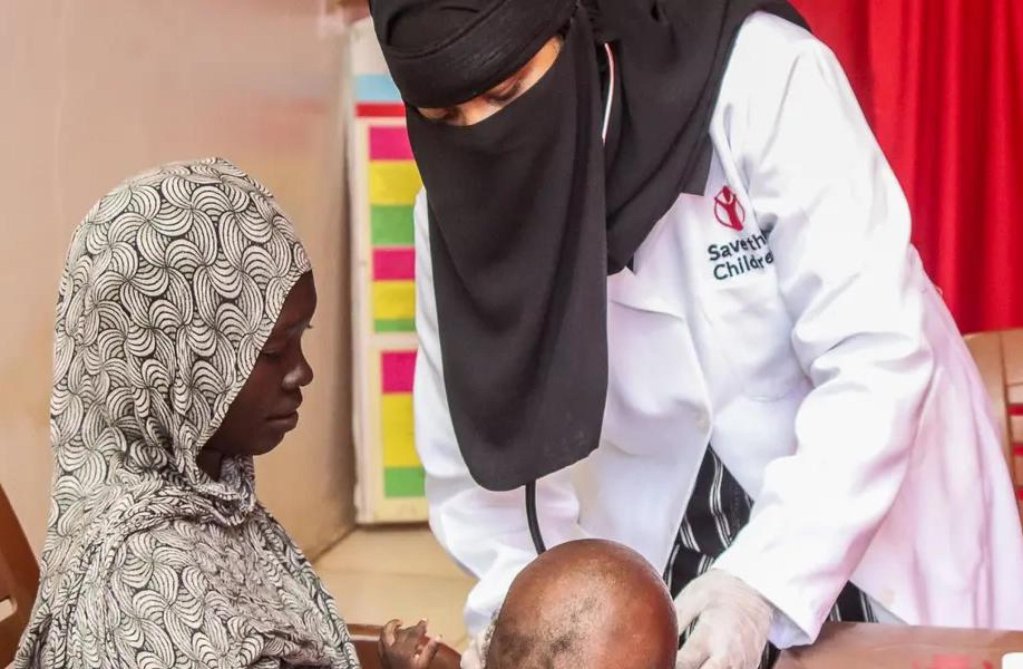
Baloch, from the UNHCR, warned the consequences of food insecurity go well beyond hunger. "This is not just a nutrition crisis -- it also bears grave protection concerns for millions of people who have fled Sudan, now the world’s largest and worst protection crisis," he said. "If people remain unable to meet their nutrition and dietary needs, there is a real risk that they will be forced to adapt negative coping mechanisms to survive. We are likely to see an increased risk of early marriage, school dropouts and child exploitation."
He added that disease outbreaks are also likely, as overstretched health systems collapse under the burden of increased needs. "There is also serious concern of increasing opportunistic diseases, particularly concerning as medical facilities, supplies and personnel are lacking. Social relations between refugees and their hosts also risk being significantly strained, increasing tensions and leading to potential conflict."
Read Also'A difficult decision': Why UNHCR ended food vouchers to migrants in Agadez
Funding shortfalls trigger service cuts
Funding gaps are at the heart of the problem according to aid agencies. The 2025 Regional Refugee Response Plan for the Sudan Situation is only 15 percent funded, leaving UNHCR and WFP to make devastating program cuts. According to Baloch, budget shortfalls have already led to "reduced food rations, reduced malnutrition screening and nutrition support, and limited medical follow-ups due to reduced community health workers."
"The impact of these cuts also means the loss of key nutrition experts and staff," he said. "UNHCR and partners have been forced to deprioritize nutrition surveys including in countries where Sudanese refugees are hosted, due to lack of funding as well as staff, given the extensive job cuts."
WFP has called on the international community to act urgently. The agency says it needs over 200 million US dollars to sustain emergency support for Sudanese refugees over the next six months, and another 575 million US dollars to provide life-saving assistance within Sudan itself.
"Ultimately, humanitarian support alone will not put an end to conflict and forced displacement," Hughes added. "Political and global diplomatic action is what’s urgently needed to end the fighting so that peace and stability can return."
Read AlsoRefugee numbers reach record high as global aid funding drops