
The lower house of the Dutch Parliament has passed a pair of bills significantly tightening asylum laws, after intense debate and concerns from lawmakers that the measures could criminalize aid to undocumented migrants.
The lower house of the Dutch Parliament has approved two controversial bills significantly tightening the country’s asylum laws. The legislation, spearheaded by far-right populist Geert Wilders and his Party for Freedom (PVV), passed after weeks of debate, coalition tensions, and last-minute amendments that sparked legal and ethical concerns.
The proposed laws reduce temporary asylum residence permits from five to three years, indefinitely suspend the issuance of new permits, and severely restrict family reunification for recognized refugees. In a move condemned by legal experts and humanitarian groups, the legislation also criminalizes living in the Netherlands without valid documents -- and, for the first time, makes it a criminal offense to assist undocumented migrants.

The vote took place late Thursday (July 3) during the final parliamentary session before the summer recess. Though the Second Chamber (lower house) approved the bills with backing from Wilders' former coalition partners, their fate in the First Chamber (upper house) remains uncertain. The Christian Democrats, once supporters of the reforms, withdrew backing over the last-minute amendment criminalizing aid to undocumented migrants -- a provision passed narrowly due to the absence of several lawmakers.
Read AlsoNetherlands starts processing Syrian asylum cases once more
Key provisions and impact
According to estimates from the Dutch Red Cross, between 23,000 and 58,000 migrants currently live in the country without legal status. Critics -- including asylum authorities, legal scholars, and refugee organizations -- warn the measures are legally questionable, practically unworkable, and risk criminalizing humanitarian assistance.
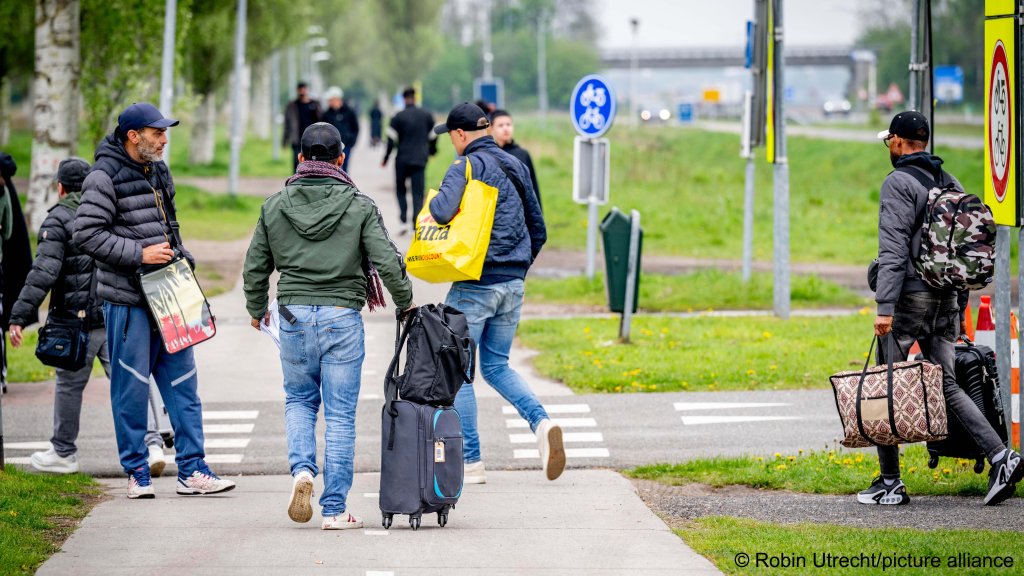
Under the new framework, asylum seekers will be categorized into two groups: collective protection cases (such as those fleeing war or natural disaster), and individual persecution cases (e.g. due to religion, political belief, or ethnicity). The duration of residence permits will be reduced to three years, and family reunification opportunities will be sharply curtailed.
Asylum seekers make up roughly 12 percent of annual migration to the Netherlands. In 2024, 32,000 asylum seekers and 10,000 family members entered the country. However, in the first three months of 2025, those numbers dropped by 50 percent. Similar declines have been observed across other European nations.
Read AlsoHeated debate over vigilante border checks on Dutch border with Germany
Snap elections to center on asylum reform
The asylum overhaul was a cornerstone of the now-collapsed four-party coalition, which included the PVV in government for the first time. That coalition unraveled in June -- after just 11 months -- amid disputes over how aggressively to pursue asylum restrictions. Wilders accused his partners of delay, while they claimed he engineered the collapse for political advantage.

The fallout triggered snap elections now scheduled for October 29, with migration expected to dominate the campaign. Polls show the PVV holding a narrow lead over a recently unified center-left alliance between Labour (PvdA) and the Greens (GroenLinks). The upper chamber’s verdict on the asylum bills -- and the public’s decision at the ballot box -- could shape Dutch immigration policy for years to come.
If the First Chamber rejects the bills, they will be sent back to the lower house for revision, further delaying Wilders' signature initiative, even as his party eyes potential electoral gains.
Despite being the strongest party in the Second Chamber, the PVV faces an uphill battle in the First Chamber, where the legislation will be debated this autumn.
Read AlsoDutch far-right leader Wilders launches campaign in Helmond amid protest against new asylum center
With AP and dpa