
The German government has passed its first law to limit migration numbers to the country. MPs signed off on a temporary suspension of family reunification for refugees, affecting those who have only limited subsidiary protection status in Germany.
The new law was passed with a considerable majority of 444 votes in favor and 135 against it, and effectively ends the prior practice of allowing up to 1,000 family members to enter Germany per month.
Members of Parliament belonging to the so-called grand coalition, comprised of Christian Democrats (CDU/CSU) and the Social Democrats (SPD), voted overwhelmingly in favor of the law. There were only two MPs from the SPD who opposed it.
MPs belonging to the far-right AfD also supported the motion alongside the two government coalition parties, however, referring to the law as only a "teeny tiny step in the right direction."
The Greens and the Left Party meanwhile voted unanimously against the law.
The suspension will be in place for two years, with the possibility of an extension.
Read Also'Fatal signal' – German opposition parties, NGOs decry end of government funding for sea rescue
Family reunification: 'a pull factor'
Federal Interior Minister Alexander Dobrindt said he hoped that this measure would help ease the burden on Germany's public welfare systems -- while also weakening criminal smuggling networks operating across Europe and beyond.
He stressed that the German social welfare system, education system, care system and housing market have their limits.
"That is why there must also be a limit to immigration to Germany, and we are setting this limit politically," he told MPs.
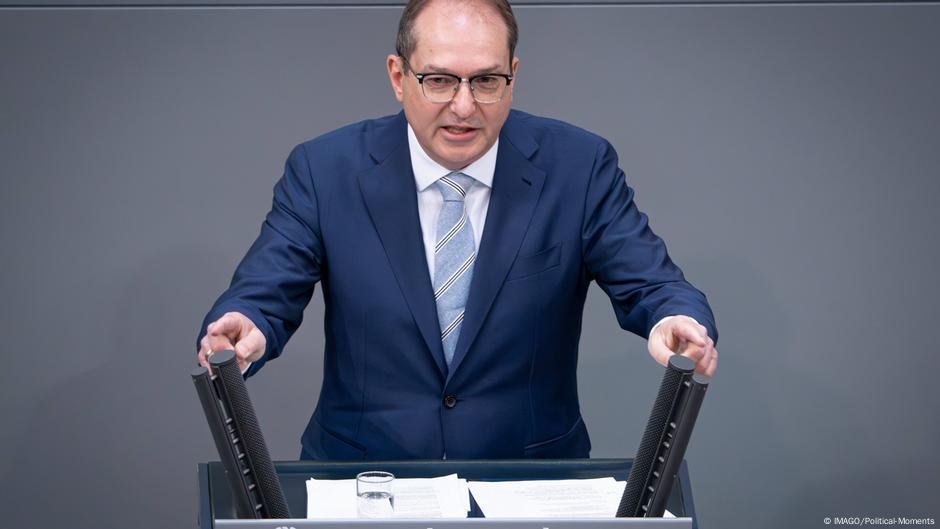
Dobrindt said that the previous immigration regulation of allowing family reunification had served as a "pull factor" that had attracted people to come to Germany.
If a migrant made it to Germany without receiving a full right to asylum, "then the whole family could join them," the minister added, highlighting that this had fed a "business model of criminal gangs" in the smuggling trade, which in his view would now be "smashed."
He added that "multitude of measures … must be taken so that we can also implement a full turnaround in migration [policy]."
Read AlsoGerman Cabinet approves stricter asylum measures
400,000 people affected — mostly Syrians
Since the onset of the so-called "refugee crisis" of 2015-2016, German authorities started making use of granting refugees a lower protection status, which in most instances was known as "subsidiary protection" with fewer rights and privileges.
This particular status was especially given to Syrian nationals, who for many years remained the single largest group of people coming to Germany seeking protection during the civil war in their country.
In short, people with subsidiary protection have not been fully recognized in Germany under the Geneva Refugee Convention or as eligible for asylum for any other reason, but are still allowed to stay for other reasons -- such as facing inhumane treatment if they were to return to their home country.
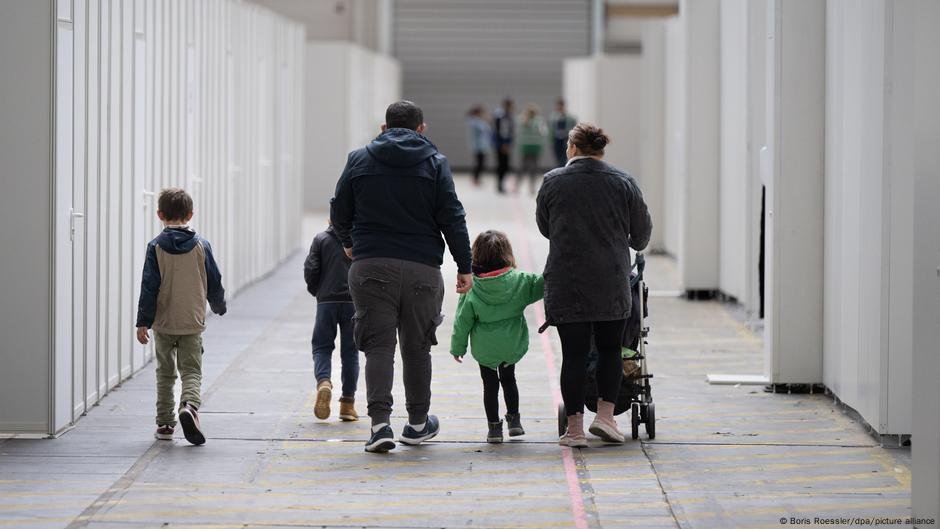
The new law now stops people under subsidiary protection from sending for their immediate family members and reuniting with them in Germany, affecting an estimated number of 400,000 people who before the law were entitled to send for their families.
Read AlsoWhat is the difference between refugee status and subsidiary protection?
Opposition parties criticize change in law
Many MPs meanwhile disagreed with Dobrindt's staunch stance against family reunification.
Some tried to interfere in his speech, with heckles being heard across the floor of the Bundestag, Germany's lower house of parliament.
One MP of the Left Party was given a warning for breaching parliamentary rules of conduct after interrupting Dobrindt's speech by shouting the word "lies" repeatedly.
Another Left Party MP, Clara Bünger, meanwhile took to the plenary to criticize the law.
Family reunification is "one of the last legal opportunities to find protection in Germany", said Bünger.
"Those who block this path are forcing families onto escape routes that are deadlier and more dangerous than ever."
Green MP Marcel Emmerich condemned the law as an "attack on what's at the heart of every society, and that's the family."
He said the law was "merciless" and meant prolonged suffering "for children who cannot see their parents."
Read Also'I want to be part of the change happening in my country' – Why Syrians are choosing to return
Notably, Germany's State Minister for Integration Natalie Pawlik, a member of the Social Democrats, stressed that many MPs from her parliamentary group had found it difficult to agree with signing off on the law, but had ultimately done so in order to keep the peace in the new coalition government.
She emphasized that the law at least still allows for exceptions in cases of hardship — for example when children need to send for their parents or if a serious illness was involved.
Read AlsoGermany to loosen rules regarding 'safe countries of origin' for migrants
Rights groups seek to take legal steps
Human rights activists and churches also criticized the law, with the refugee rights organization ProAsyl saying that the Bundestag had "deliberately imposed years of separation and suffering on thousands of people" by enacting the new law.
Pro Asyl also pointed out that some of those who now are affected had been waiting for years for their relatives to join them in Germany.
The refugee rights group said it would examine options of taking legal steps "and, if necessary, support those affected in taking legal action."
Read AlsoGermany: Church asylum requests rise as protection dwindles
With dpa, AFP, KNA