
In a response to the announcement of a judicial investigation, Italian Prime Minister Giorgia Meloni said that she will not be intimidated. Judges are looking into her government's decision to release a Libyan suspect wanted by the ICC.
Italian Prime Minister Giorgia Meloni is under judicial investigation for allegedly abetting a crime and embezzlement in relation to the release of a Libyan high-ranking prison official accused of suspected war crimes, news agency Reuters reported Tuesday (January 28).
In a video message posted on her Facebook page also on Tuesday (January 28), a defiant Meloni said that Francesco Le Voi, Rome’s Chief Prosecutor has placed her and three other officials under investigation for the release and repatriation to Libya of Osama Elmasry Njeem, also known as Osama al-masri Njeem, head of the Libyan judicial police and head of Tripoli's Mitiga detention center.
'I will not be intimidated'
"It is not possible to blackmail me, and I will not be intimidated," stated Meloni after explaining in some detail about the judge who issued the investigation and the reasons the Italian government decided to release the suspect.
According to Meloni, the suspect had been in three other EU states over a period of 12 days, before the arrest warrant was issued by the ICC "exactly at the moment when he arrived in Italy," she said with apparent heavy irony. The arrest warrant did not pass through the ministry first, and so, "in accordance to the protocol in past cases," explained Meloni, they had to release him.
Al-Masri was in fact arrested in Turin, northern Italy, during the early hours of Sunday (January 19) under a warrant issued by the International Criminal Court (ICC). Following the arrest, the suspect was held in custody to process the necessary paperwork for his arrest and transfer to the ICC. However, al-Masri was released two days later and flown back to Libya on an Italian state aircraft.
'Urgent security reasons'
Italy's Interior Minister Matteo Piantedosi, who has also received a similar notice of investigation, said Meloni in her video, defended Italy's decision to fly al-Masri back to Libya, saying he had been released for "urgent security reasons", the French news agency Agence France Presse (AFP) reported.
In her Facebook post, Meloni defended the release of al-Masri saying that it was the Court of Appeals in Rome and not her government who had invalidated the arrest. Further, Meloni said that she would request clarification from the ICC on why al-Masri had been arrested on Italian territory after he had, Meloni claimed, already “stayed approximately 12 days in three other European States.”
"I intend to continue to defend Italy especially when the safety of the nation is at stake, with my head held high and without fear," Meloni concluded.
International outrage
Al-Masri was appointed as director of the Reform and Rehabilitation Institution of the Judicial Police under the Ministry of Justice, Tripoli in 2021. In this position, he oversaw the management of several prisons including the Mitaga prison in Tripoli.
In a statement, human rights watchdog Amnesty International said that they have long documented "horrific violations committed with total impunity" in Mitiga prison in Tripoli which included torture unlawful killings, and enforced disappearances. According to the rights group, these suspected crimes are considered serious human rights violations under international law.
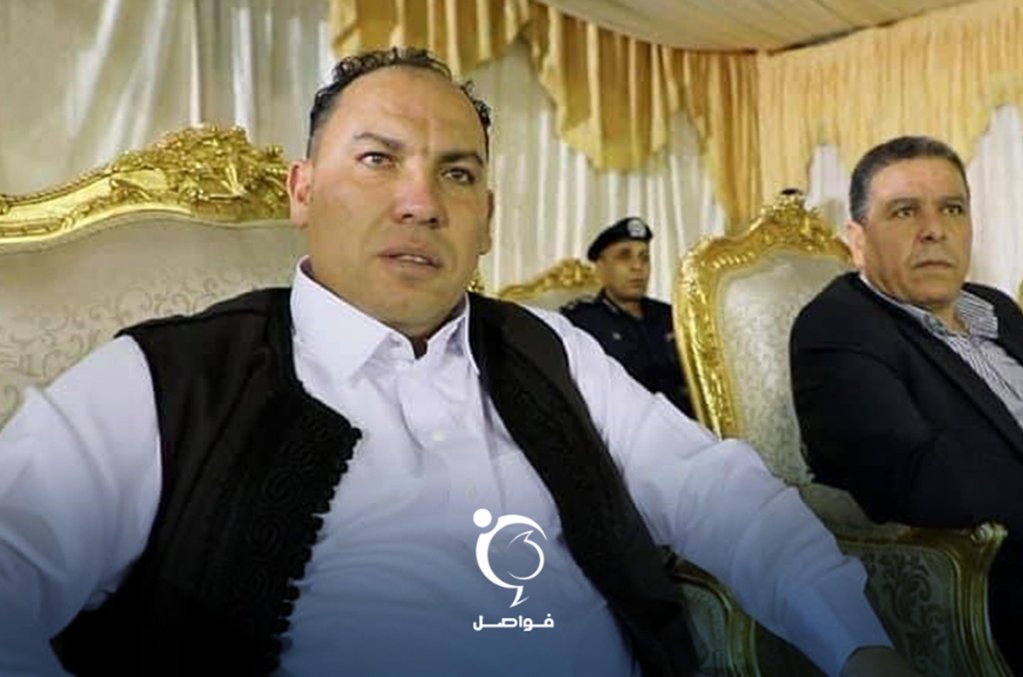
Amnesty International further condemned Libyan authorities for appearing to condone those suspected of these crimes including al-Masri by lavishing them "with high-ranking positions and state salaries, emboldening them to commit further abuses and entrenching impunity."
The complicity of the Libyan State has reduced the possibility of domestic redress and accountability leaving interventions such as prosecution through the ICC as one of the few avenues for justice.
The release of al-Masri was met with international outrage. The International Federation for Human Rights (FIDH), a global organization of human rights NGOs, condemned what it called "egregious non-cooperation" from Italy.
Struggling with non-compliance
"(This)...not only obstructs the ICC’s ability to hold perpetrators accountable, it also denies thousands of Libyan victims access to justice," said the FIDH in a statement.
The FIDH called on Italy to issue an immediate explanation for its release of al-Masri and its failure to surrender him to the court and further urged the ICC to consider filing a motion against Italy for non-compliance to its legal obligations as a signatory of the Rome Statute.
The Hague-based ICC has been struggling with the non-compliance of state parties to execute arrest warrants. The ICC has reportedly issued warrants for over 30 people around the world suspected of violations of international law. The ICC depends on state parties to the Rome Statute to carry out arrest warrants and surrender suspects to the court in order for trials to proceed.
Relations that extend beyond borders
Libya and Italy are divided by the Mediterranean Sea which separates Europe from Africa. Both bilaterally and on behalf of the EU, Italy has brokered deals with various Libyan governments over the years.
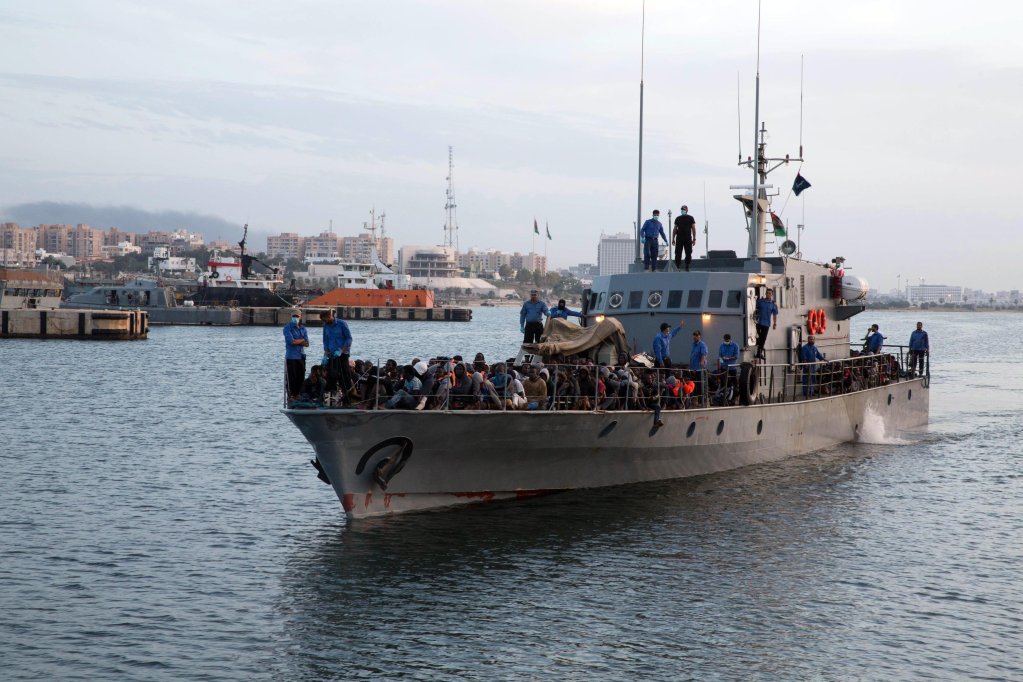
The various deals have provided a framework for millions of euros of funding, training and hardware for the Libyan coast guard to carry out maritime patrols. The Libyan coast guard and other patrols operating in the area regularly return migrants to Libya. Agreements between the two nations extend beyond border control.
According to the Libyan Observer, Libya was Italy's largest crude oil supplier in the first seven months of 2024. Italy reportedly imported 7.39 million tons of Libyan crude, representing 22.3 percent of its total oil imports.
The Libyan Observer said these types of trade movements highlighted Libya's role as a critical energy partner for Italy despite ongoing political instability within the North African nation. Other key suppliers of crude oil to Italy included Nigeria, Ghana, and Cameroon.
Last year, the Italian Minister of Enterprises and Made in Italy Adolfo Urso penned agreements with his Libyan counterpart to strengthen economic and industrial cooperation initiatives in the sectors of energy and green technology.
At the time, Urso said that Italy and Libya are a natural bridge between Europe and Africa.