
European interior ministers have discussed the possibility of introducing deportation hubs, or "return centers" at a meeting in Luxembourg. The bloc is keen to increase its deportation rate in line with tougher migration policies.
The idea of creating centers outside of Europe’s borders to process potential asylum seekers and facilitate returns is outlined in the EU's migration and asylum pact, to be introduced by 2026.
Meeting in Luxembourg on Thursday (October 10), interior ministers from the 27-member bloc debated ways to increase the deportation of migrants and rejected asylum seekers, the AFP news agency reported.
Many governments in the bloc are pushing for stricter migration policies. Some countries have even drafted a letter calling for tightened controls from the European Commission. The ministers are considering new ways to tighten asylum and migration rules against the background of a broader shift in the European parliament and the executive against irregular immigration.
Read AlsoHow Europe's far right is changing EU asylum policy
'Return hub concept'
A spokesperson in Brussels said ministers would be exploring "the feasibility of innovative solutions in the field of returns, notably the return hub concept," reported AFP.
France’s new Interior Minister Bruno Retailleau, who has already spoken strongly on this issue, told the press, "we must not rule out any solution a priori."
The idea is also favored by Hungarian Prime Minister Viktor Orban. Speaking in Strasbourg on Wednesday, he once again praised the idea of keeping migrants outside the external borders of Europe, or creating "hotspots" outside EU territory to verify the asylum rights of migrants before letting them enter the bloc.
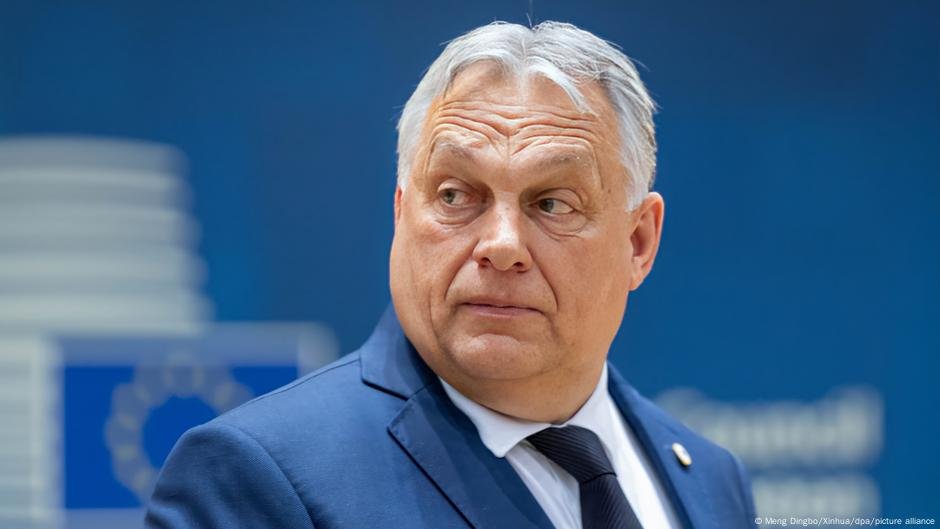
Orban said that without this kind of approach, it would be almost impossible to remove most migrants from the EU.
Accused by the European Commission president of letting convicted people smugglers out of prison earlier and "throwing the problem at your neighbor’s door," Orban declared, "Hungary has saved Europe from these people smugglers."
The speech was to present his priorities for the revolving EU presidency, which is currently held by Hungary.
Read AlsoDeportation pressure undermines refugee job integration, warns Bavarian Refugee Council
'Pressure on accelerating deportations'
Jacob Kirekegaard, an analyst at the Brussels-based think tank Bruegel, said there was a "pressure on accelerating deportations" across the EU. He told AFP that more and more governments, even left and centrist governments, were being asked to show how they would deal with migrants who had been rejected from Europe "in one way or another."
In Germany, the government has restarted deportations to Afghanistan. The first flight took off in August, with more planned. It is also talking about sending back rejected asylum seekers and convicted criminals to Syria, since a German court declared that there were now some parts of the country that could be considered "safe."
Earlier this year, soon after the details of the new pact were made public, InfoMigrants asked the European Commission for details about how many "hubs" might be set up, where they might be situated, or how much they might cost, but no answer was given.
Third party hosts for hubs?
AFP also confirmed that no detailed plans for the hubs have been published. However, an unnamed diplomatic source told AFP that one option could entail asking EU membership candidates, such as Montenegro, to host such centers.
But plans for third-country processing of asylum seekers, such as the UK's Rwanda plan and the agreement between Italy and Albania, have given rise to legal and moral concerns.
A second unnamed diplomatic source told AFP that legal and fundamental rights assessments would be needed "to verify the feasibility of any such project."
Read AlsoEU presents plan to roll out new migration pact
Only 20 percent leave
EU countries increasingly focused on the issue of expelling foreign nationals who have been ordered to quit the territory frequently cite the number of those who have "escaped" deportation. According to Eurostat, across the EU, around 500,000 people every year are ordered to leave. Under 20 percent actually leave, figures show.

Italy has a growing population of migrants who have not been issued with any sort of protection or residency permit, but cannot be returned to their country of origin, for a range of reasons. As they unable to access health care, or to work or rent – except informally – these people are vulnerable to exploitation.
Negotiations with receiving countries
For many European countries, returns are difficult and costly to execute. A successful repatriation also requires the cooperation of the receiving country.
As no European country has direct, formal contact with Afghanistan, Germany’s deportation flight in August was brokered via Qatar.
Returns to Syria and Mali, from which – after Afghanistan – most undocumented migrants enter Europe according to the European border agency Frontex, are also nearly impossible.
Austria and the Netherlands have proposed making the process simpler by introducing a sanctioning system for migrants or rejected asylum seekers who are required to leave. Under the proposal, those failing to leave would be detained, making it easier to deport them.
Speaking in Brussels, German Interior Minister Nancy Faeser said the returns system in Europe needs reform and must go hand in hand with "possible agreements" with third countries.
Read AlsoThe new EU Asylum and Migration Pact -- questions answered
Returns 'the weakest link' in migration policy
Her Belgian counterpart Nicole de Moor appeared to agree, saying that returns were "the weakest link" in Europe’s migration policy.

However, according to Sophie Pornschlegel from the Jacques Delors think tank in Brussels, much of the political rhetoric concerning returns is based on a belief among politicians that they need to counter the rhetoric coming from much of the far right and populist parties, which make migration one of the main electoral issues.
Pornschlegel points out that irregular border crossings actually fell by 39 percent in the first eight months of 2024 compared with the same period last year. AFP reports, she also noted that, according to the European Union Agency for Asylum, asylum applications were down by a third in May compared with a peak reached last autumn.