
In Hamburg, a 29-year-old Afghan was deported from church asylum on Monday. Both the Catholic and Protestant churches have criticized the latest breach of church asylum, and Hamburg factions of the Left and Green parties also condemned the action.
According to the Archdiocese, a 29-year-old Afghan had been granted church asylum in a parish in Hamburg in August. However on Monday morning (September 30), in a breach of church asylum, he was deported and transferred by plane to Sweden according to the Ministry of the Interior.
The Catholic Archdiocese had stated that the parish of St. Elisabeth had taken the man in for humanitarian reasons because he was seriously ill. Church communities try to prevent deportations in exceptional hardship cases by granting asylum within their premises.
Church asylum in Germany is rooted in a longstanding tradition rather than a formal legal principle. It is based on an agreement between state authorities and religious institutions to provide temporary sanctuary to individuals facing deportation. Typically, church asylum is granted for a limited duration and is applied in cases involving particularly vulnerable individuals who are at immediate risk of deportation.
In the past, authorities did not intervene in church asylum cases. However, in recent years, there have been increasing instances of church asylum being breached and attempted clearances and tensions between the church and authorities have risen.
Almost a decade in exile
The Archdiocese reported that the Afghan man had been seeking protection for almost 10 years. According to the Ministry of the Interior, he initially lived with family members in Sweden since leaving Afghanistan in 2015. He applied for asylum in Sweden, but it was denied. As a result, he then traveled to Germany in March of this year.
The Federal Office for Migration and Refugees (BAMF) rejected his asylum request in Germany as inadmissible. Under the Dublin III Regulation, asylum applications and the reasons for fleeing must be examined in the responsible Member State, which is the first safe country of entry -- in this case, Sweden.
To avoid his deportation to Sweden, he sought church asylum at the parish in early August and due to his serious illness, the parish took him in for humanitarian reasons. The Archdiocese of Hamburg then submitted a dossier for the examination of individual hardship by the BAMF.
However, after an intensive review of the dossier, this was also denied, according to the spokesman for the Hamburg Ministry of the Interior, Daniel Schaefer. And Hamburg authorities were obligated to organize the return transfer following the BAMF's decision.
Following the incident, Catholic Archbishop Stefan Heße expressed his concerns: "A refugee who was in an extremely difficult situation was deported. The anticipated humanitarian hardships, which the Catholic parish had highlighted, were not taken into account."
The German paper Hamburger Abendblatt reported that according to Schaefer, the operation proceeded calmly and cooperatively. It was the first time someone had been deported from church asylum in Hamburg.
Read Also
More and more refugees seek protection in churches
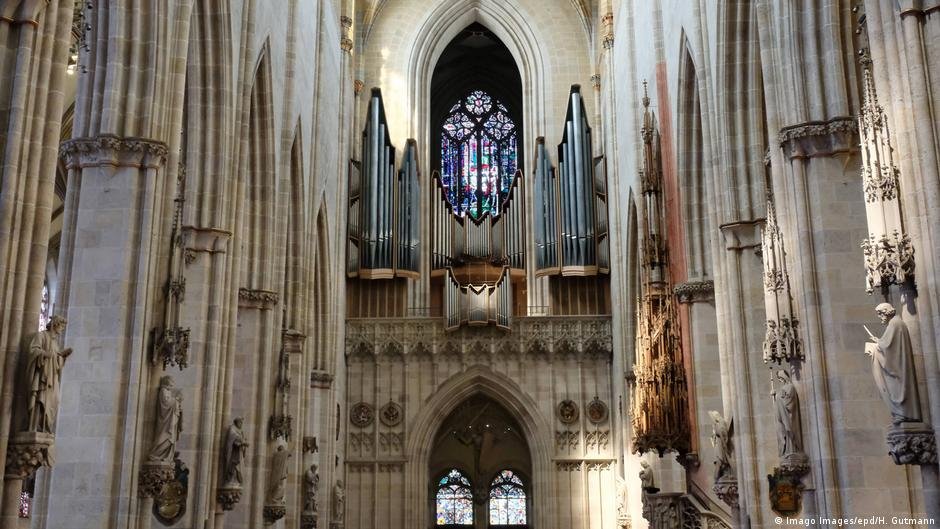
Church asylum as a last resort
The Green Party politician Lamya Kaddor criticized the deportation of an Afghan from church asylum in Hamburg. The church asylum had been repeatedly violated, said the Green Party's spokesperson for interior and religious policy in the Bundestag on Tuesday in Berlin.
Church asylum has a centuries-old tradition and often represents the only protection for those in need, she added: "It is a disturbing development that this sanctuary is no longer respected by the state," Kaddor said.
In church asylum, communities or orders take in asylum seekers when they believe deportation would pose a threat to the individual's life or safety. The practice is based on an agreement between the BAMF and the churches.
The practice is based on a closely coordinated procedure between churches and state authorities, through which only selected individual cases are admitted into church asylum. In each case, the parish must submit a dossier outlining the specific reasons for granting asylum, and the BAMF then re-examines the case based on this submission.
Hamburg Archbishop Heße stated: "Church asylum is a last resort to avert unacceptable humanitarian hardships. It is about finding a responsible solution in cooperation with state authorities in individual cases." In this sense, church asylum also serves the rule of law. "It is all the more important that the authorities respect the tradition of church asylum."
Read AlsoValidity of church asylum in Germany questioned following deportation of family
Tensions between churches and state
Over the last few years, there has been a significant decline in church asylum cases, with authorities increasingly rejecting such dossiers presented by churches. There has even been a crackdown on clergy who seek to protect refugees on their premises, a practice which is technically unlawful but has been traditionally tolerated by authorities. Recently, authorities have repeatedly intervened in church asylum cases across the country.
Hamburg Bishop Fehrs said the recent deportation worried her. In recent weeks, state authorities had repeatedly violated church asylum across the country. She stated: "As churches, we will continue to work together to ensure that church asylum remains a last refuge in the context of humane asylum practices."
Archbishop Heße expressed deep concern over the breach of church asylum noting that when a parish grants church asylum, it does not make the decision lightly. Every eviction from church asylum represents a significant burden for all parties involved, he said.
Michael Gwosdz, spokesperson for refugee and religious policy for the Green Party, said: "Against this backdrop, the breach of church asylum is completely incomprehensible."
Carola Ensslen, spokesperson for refugee policy for the Left Party faction, stated: "There should be no deportations from church asylum!" Both expected Hamburg's Interior Senator Andy Grote (SPD) to ensure that church asylum is respected in Hamburg.
Read AlsoChurch asylum: A case of deportation and its aftermath for a Syrian asylum seeker
With epd and KNA