
Authorities in Croatia reported a nearly 40 percent increase in arrests for smuggling, with 1,430 individuals detained this year. Meanwhile, the interception of irregular migrants has dropped by 60 percent to just under 22,000.
The Croatian interior ministry announced that it had arrested 1,430 people for smuggling so far this year -- nearly 40 percent more compared to the same period in 2023.
While it did not disclose the nationality of those arrested, officials explained earlier this year that 80 percent of all smugglers were foreign nationals, coming mostly from Bosnia, Romania, Ukraine and Serbia.
However, it is unclear whether this increase in smuggler arrests is in any way related to changing trends among migrants and refugees, such as more people making use of such smuggling rings rather than trying to cross the highly fortified border into Croatia on their own.
Authorities meanwhile also highlighted that they had intercepted just shy of 22,000 irregular migrants thus far in the year, marking a 60 percent drop compared to the same period last year.
According to the AFP news agency, the majority of people hoping to enter the EU member state at present come from Syria, Turkey and Afghanistan.
Also read: Croatia accused of new mass expulsions of migrants to Bosnia
Gateway to the EU
Croatia is a major transit country for migrants as part of the so-called "Balkan Route" into the EU and has been at the forefront of fighting smugglers who facilitate irregular migration pathways for the past decade.
According to the EU's border agency, Frontex, there were almost a total of 100,000 people taking the Balkan route in 2023 alone.
Croatia, which has been an EU member state for more than ten years now, also joined Europe's Schengen Area -- where there is free movement without border checks -- at the start of 2023. Since then, the country has had to significantly increase its border checks and surveillance, as any person who enters the country via irregular routes can lodge an asylum claim there, making Croatia responsible for the processing of that claim.
Also read: Croatia's president labels immigration as nation's top challenge
Though few refugees and migrants regard Croatia as a destination country in the EU, they can easily be referred back to Croatia from any other EU member state under the so-called Dublin agreement, which stipulates that the country of first entry into the EU should be in charge of processing asylum requests.
Due to beefed-up border controls, people fleeing conflicts in the Middle East and Central Asia often get stuck just outside the fortified borders into Croatia for months or even years while hoping to somehow enter the European Union eventually.
Trouble along Bosnia-Croatia border
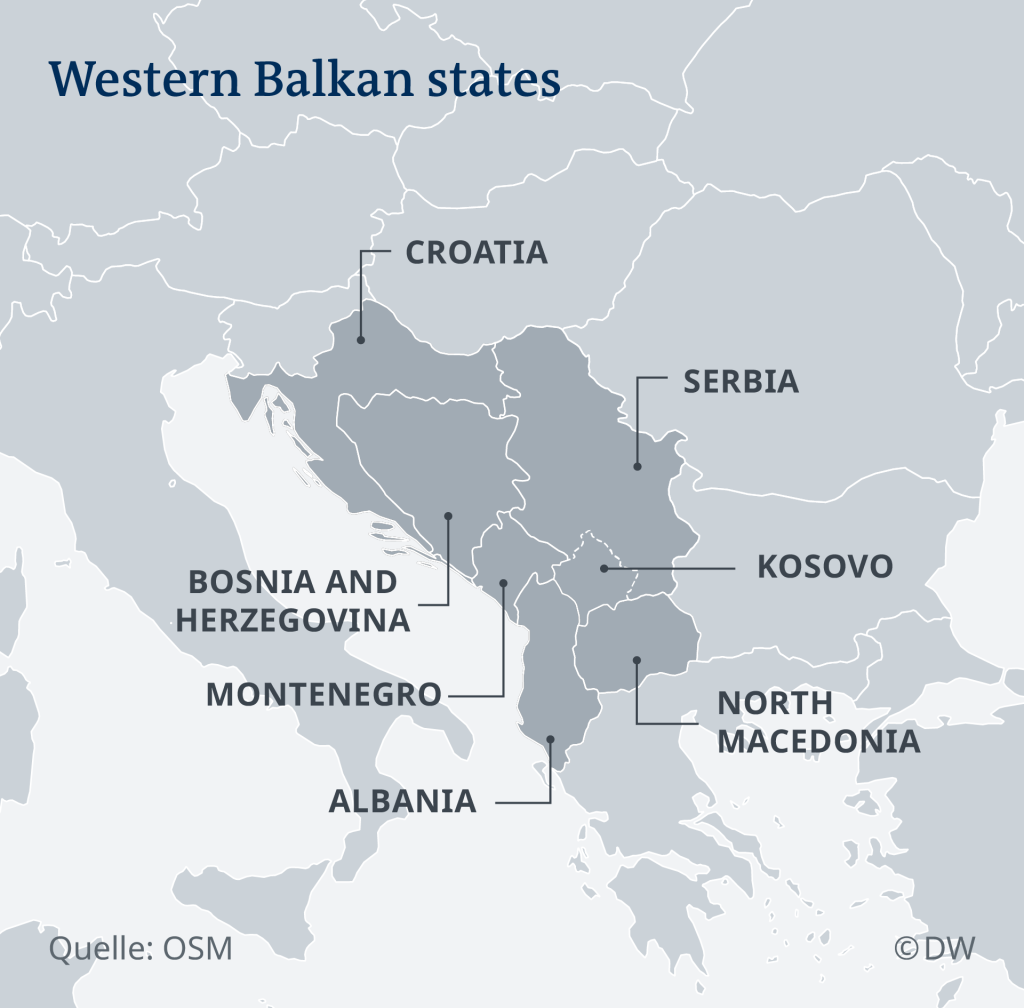
Croatia borders the non-EU states of Montenegro, Serbia, and Bosnia and Herzegovina, all of which also are located on the so-called Balkan Route.
The vast majority of attempted unauthorized entries into Croatia take place along the border with neighboring Bosnia, according to the interior ministry.
Bosnia's director of Foreigners' Affairs, Zarko Laketa, told AFP that the smuggling gangs that facilitate these crossings are typically run by other armed migrants, especially from Afghanistan.
"Unfortunately, armed groups are cropping up to manage migrant smuggling and illegal border crossings to favor the continuation of their journey towards Croatia and other countries of the European Union," he told the ANSA news agency last week.
The two former Yugoslav republics share a border of 932 kilometers with each other -- the second longest external border of the EU.

Also read: Bosnia: More migrants taking the Balkan route once again
Deadly car chase in Serbia
Earlier in the week, authorities in Serbia also arrested two people smugglers following a vehicle chase, which are not uncommon between police and smugglers in this region.
They retrieved the body of a dead migrant afterwards. Other migrants who allegedly were in the vehicle at the time, fled the scene, prosecutors told journalists.
Also read: EU agency finds 'widespread rights violations' at borders
with AFP, ANSA