
The EU has said it will allocate 14 million euros from its European Regional Development Fund to the Canary Islands region to assist in hosting migrants. The measure will be part of a joint operation in the region launched with Europe’s border agency Frontex.
The Canary Islands archipelago in the Atlantic Ocean is one of the regions in Europe that has seen an increase in the number of migrant arrivals this year. Between the beginning of 2024 and September 15, more than 26,813 migrants reached the Canaries, according to UNHCR. The total arrivals across all Spanish territories numbered 38,302 in that time period, making the Canary Islands the most popular route for arrivals in Spain.
On Wednesday, (September 18) the European Union announced that it intends to allocate 14 million euros to help host the migrant arrivals.
The money is part of the European Regional Development Fund (ERDF) and will be part of a joint operation in the region launched with Europe’s border agency Frontex. It follows an earlier payment of 20 million euros made to the region in March this year.
Margaritis Schinas, Vice President of the European Commission, visited the Canary Islands on Wednesday and met with the region’s president Fernando Clavijo. Schinas said the scheme was aimed at "strengthening the safeguarding of our external border through the Canary Islands," reported Europe’s broadcaster Euronews.
Also read: Ongoing migrant arrivals further strain capacities on the Canary Islands
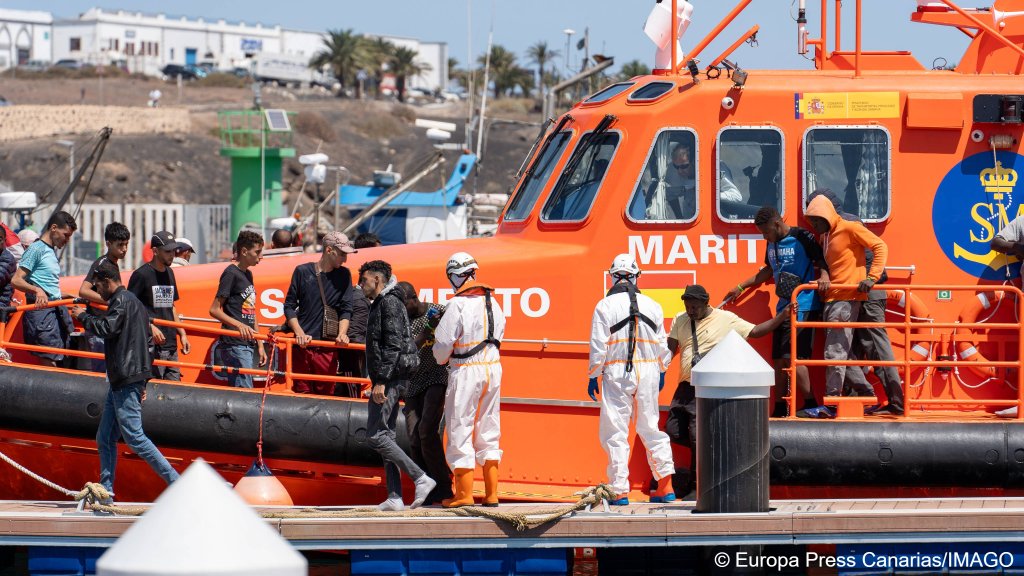
641 migrants rescued on Wednesday
The announcement comes as just over a thousand migrants arrived on the Canary Islands in two days. A total of 364 migrants on board six different boats were assisted by rescue services on Thursday, reported the regional news outlet Canarias 7.
On Wednesday, While Schinas was on the islands, the Spanish news agency EFE reported that the Spanish maritime rescue service Salvamento Marítimo had rescued 641 migrants who had arrived in 15 different boats. Some of the boats were spotted off Gran Canaria, others off El Hierro, and still more off Tenerife.
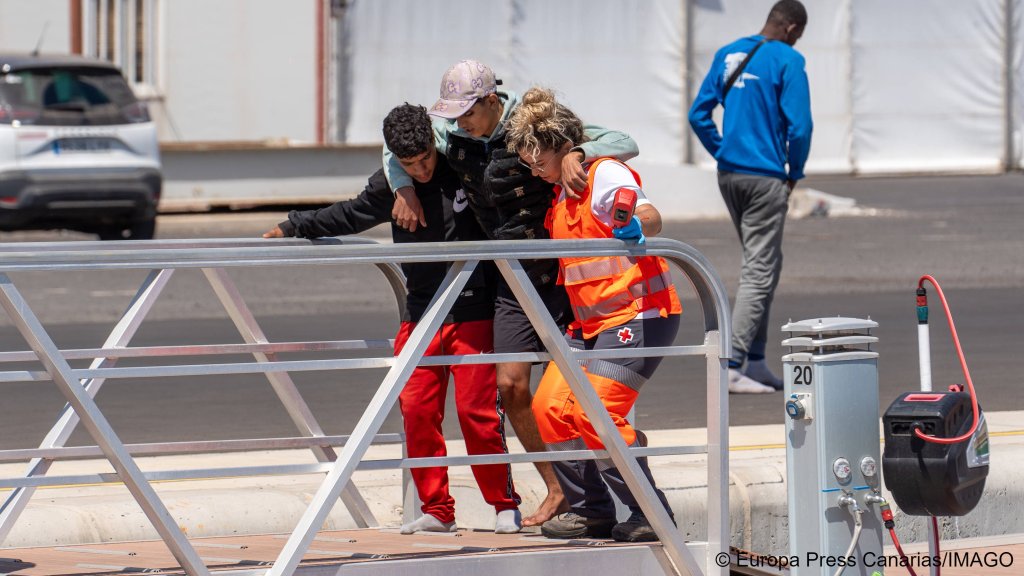
The arrivals included at least 40 women and around 15 minors, but EFE suggested these numbers would "probably increase" once more information came in.
On the island of Lanzarote alone, 451 people arrived. The first rescue operation started late on Tuesday night. The first boat to be spotted contained around 40 people of Moroccan or North African origin, about 30 men, eight women and two children.
Later on, around 222 people were rescued from four different boats by Salvamento Marítimo. The majority of the occupants of these boats came from sub-Sahara Africa, reported EFE. On board one boat, there were 70 people, on another 51, on a third around 50 and on the fourth also 51.
On the same day, the rescue services were busy around the island of El Hierro. There, Salvamento Marítimo picked up 72 people, including 61 men, six women and five minors. Later, another boat was spotted with around 57 people on board, including three women and four minors.
Back on Lanzarote, another rubber boat arrived in the early hours of Wednesday morning, with 73 people on board, including four women, one of whom is pregnant and a child. Later on Wednesday, three more rescues took place, one off Gran Canaria, with 76 people on board, another off El Hierro with 60 people on board, and a third off Lanzarote.
Also read: Migration trends, rise in migration to Canaries, declines to Italy
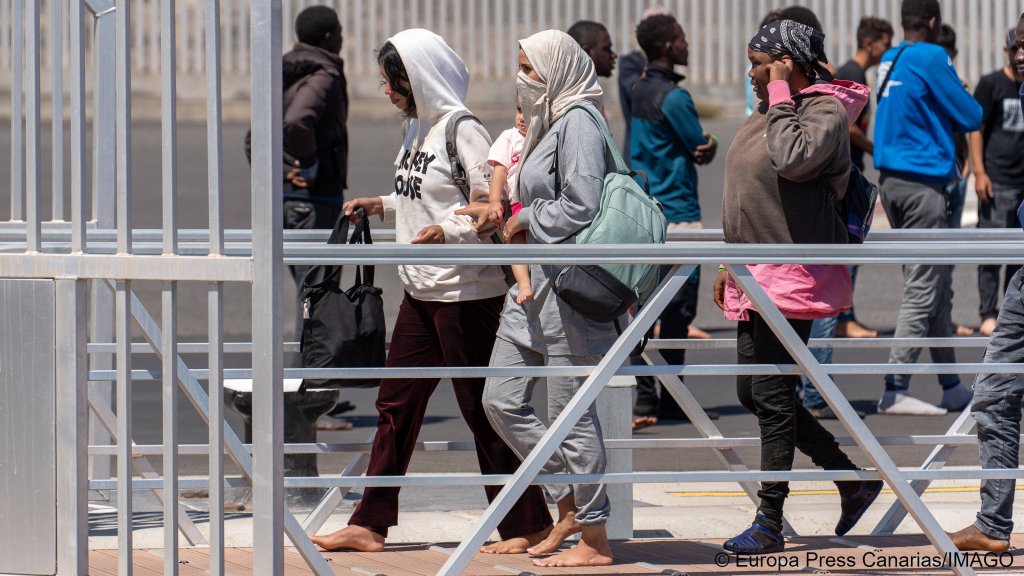
'Intensifying cooperation with countries of origin'
In a statement from the Canary Islands government on Wednesday, Clavijo said that Spain would be working with the European Asylum Agency and hoping to "intensify its cooperation with countries of origin," as well as rolling out the European pact on migration and asylum.
Politicians on the Canary Islands like Clavijo have been stressing their case to the Spanish government in Madrid all year, saying that they are facing "enormous pressures" trying to accommodate the number of arrivals.
Schinas said that the payment was designed to show that the "Canary Islands are not alone" in dealing with the situation. Clavijo, in his press statement, replied that he felt the EU had shown "great kindness and sensitivity and compromise towards the Canary Islands, in fact more than they had received from the Spanish government."
The number of unaccompanied children arriving on the Canary Islands has also risen this year. Schinas said that some of the funds would be used to support "those who arrive in a situation of greater vulnerability, such as children."
Also read: Spain and Mauritania announce cooperation on migration
Unaccompanied minors
Many of the unaccompanied minors who arrive are transferred to the Spanish mainland. They have the right to stay in institutions and to schooling in Spain, but often young people will leave the homes they have been allocated and slip out of the system. Their need to make money to support their families and pay back the travel debts that brought them to Spain loom greater for them than staying in some form of protection offered by the Spanish state.
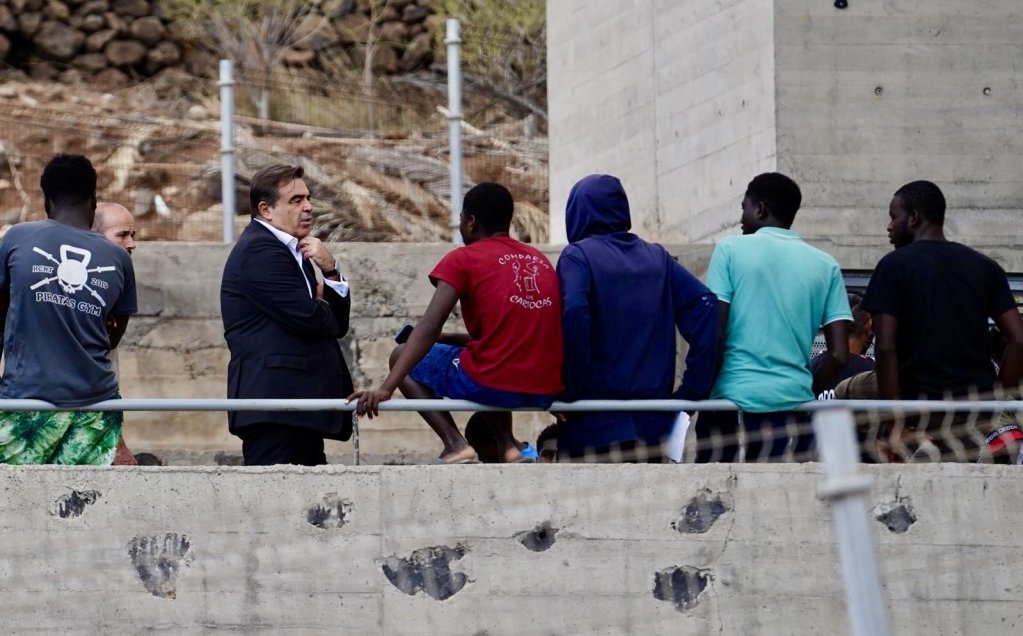
In order to cope with the arrivals, temporary reception centers have been set up on the islands of Tenerife and El Hierro. Schinas is due to visit the centers during his stay on the island.
In a press release, the Canary Islands administration thanked the EU for the funds, underlining that they wanted to make sure that all those who arrived were treated "with dignity."
Also read: Spain's defense ministry provides two sites for unaccompanied minors
Schinas: What happens in Canaries affects 'all of Europe'
For his part, Schinas also underlined that the EU intended to intensify Frontex operations in the area, so that they could better protect Europe’s external borders. Spain has already signed agreements with some countries in West Africa, like Mauritania and Senegal. Schinas underlined that those agreements, to allow returns and heighten border controls would be "strengthened" in order to prevent "the trafficking of persons." Schinas also mentioned that more "legal migration pathways" should be offered.
In his speech in Spanish, Schinas underlined that what happened in the Canary Islands, in terms of migration, would affect "all of Europe," and reasoned that that is why the region needed European support.
Schinas posted pictures to his X page, showing him talking to some young migrants in Tenerife. He concluded that "addressing migration challenges in the Canary Islands requires a collective response with full cooperation and synergies at the European, national and regional levels."
With EFE
Also read: Spain's circular migration policy explained