
A van fleeing police in Croatia crashed near the Bosnia-Herzegovina border, injuring 14 people, including young children, in a suspected human trafficking operation. The incident highlights the dangers of migration routes through the Western Balkans into the EU.
Fourteen people were injured in Croatia while fleeing police when their van crashed into a streetlamp near the Bosnia-Herzegovina border, the Swiss news outlet 20 Minuten reported on Monday (September 9).
The passengers were said to be Syrian nationals. Seven children, some reportedly as young as five years old, were among those injured and taken to the hospital. Authorities are investigating what is suspected to be a human trafficking operation to transport the passengers into Western Europe.
The police, on guard for irregular entry to Croatia, stopped the van, which had Swiss plates, at around 3 am. The van was also stopped for overloading, but the driver sped up. The driver is reported to have been arrested.
Photos of the crash posted on the news portal 20 Minuten show a mangled black vehicle, crumpled to nearly half its size.
The owner of the Swiss car garage where the van was rented expressed shock over the incident. The owner alleged that the eight-seater vehicle was rented by a couple who said they were going to use it for a weekend holiday with their family.
West Balkans: Route and transit hub
The West Balkans route passes through Albania, Bosnia and Herzegovina, Kosovo, Montenegro, North Macedonia, and Serbia. Surrounded by European Union states, the West Balkans serve as a key transit hub for migrants from the Middle East, Asia, and Africa heading to the EU.
The route commonly referred to as the "Balkan Route," mainly used by migrants from Syria and Afghanistan heading to Western Europe, passes through Bosnia-Herzegovina and Croatia.
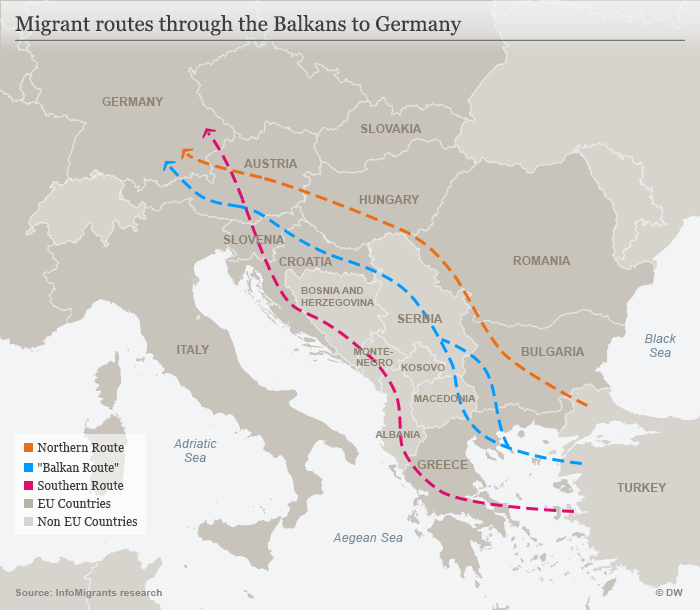
According to data by the EU border agency Frontex, the Central Mediterranean, Western Balkan, and Eastern Mediterranean were the top three migratory routes, with Syrian, Afghan, and Tunisian migrants being the most frequently reported nationalities.
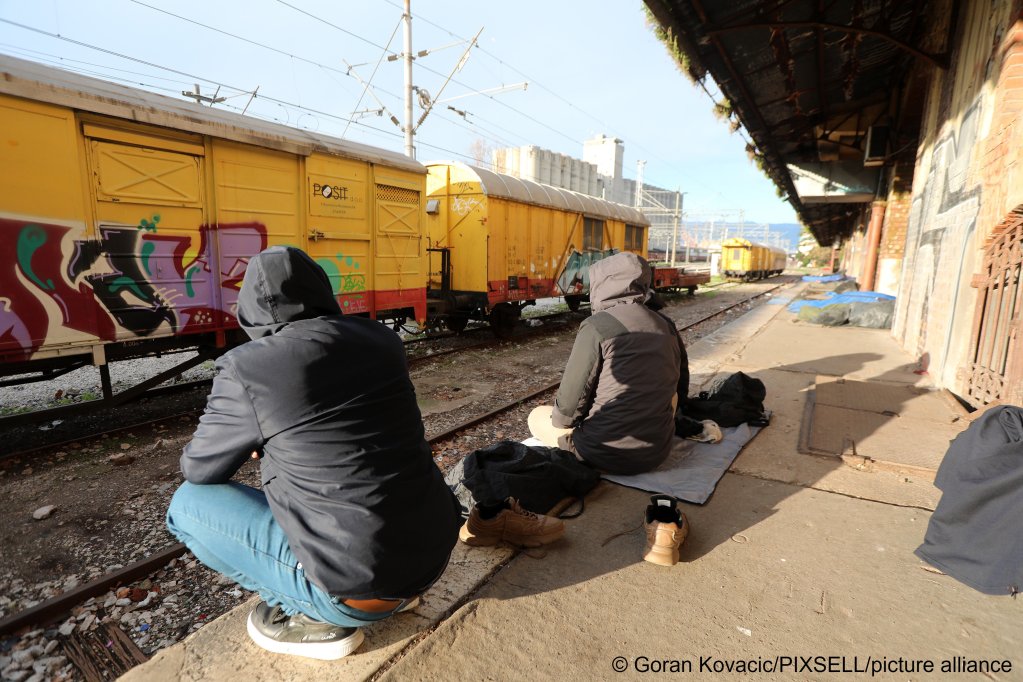
However, Frontex noted a dip in arrivals in the Western Balkan route from 144,197 in 2022 to 99,068 in 2023, or about a 31 percent drop.
This has led to the closure of some migrant reception centers along the route, a move contested by rights groups who argue it will push people toward equally dangerous alternatives.
Last month, InfoMigrants reported that No Name Kitchen, a rights group, noted a rise in vehicular accidents involving irregular migrants in Serbia.
Rights organizations in Serbia have identified at least four crashes linked to car chases in the past year, the British newspaper The Guardian reported. In addition, a Guardian search of Hungarian media since June 2021 found 20 more cases involving migrants, where police chase or attempts to evade police preceded the accidents.
The International Organization for Migration (IOM), which records the number of people who die in the process of migration through their Missing Migrants Project, told InfoMigrants that of all 1,209 deaths on other routes to and within Europe -- except the Mediterranean Route--documented since 2014, the majority (563) are due to vehicle accidents and hazardous transport.
"In the absence of regular migration pathways, migrants continue to rely on hazardous methods employed by smugglers whose business model prioritizes profit over migrants' safety," said Jorge Galindo, the Communications Officer at IOM's Global Data Institute in Berlin.
Also read: Serbia: Criticism over government closure of refugee shelters along Balkan Route
Shifting policies, shifting migration patterns
International migration consultant Charles Autheman suggests that policy changes will shift migration patterns. Citing the increase in Nepalese nationals entering Portugal, he noted that Portugal’s new policy allowing migrant workers to regularize their status upon entry has contributed to this rise.
Some people reportedly paid over 10,000 euros and even walked from Croatia through Slovenia and Italy to reach Portugal.
He noted that migrants often use various travel methods to enter Europe, combining air travel with land travel and sometimes, even getting by on foot.
"People are not irregular. But they find themselves in an irregular administrative situation that pushes them to precarious living and precarious traveling," said Autheman.
Also read: Why are Nepalese shunning Gulf and Asia to work in the EU?
Update: We updated this article on September 11, 2024, to include a statement from the International Organization for Migration.
Correction: We updated this article on September 18, 2024. An earlier version said that the International Organization for Migration recorded 1,209 deaths on other routes to and within Europe since 2014 and that the majority (563) are due to vehicle accidents and hazardous transport. This number refers to all routes except the Mediterranean Route.