
The conservative opposition party is calling for the rejection of asylum seekers at the border and declaring a national emergency to do so. The move follows a knife attack last month by a rejected Syrian asylum seeker who had been slated for deportation.
Germany's coalition government has unveiled a new bill to expedite deportations and curb knife crime following a deadly stabbing in Solingen last month, German news agency dpa reported on Saturday (September 7).
The new package of measures, announced at the end of August, includes faster deportations, reduced benefits for asylum seekers, expanded police powers, as well as tighter rules on public knife carrying. Justice Minister Marco Buschmann said a draft bill is now ready for parliamentary review and could be discussed next week.
"We are providing more protection against Islamist terror, stricter deportations of violent offenders, bans on knives and facial recognition of criminals," Interior Minister Nancy Faeser, told dpa.

However, the conservative Christian Democrats Union (CDU) opposition argues that the new measures may be insufficient and is calling for stricter asylum limits. According to a statement on their website, CDU chairperson Friedrich Merz is calling for a halt to the admission of asylum seekers from countries such as Syria and Afghanistan and implementing consistent deportations there. In addition, anyone who travels from Germany to their home country as a refugee must immediately lose all protected status in Germany.
A meeting with the coalition parties and federal state leaders to discuss the measures of the bill is scheduled for Tuesday. Dpa reported that Merz will only continue negotiations if undocumented migrants are immediately turned away at Germany's borders.
Also read: Germany to tighten asylum laws after Solingen attack – what are the measures?
Unconstitutional
Rights group Pro Asyl warned against politicking bickering and said that the political leaders in the democratic center must not enter into a competition to outdo the right-wing extremists and nationalists.
"Refugees often seek protection from the very Islamist violence we encountered in Solingen. And we demand that action be taken against terrorists with all the means available under the rule of law," a spokesperson for Pro Asyl told InfoMigrants in an email.
The rights group called Merz's proposal unconstitutional and incompatible with EU law as well as deeply inhumane.
"It is intolerable to place those seeking protection from Afghanistan and Syria under general suspicion. Over 1.3 million refugees from these two countries of origin live in Germany. An assassin who presumably killed on behalf of IS (Islamic State) cannot and must not discredit these people. Instead, politicians should now support the structures in our country that have been campaigning against extremism of all kinds for years," said the Pro Asyl spokesperson.
Also read: Can Germany stop accepting Syrian and Afghan refugees?
Declaring a national emergency, if necessary
German asylum law includes border rejection rules but is overridden by European Union law, specifically the Dublin Regulation which dictates that asylum seekers at the German border must be transferred to the responsible EU state defined as the EU country first entered by an asylum seeker for their asylum process, not simply turned away. If an asylum seeker lodges a claim in a second EU country, he is to be sent back to the first one.
The procedure, which takes about five months and requires court approval, ensures that asylum seekers are not left in limbo between countries. If a person seeking international protection is already registered elsewhere in the EU, Germany must still follow the Dublin rules for their return. Only those who have not sought asylum in another EU country can be turned away at the border.
German media reported that after a meeting with German Chancellor Olaf Schloz last month, Merz called for stricter enforcement of the Dublin Regulation and suggested declaring a state of national emergency, if necessary, to ensure the stricter implementation of the regulation as national law would supersede EU legislation.
Also read: The Dublin Regulation – your questions answered
After Solingen attack
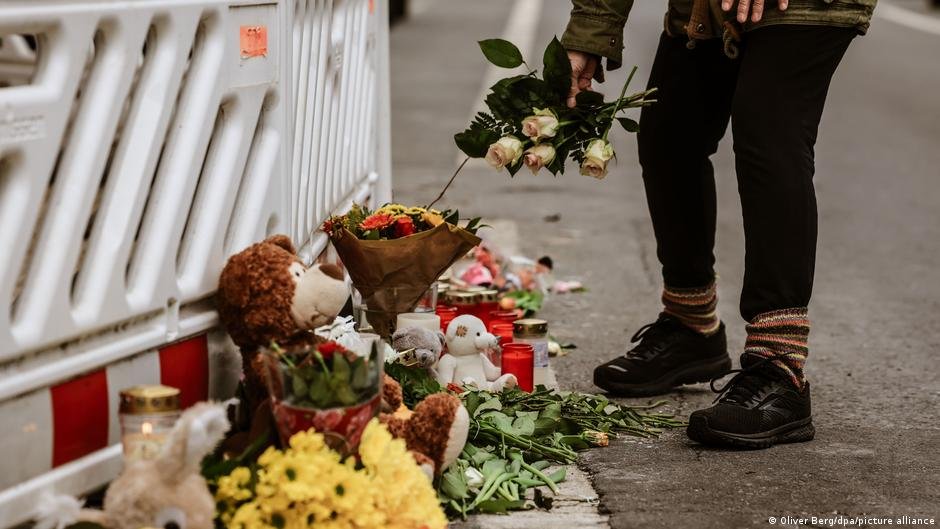
Last month, three people were killed and eight wounded in a knife attack during a town festival in Solingen, Germany. The suspect, a 26-year-old failed asylum seeker from Syria, reportedly turned himself in.
The suspect, identified as Issa Al H., first entered the European Union (EU) through Bulgaria and applied for asylum in Germany in 2022. Under the Dublin Regulation, he should have been sent back to Bulgaria, but he reportedly disappeared when authorities came to deport him in June 2023. Months later, he resurfaced in Solingen and successfully reapplied for asylum, receiving subsidiary protection. The Islamic State (IS) later claimed responsibility for the attack, saying that the suspect was a soldier of the Islamic State.
Despite Germany’s Repatriation Improvement Act, which has increased deportations by a reported 34 percent in 2024, Al H. had not been flagged as dangerous or a flight risk before the attack occurred.
Also read: Solingen attack puts spotlight on Germany's deportation laws
More deportations
Changes in Germany's deportation laws took effect in February, and aim to curb irregular migration by accelerating deportations of those without legal status to remain in the country. The law targets convicted criminals and members of criminal organizations. The law also extends detention times for asylum seekers and grants authorities increased powers to search their accommodations and smartphones.
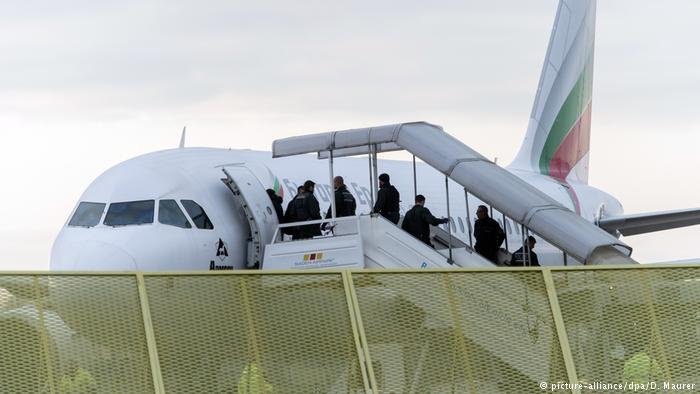
As of June, Germany has reportedly deported 30 percent more people this year compared to the same period in 2023. Total deportation figures for last year were recorded at 16,430, while in 2022, an estimated 12,945 people were deported.
Data compiled by Eurostat, the statistical office of the EU, indicate that in the first quarter of 2024, 103,515 non-EU citizens were ordered to leave an EU country, and 30,570 were returned following such orders. Compared to the same period in 2023, orders to leave fell by 7 percent, while returns increased by 11 percent. Most returns (85 percent) were to countries outside the EU.
Algerians and Moroccans made up the largest share of those ordered to leave (7 percent each), followed by Turks (6 percent), Syrians, and Georgians (5 percent each). France, Germany, and Belgium issued the most orders to leave, while France, Germany, and Sweden recorded the most returns.