
A former head of Libya’s coast guard, Abd al-Rahman Milad was killed on Sunday in Sayyad, west of the capital Tripoli. Also known as Bidja, he had been linked to atrocities against migrants.
Milad, nicknamed Bidja, was a leader in the smuggling and trafficking of migrants as well as fuel, who was sought by Interpol and had been sanctioned by the UN Security Council.
Images circulated on social media and websites showed a white four-wheel drive vehicle, riddled with bullet holes, on the side of the road, with what was said to be Milad’s body inside it.
There was no information about who was responsible for the death of Milad, who was said to be in his mid-thirties.
Famous and infamous
Libya Review, a daily online newspaper, said the death of Milad (Al-Bidja) marked the end of one of Libya’s most notorious figures.
"Al-Bidja was both feared and infamous for his extensive involvement in human trafficking and smuggling operations," the paper said.
Many senior figures in Libya meanwhile expressed condolences and warned that the perpetrators would be brought to account.
Moammar Dhawi, a militia leader in western Libya, called for an investigation into Milad’s death, while Abadallah Allafi, the deputy head of Libya’s Presidential Council, said the killer would "not escape divine punishment."
Abdulhamid Dabaiba (also written Abdel Hamid Dbeibah), the head of Libya's National Unity Government, praised Milad's "commendable efforts to rehabilitate the Janzour Naval Academy and train new batches of cadets after a hiatus of more than a decade," the news agency Agenzia Nova reported Monday.
Also read: Tripoli seeks to present itself as a migration hub amid human rights concerns
Violence against migrants
Bidja or Abd al-Rahman Milad (also written Abdel-Rahman Al-Milad) gained international notoriety in 2017 for criminal activities and abuse of migrants.
A UN Security Council report said the coast guard unit he commanded in the western Libyan town of Zawiya was "consistently linked with violence against migrants and other human smugglers."
"Milad, and other coastguard members, are directly involved in the sinking of migrant boats using firearms," it added.
In the same year, Milad attended a meeting in Italy to discuss cooperation between the Libyan coast guard and Italian authorities to intercept migrant boats at sea and bring them back to Libya.
Also read: NGO Mediterranea files report against Libyan coast guard
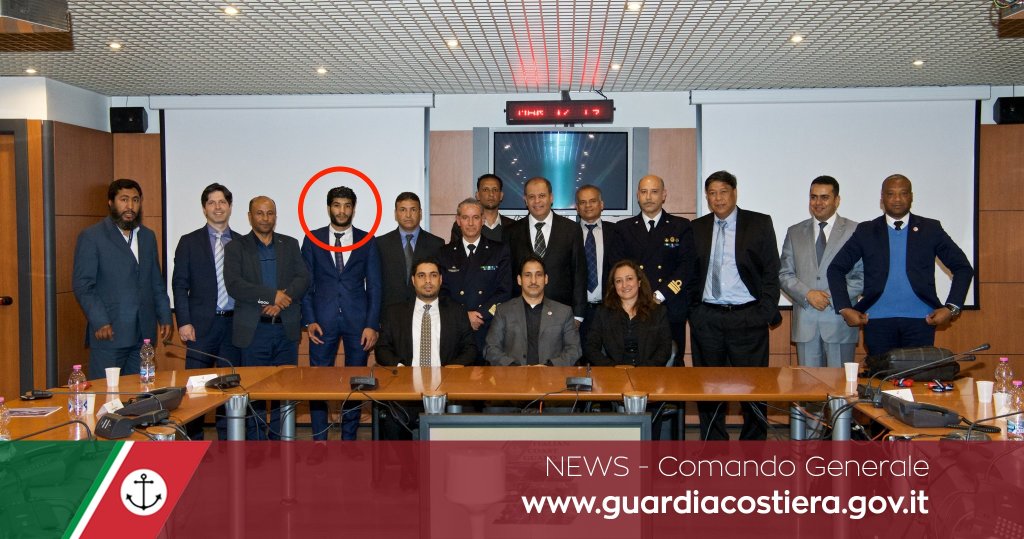
During criminal investigations, migrants have reportedly told authorities that they were picked up at sea by armed men on a Libyan coast guard ship that was used by Milad and taken to the al-Nasr detention center, where they were held in brutal conditions and subjected to beatings, according to the UN.
Milad had denied claims that he was linked to people smuggling and said the uniforms worn by traffickers were similar to those of his men.
But in 2020 he was convicted of human trafficking and fuel smuggling and served a prison sentence of around six months between October 2020 and April 2021. On his release, he received a hero's welcome in Zawiya, Agenzia Nova reported.
Coast guard and smugglers working together
People smugglers, many linked to the Libyan coast guard, have been able to take advantage of the chaotic political and security situation that followed the overthrow of leader Muammar Gaddafi in 2011.
Some have been complicit in sending migrants to Europe by sea. Thousands of migrants have died during the voyages.
The coast guard has also been linked to serious abuses of migrants in detention centers, a report by the UN’s Human Rights Council OHCHR confirmed last April.
In 2021, a sub-Saharan migrant who had tried six times to cross the Mediterranean with the help of smugglers told InfoMigrants how traffickers and Libyan coast guard officers were working hand in hand.
"The Libyan coast guards are in league with the traffickers, some work directly with them," the man said.
"They know that by intercepting us at sea, they will receive money from the prisons."
Journalists point finger at Italian authorities
Two Italian journalists, Nello Scavo and Nancy Porsia, who received death threats after investigating Milad’s trafficking activities, commented on social media on the news of his death.
Porsia, a freelance print and TV journalist and filmmaker, posted on Facebook that Bija’s story was "still being written."
Scavo, who, along with Porsia, was given police protection following the death threats, said Milad had been under investigation in Italy for some time.
He wrote on X: "[Bija’s death was] good news only for those who feared that one day, perhaps before an international tribunal, he might spill the beans… Justice ran out of time."
With AFP, AP