
The Higher Administrative Court (OVG) in the city of Münster has ruled that a Syrian man does not qualify for subsidiary protection or asylum, stating that such protection only applies if lives are at risk in one's home country, which by and large the court deemed no longer the case in Syria. The decision is now binding.
For the first since the start of the Syrian civil war in 2011 did a court in Germany hand down a binding decision that declares that the Middle Eastern country is safe enough.
The ruling was already made on July 16 but still had a statutory six-week appeals period pending.
Since no appeal was made and since no complaint against the ruling was lodged within this time period with the Federal Administrative Court in Berlin, the decision has now become binding law.
Also read: Can Germany stop accepting Syrian and Afghan refugees?
Syria: no longer a place of 'grave danger to life and limb'
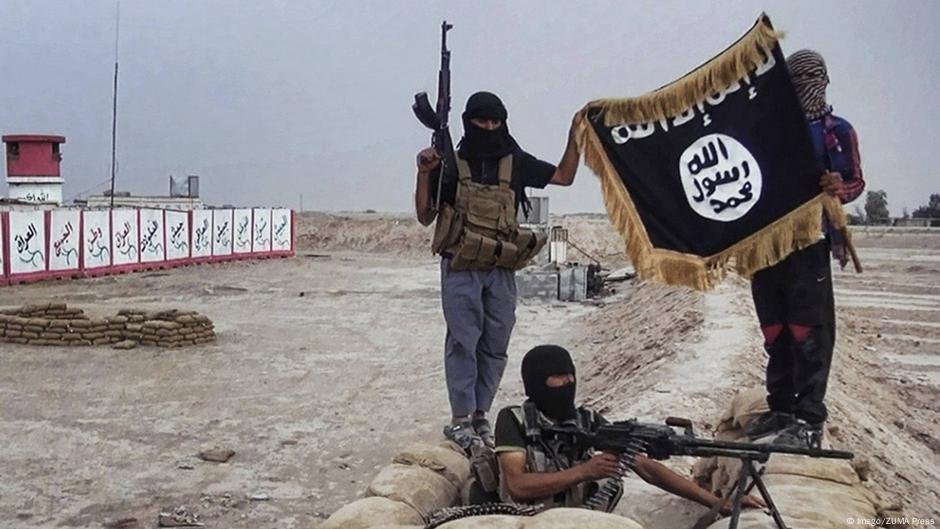
The Higher Administrative Court (OVG) of the German federal state of North Rhine-Westphalia explained in its ruling that while there still were parts of Syria where armed conflict linked to the Syrian uprising in 2011 and its aftermath continued to cost lives and that even though the "Islamic State" (IS) terror group continued with occasional attacks in parts of the country, there was no real need for the civilian population to expect falling victim to any organized violence.
The court added that in this particular case, the plaintiff could not be recognized as a refugee since he would no longer face any real threat of political persecution in Syria, adding that he could not qualify for subsidiary protection either, as his life was not threatened.
According to Germany's Federal Office for Migration and Refugees (BAMF), subsidiary protection is only granted in cases where neither the provisions of refugee protection nor the right to asylum are given, but the threat of suffering serious harm in the country of origin remains.
Also read: Germany continues to debate Syrian returns
Criminal history as aggravating circumstance
The OVG added that in addition to these reasons, the man's criminal history had also made it impossible to give the man subsidiary protection.
The plaintiff had been sentenced to several years in prison in Austria for his earlier involvement in facilitating the smuggling of people into Europe.
Under German law, asylum seekers and those with similar protection levels will normally be rejected if they have committed any crime in the European Union which comes with a prison sentence of more than one year.
The case in question involved a Syrian national from the northeastern Hasaka Province of the country, who had come to Germany in 2014. His asylum request was already initially rejected by BAMF due to his past involvement in smuggling activities.
This latest court decision will now likely flag him for deportation back to Syria.
Also read: Germany: Deportations up 17 percent in the first half of 2024
Less tolerance towards migration after recent events
The decision from Münster comes amid mounting calls in Germany to limit the number of asylum requests by recognizing certain countries -- including Syria as well as Afghanistan -- as safe countries of origin.
Even though crime and violence remain high in these countries and even though there still are reports of continued human rights abuses, the reasoning is that those sent back would serve as a deterrent for other would-be migrants and refugees.
Following a deadly attack by a self-professed Islamist in the western town of Solingen, which left three people dead, Germans are calling for an overhaul of the asylum system, including the execution of more deportations.
Also read: Solingen attack puts spotlight on Germany's deportation laws
In regional elections in East Germany, which are due to be held this weekend, preliminary polls show a major rise in support for the far-right Alternative for Germany (AfD) party, which is running on a populist, anti-immigrant platform.
More moderate politicians meanwhile, including those who are part of the governing federal coalition in Berlin, are also increasingly moving towards a more isolationist rhetoric before the upcoming votes.
Also read: Germany: Immigrants in east wary of rising far-right AfD
with KNA