
The Libyan coast guard has intercepted 220 migrants, including women and children, from a distressed vessel near Tripoli. The migrants were later handed over to national authorities.
A boat carrying 220 irregular migrants was intercepted off Libya's western coast, near the offshore oil field of Bouri, on August 13, according to local reports.
The migrants, including women and children, were spotted during the night on a distressed vessel, according to Libya's General Administration for Coastal Security.
They were rescued and brought to Shaab Port in Tripoli, where they were handed over to authorities for legal proceedings.
Since the start of 2024, over 13,323 migrants have been intercepted at sea and returned to Libya, including 775 during the week of July 4 - 10, according to an update from the Libyan office of the International Organization for Migration (IOM).
The IOM also reported 421 deaths and 603 missing persons, bringing the total number of victims in the central Mediterranean crossing, encompassing both Tunisia and Libya, to 1,244 this year.
Last year, the IOM recorded 17,190 migrants as intercepted at sea and returned to Libya, with 2,498 dead or missing in total.
Also read: 119 refugees evacuated from Libya reach Italy -- UNHCR
Widespread Human Rights Violations
Libya is a major transit point for migrants, with most having entered the North African nation through Egypt, Niger, Sudan, or Chad.
With over 706,000 migrants and refugees confirmed in the country as of December 2023, Libya is also increasingly becoming a country of settlement for those, who cannot afford onward journeys.
Since April 2023, Libyan authorities have increasingly conducted mass arrests and expulsions, including of those with valid visas, driven by an "increasing pressure" from the EU to curb migration.
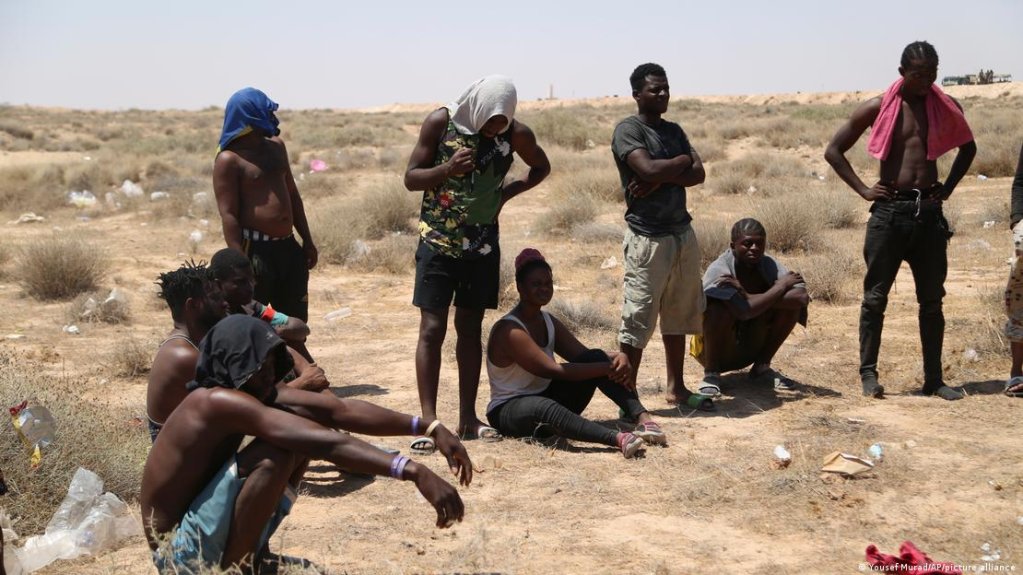
Addressing the UN Human Rights Council, UN High Commissioner for Human Rights Volker Türk described human rights abuses including mass expulsions taking place in Libya, which are "committed on a large scale, with impunity," and at the hands of "state and non-state actors, often in collusion."
Türk's office has also gathered information on "a systematic pattern of armed interceptions on land and sea, and forced returns without due process."
Also read: Niger: Libya expels over 400 Nigerien migrants to desert
Hate speech against migrants
Türk also noted that these widespread abuses occur amid increasing "hate speech and racist acts against migrants" in Libya, including online misinformation campaigns advocating for "the expulsion of all sub-Saharan Africans."
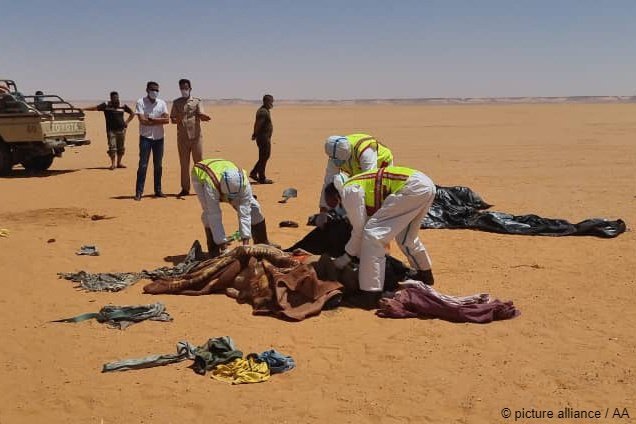
Earlier this year in March, a mass grave was discovered in southwest Libya, containing "at least 65 presumed migrant bodies."
In July, Türk reported that another mass grave was discovered in the desert at the Libya-Tunisia border, urging authorities to thoroughly investigate these crimes.
Despite these risks, migrants continue to come to Libya in hopes of eventually reaching Europe.
Also read: Libya: Mass grave found in former stronghold of Islamic State
Libya as a migration hub
Libya is increasingly trying to position itself as a central hub for managing Mediterranean migration, after hosting a series of international meetings and boosting its operational capabilities for expulsions and repatriation programs.
On July 25, Libya repatriated 750 irregular migrants from Niger and Egypt as part of ongoing deportation operations that are being carried out on a semi-regular basis.
Countries like Italy see Libya as a key partner in controlling migration to Europe. Both Italy and the EU have provided over 700 million euros in funds to support the Libyan coast guard, tighten border control, and improve Libya's capacity to manage migration.
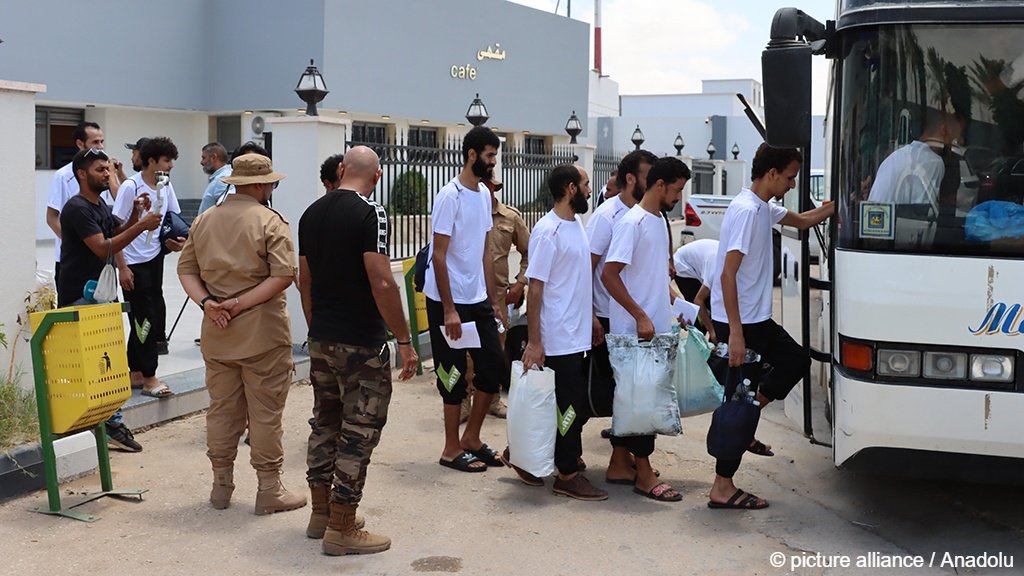
However, these partnerships have faced significant criticism for indirectly contributing to human rights abuses in Libya, where migrants often suffer severe mistreatment.
Italian Prime Minister Giorgia Meloni has actively engaged with both the Tripoli-based Government of National Unity (GNU) and the rival eastern government of the country to strengthen cooperation on migration control through various initiatives.
Libya remains divided between rival governments, with ongoing conflicts, political turmoil, and widespread human rights violations exacerbating the crisis.
Also read: Tripoli seeks to present itself as a migration hub amid human rights concerns