
A court in Germany has ruled that there is no longer a general danger to civilians from the long-running conflict in Syria, rejecting a claim to protected status by a Syrian man.
A German court in the western city of Muenster ruled that there is no longer a general danger to civilians from the long-running conflict in Syria, rejecting a claim to protected status by a Syrian man who had been convicted in Austria for involvement in smuggling people into Europe.
The ruling by the top administrative court of North Rhine-Westphalia, Germany’s most populous state, was announced on Monday (July 22).
Justice Minister Marco Buschmann said on Tuesday (July 23) it was "a decision that one can understand, if one assumes that there are now regions in this country that are very dangerous but also other areas where there isn’t necessarily a danger to life."
It wasn’t immediately clear what consequences, if any, the ruling would have for German authorities' practice in handling claims for protection from Syrians, who have largely been deemed to face a threat of serious harm until now. The decision could still be appealed under German law.
Also read: Germany, deportations up by 30 percent
Previous conviction
The decision from the court in Muenster was based on the case of a man from Hasaka province in northeastern Syria who arrived in Germany in 2014.
According to the court, he had received a prison sentence in Austria before entering Germany because of his involvement in smuggling people from Turkey to Europe. Due to this conviction, German authorities denied him protected status. But a court then obliged them to recognize him as a refugee.

The Muenster court reversed that ruling on appeal. The presiding judge said the man didn’t face political persecution in Syria and his previous offenses barred him from being given refugee or other protected status, the court explained in a statement.
Currently, in cases where neither refugee protection nor asylum can be granted and there is a threat of serious harm in the country of origin, an asylum seeker would be eligible for subsidiary protection.
To qualify, a person must have valid reasons for believing that they are at risk of serious harm in their country of origin, caused by state or non-state actors.
However, the court found that this particular man didn’t qualify for a lesser degree of protection, in part because there is no longer a "serious individual threat to the life or physical integrity of civilians as a result of arbitrary violence in the context of a domestic conflict in Hasaka province, but also generally in Syria."
Also read: Syrian teenager rescued in Austria on 'new' smuggling route
Safety warning
The Hasaka province is currently under the control of the Kurdish YPG in northern Syria. According to the court, fighting and attacks in the Hasaka region no longer reach a level at which civilians face a high probability of being killed and wounded.
However, the German foreign office website appears to paint a different picture of the country as a whole, stating that both foreigners and Syrian citizens "can become victims of terrorist and violent jihadists."
It also states that the general security situation throughout the country "remains extremely volatile."
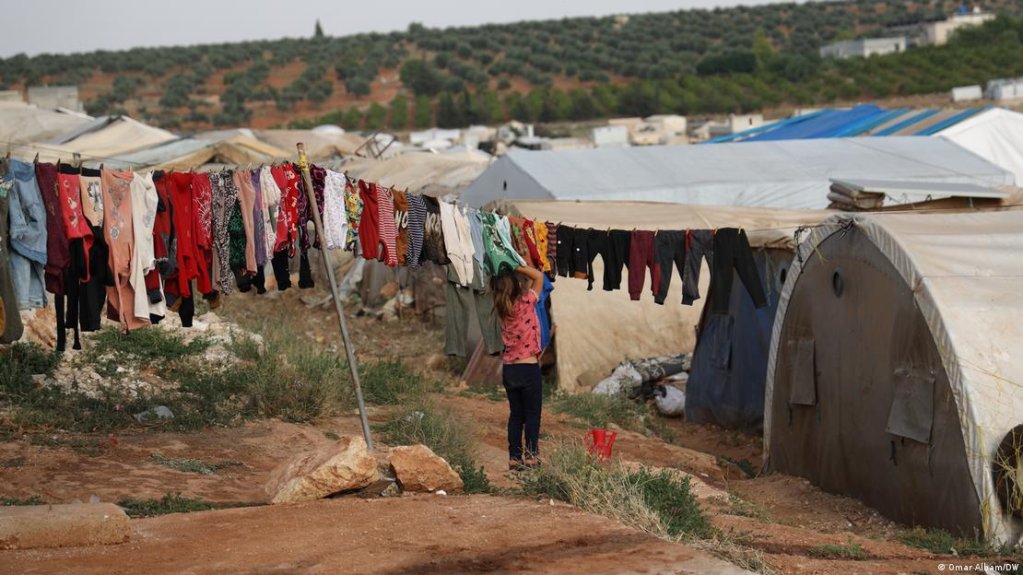
"The complex military conflicts between various groups in Syria continue to affect different cities and regions. Deaths and injuries are reported from parts of the country on an almost daily basis," according to the foreign office.
Following the decision, German MP Alexander Throm called on the Federal Foreign Office to review the security assessment for Syria.
Federal Minister of Justice Marco Buschmann, stated that it is "no longer possible to say across the board that the security situation in the entire country is the same everywhere, but that we need to take a closer look."
However, a spokesperson for the German rights group Pro Asyl, Wiebke Judith, argued that the ruling ignores the reality in Syria, German news agency dpa reported.
Also read: Turkey's Erdogan seeks dialog with Syria's Assad amid tensions over refugees
Refugees not so welcome
Currently Germany is able to deport individuals to other EU nations under the Dublin agreement, which sets out that asylum seekers must apply for protection in the first EU country they entered in the bloc.
However, in June, the German Chancellor Olaf Scholz announced that it is also looking into ways to start deporting people back to Afghanistan and Syria. The announcement came shortly after a German policeman died and four people were injured following a knife attack reportedly by an Afghan national in Mannheim, southwestern Germany.

Even though Germany has been a major destination for Syrians fleeing the country’s 13-year civil war. Attitudes toward migrants have hardened in recent years, with the far-right AfD party making considerable gains both in local and EU elections in recent years.
Also read: How Germany’s AfD party tries to win over voters from immigrant backgrounds
With AP