
Polish MPs have approved a new measure which authorizes agents on the Belarusian border to fire live ammunition at migrants, for "self-defense" or in a "preventive manner." The law angered NGOs, who point to an already very tense situation in the area.
On July 12, the Polish Parliament authorized security forces deployed on the Belarusian border - soldiers, border guards, police officers - to fire live ammunition "preventively" or in "self-defense" at anyone who attempts to cross the border irregularly.
Agents who use their weapons at the border, "when the life, health and freedom of members of the police are threatened in the context of a direct and illegal attack against the 'inviolability of the state border'" are now exempt from liability.
The measure was approved by 401 MPs. Only 17 opposed it. The text is now moving to the Senate for approval.
The announcement of this new law angered human rights defenders. The law grants the police "a right to kill", they wrote in the newspaper Gazeta Wyborcza.
"This law will only make an already very difficult situation at the Belarusian border worse," Bartek Rumienczyk, communications manager for the Grupa Granica association, told InfoMigrants. Because of the buffer zone, it is already impossible for us to document what is happening in the region, including the violence carried out by the border guards. This will further complicate our work and make the area more dangerous for people seeking asylum.
At the beginning of June, pro-European Prime Minister Donald Tusk announced the deployment of a 200-meter wide and 60-kilometer long buffer zone along the border, forbidden to anyone but police. A similar decision was already applied in November 2021 by the previous nationalist Law and Justice (PiS) government, when thousands of people tried to enter the country.
Also read: Polish government pledges to do what is needed at Belarus border
'A dangerous precedent'
For Dinushika Dissanayake, Amnesty International Europe deputy director, "these proposals create a dangerous precedent for the rules around use and abuse of firearms in Poland," she wrote the day before the vote, in a press release. "Under international law […], the use of force against individuals must be strictly necessary and proportionate to the threat posed; the use of firearms is prohibited except in situations where it is necessary; when there is an imminent threat of death or serious injury. Any attempt by the Polish authorities to undermine these principles would be unlawful."
For Dissanayake, "the notion of 'preventive' self-defense is not consistent with international law and standards relating to the use of force" and "opens the door to all kinds of abusive practices."
On July 17, Interior Minister Tomasz Siemoniak also said that additional financial investments had been alloted "for the modernization of the border fence." Since June 2022 a double 5.5-meter high metal barrier stands at the border. "We will see the results [of the fencing] in October," he told the press. Already on May 11, during a visit to the border, Donald Tusk had promised that "there would be no limit [to spending] in terms of securing the border."
Also read: Poland, Baltics step up border controls amid migrant crisis
Soldier dead after stabbing
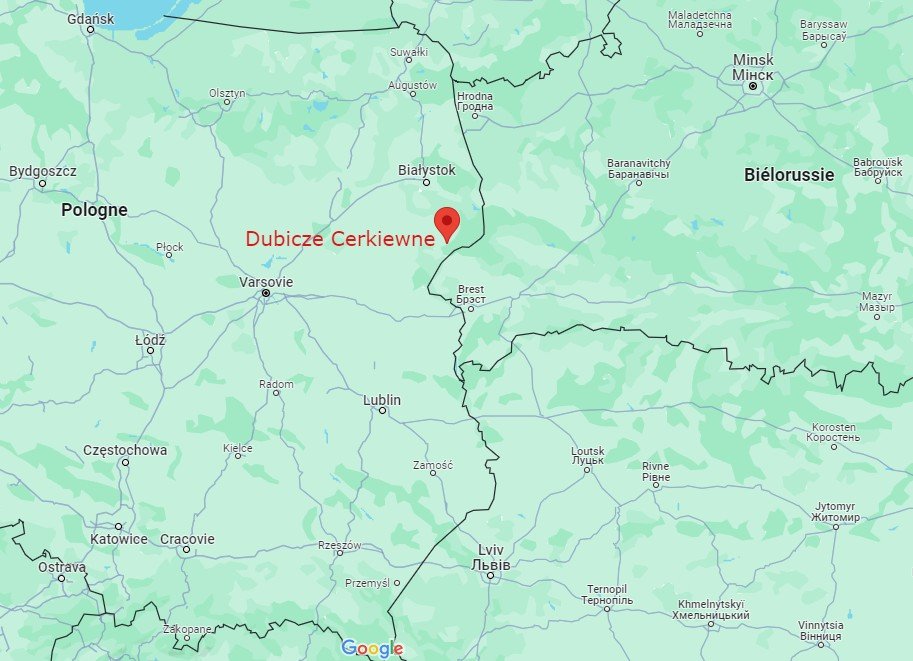
The law comes in a very tense context in the area. In early June, a Polish soldier died after being stabbed a few days earlier, while trying to prevent migrants from entering Polish territory near the village of Dubicze Cerkiewne. In March, three border guards were suspected of using their firearms on migrants and arrested. "Their arrest sparked very strong reactions from the opposition and created controversy in the country," Bartek Rumienczyk said.
The establishment of the new emergency zone also makes the work of police there opaque. NGOs and migrants regularly call out police violence at the border. For a month, Grupa Granica observed "an increase in the feeling of impunity of the uniformed forces and nationalists, who want to 'take matters into their own hands.'"
In early June, a video taken by a migrant and posted online showed members of the police force violently beating with batons a defenseless migrant on the ground. According to a humanitarian worker there contacted by InfoMigrants, this video was filmed on the evening of May 27, at marker 333, near the village of Dubicze Cerkiewne.
In addition to the violence, "pushbacks" towards Belarus are increasing. "According to our information, 66 people, who had been given power of attorney for their asylum request, were turned back to the Belarusian side," Bartek Rumienczyk said. "Including minors and pregnant women. This is once again proof that the right to asylum is not respected at the border, and even less so when NGOs are not there to observe what is happening."
Also read: What will be the human cost of Poland's new border defenses?
'The border guards hit you'
Since 2021, thousands of people have tried each year to reach the European Union (EU) via the migration route starting from Russia or Belarus crossing into Poland. According to Polish border guards, more than 17,000 illegal crossing attempts from Belarus have been detected since the start of the year.
For Andrzej Juzwiak, spokesperson for the Polish border guards, "there is no doubt that the crisis at the border was caused by hybrid actions of the Belarusian side," he argued on Deutsche Welle. "We know that this is an artificially created and controlled migration route." His statements align with those of the EU since the start of visits to the area, which had also denounced a "hybrid war" led by Belarusian President Alexander Lukashenko, ally of Vladimir Putin.
Migrants are caught in the middle of this border tussle, as victims of diplomatic manipulation on the one hand, and of Polish migration policy on the other. Azzedine, a young Sudanese man now living in Warsaw, was brought back to the Belarusian side eight times, although he requested asylum each time. "The border guards beat [the migrants], broke the phones and sprayed gas in our eyes," he told InfoMigrants. "I didn’t expect to go through that. I just wanted to escape the war, and find a country that protects me."
Also read: Poland, new government, new year, but is there a new migration policy?