
Plans to put 500 asylum seekers in a village with just 1,370 residents have met with protests in the north-east of Germany.
There are just 1,370 residents in the small village of Dabel, located in the state of Mecklenburg Vorpomerania in north-east Germany between Berlin and the Baltic Sea. That's one of the reasons why many of the residents, including the town’s mayor, are putting up resistance to plans to open a home for 500 asylum seekers in a former army barracks.
The plans are being pushed forward by local authorities based in Ludwigslust Parchim. The local village authorities in Dabel have lodged a complaint about the renovation plans.
"We will suddenly have one-third more residents," the local mayor Jörg Neumann said, speaking at a press conference in the regional capital Schwerin on Tuesday (July 16). The village simply doesn’t have the infrastructure to host so many extra people, he explained. "Our village life would be completely changed."
The mayor, who does his job as a volunteer and does not belong to a political party, added that the former army barracks is now in the middle of an industrial estate where no one else is allowed to live. That means there aren’t many structures, like public transport, to support people suddenly living there again.
Also read: Far right protests refugee housing plan in Germany
'Not against migrants, but against the mechanisms'
Neumann explained to the press that it wasn’t that the village didn’t want to take asylum seekers per se. In fact, he said they had welcomed Syrians in 2015 when more than a million arrived over the course of about a year between 2015 and 2016. "Two of them still work here," added the mayor. "They are here and they are part of our community."
However, it is the numbers that are making local residents worried. "We are not against migrants, we are against the mechanisms, that someone just decides that we should have to take 500 and they will be just placed here in the former barracks." Neumann said he was also worried about being able to integrate so many people.
The mayor said that despite their opposition, local authorities have said the barracks are due to open early next year and start receiving asylum seekers.
Organizer of protest feels targeted
According to reports in the right-wing magazine Junge Freiheit (Young Freedom) Dabel is an "idyllic place, known for its nature, hunting and fishing." The magazine says that on June 1, the grounds of one of the organizers of the protest were set alight. They added that police believe the motive may have been "politically motivated."
The magazine showed photos of a carport burning at night, including three of the cars parked there. The house itself was not set alight, but suffered from heat damage from the flames, reported the Junge Freiheit.
The mother of the family, Julia D., reportedly told Junge Freiheit that her children were "scared" and remained shocked. She said at the time of the fire, there had been three adults and six children present in the house.
Julia D. said that her family had been helping to organize the protests since April following the announcement in March about the transformation of the barracks. She mentioned that a few weeks before the fire, both her and her partner's car had been "scratched," which she interpreted "as a warning."
Also read: Locals protest against new migrant center in Germany
Fears and worries
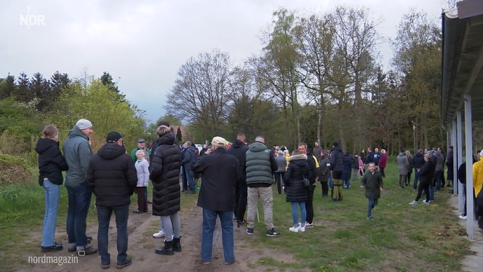
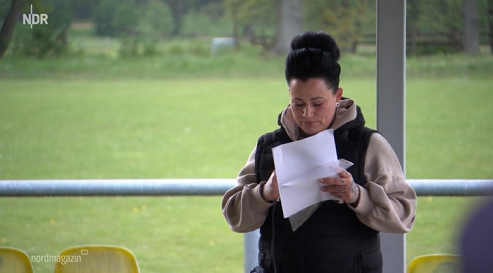
In April, in a report about the protests one woman told the local state broadcaster NDR that "it is just too many for our tiny village. We live from tourism, it is an idyllic place here." That's despite the announcement that local authorities planned to put mostly families into the barracks.
Another woman said that she was sure that "some of them might be genuinely fleeing war and wanting a quiet place to stay," but that she was worried about cycling near the home in winter when it was dark as the possibility that there might be some people in the group who could be dangerous would make her feel unsafe and force her to change her life choices.
Not everyone in the village is against the idea. The local dentist, Dr. Axel Brandt, told NDR: "I don’t want to say that everyone who is against the idea of bringing migrants to this area are nazis, that is far from what I am saying. But, you have to understand that continually just refusing to place asylum seekers is not the solution. They have to be placed somewhere, so we need to find the right kinds of solutions for them."
NDR reported that on the demonstrations in April, there were some AFD members and others with "openly extreme-right backgrounds," but that the protest had passed off peacefully.
Similar protests in other villages
Dabel is not the first place in this part of rural Germany with lots of space and relatively few residents where protests have preceded the arrival of large groups of migrants and asylum seekers. After protests in another part of the region, in Upahl, the planned capacity for 400 asylum seekers was reduced to 250.
According to locals in Upahl, the authorities put those 250 in a container village and said it would only be for a year, but now it is due to function until at least summer 2025.
With dpa
Also read: Germany, heated migration debate amid increase in arrivals