
The Government of the Canary Islands has repeatedly been asking for help from the other autonomous communities of the country, as it is witnessing a high number of unaccompanied minors arriving on its shores. It demands a change in law to bind relocations to a quota rather than keeping them part of a voluntary mechanism.
The Government of the Canary Islands stressed that it was in the best interest of the underage minors to spread them out across Spain in a wider context, as the archipelago was unable to provide adequate attention to all children and youths arriving without parents or other official guardians there.
This is due to the fact that Spain's central government is only responsible for providing care for adults, leaving the responsibility for unaccompanied minors to the individual Iberian regions where they arrive.
The relocation of youths is merely part of a voluntary mechanism, which authorities in the Canaries say isn't working.
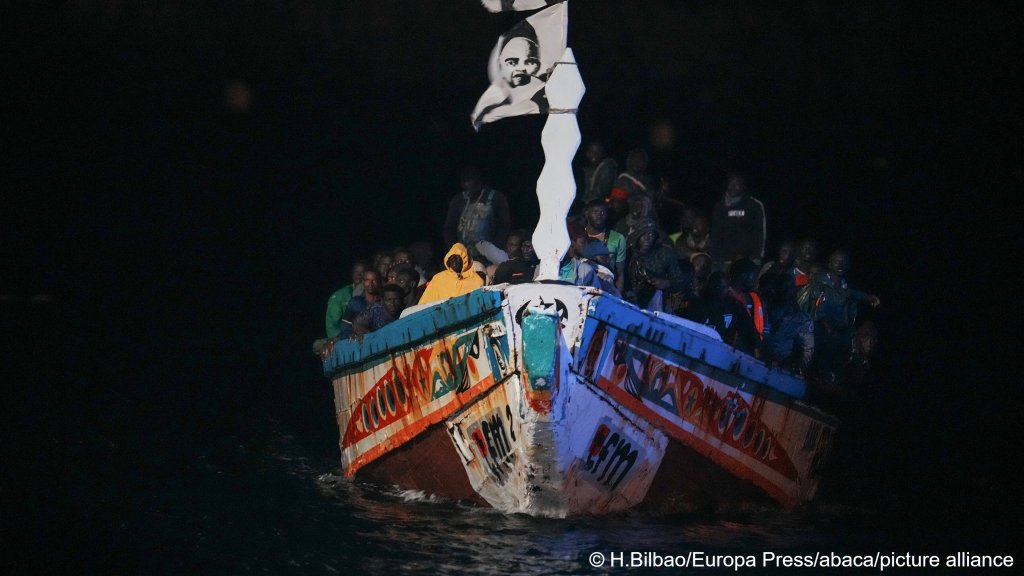
During a conference in Tenerife on Wednesday (July 10) local and regional leaders met to discuss the details of what a change in law could look like in practice.
Also read: Canary Island seek help to relocate almost 5,000 migrant minors
New laws to allow for more 'dignity'
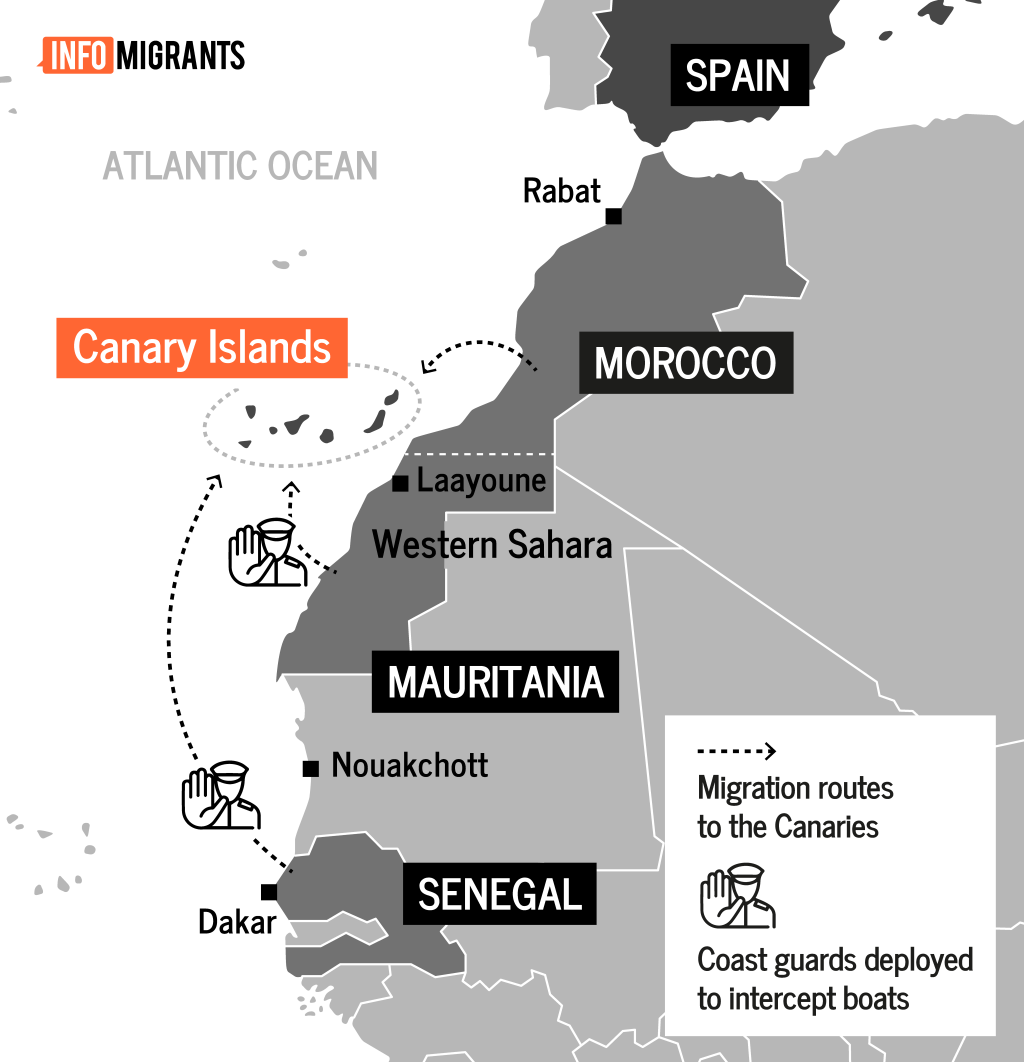
About 40% of all underage migrants coming to Spain in 2023 arrived on the archipelago, which is located close to mainland Africa, roughly at the height of the line that delineates the distinction between sovereign Morocco and the Western Sahara territory, also claimed by Morocco.
The Government of the Canary Islands therefore wants the law on relocations of youths and children to be amended, demanding that nearly half of the unaccompanied minors presently housed in the Canaries should be moved to other communities within a year.
This legal reform, it says, would help decongest at least some resources on the Canary Islands, with the president of the archipelago, Fernando Clavijo, saying that facilities for migrant youths and children are completely "overflowing."
Also read: Canaries' president appeals to Spain to take unaccompanied minors
The administration says that they can take care of up to 2,000 minors without running out of capacity, and that anything above 3,000 minors would mean that they could not provide the services to them that they deserve and are entitled to, emphasizing the importance of treating the children and youths with dignity.
As stipulated under the International Convention on the Rights of the Child, dignified protection applies to all underage minors arriving in Spanish territory; the same is also enshrined in Spanish and EU law.
The recent plea from the Canaries' government comes despite the departure in recent weeks of many migrants who had reached the age of 18, and therefore were able to be transferred to mainland Spain to continue their asylum procedures there.
Also read: Save the Children: Young migrants need greater protection
Who are the minors arriving on the Canary Islands?
Currently, the Canary Islands are hosting more than 5,500 underage minors who arrived in recent months on small boats, coming chiefly from Senegal, Mali, Gambia and Morocco — in that descending order. Other countries of origin, which are less common however, include Guinea and Mauritania.
The government of the archipelago in Tenerife released some further statistics, highlighting that the vast majority of the unaccompanied migrant youths and children (94%) are aged between 12 and 17 years of age.
Only 5% were between the ages of 7 and 11, while only 1% were reported to be younger than 6.
The majority of them -- 95% -- are male, representing the same rate of distribution between male and female arrivals on the Canaries among adults, according to data made available by the Red Cross.
Also read: Spain: Criticism of age assessment tests for young migrants
Crisis brewing in Lanzarote
While information wasn't available on all seven islands in the group, there is data available from the two main islands -- Gran Canaria and Tenerife -- which are believed to be the hosts of the majority of all underage migrants in the archipelago.
The rate of unaccompanied youths between the two islands is nearly equal, with slightly more underage migrants residing in the province of Las Palmas on Gran Canary than in the province of Santa Cruz de Tenerife on Tenerife island.
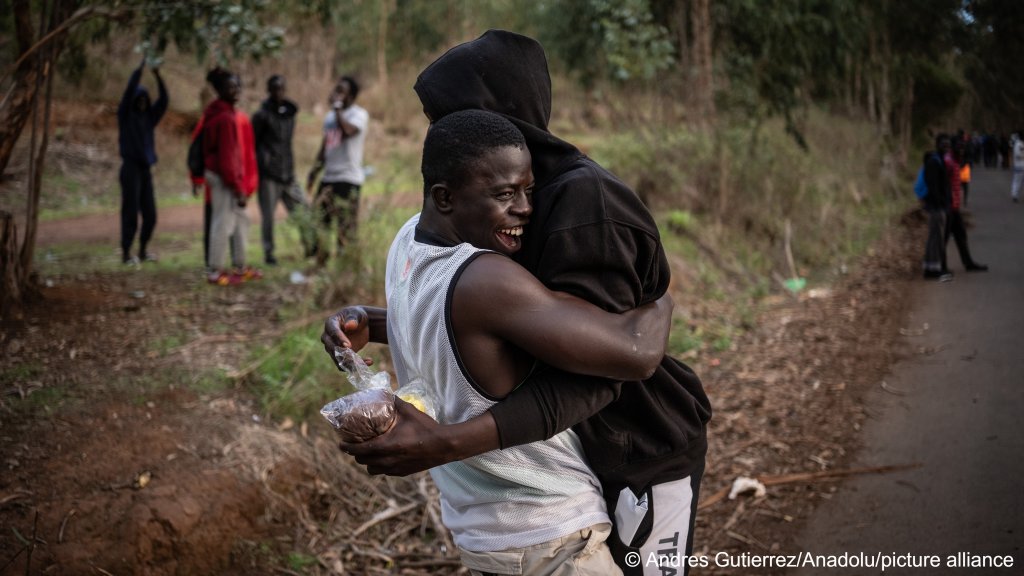
However, according to recent media reports, the other islands are beginning to express concern over the rate of unaccompanied minors arriving there. The island of Lanzarote declared a "social emergency" earlier in July following the recent arrival of around 40 unaccompanied minors there, marking a sudden 5% jump in all minors currently being looked after there.
Nearly all minors are being housed in centers designed for the specific needs of youths; only 58 children were reported to be living with foster families at present.
However, due to the overcrowding of the centers, there are worries that the children and youths are receiving adequate attention. According to a legal case filed by the Samu Foundation NGO recently, one center on Lanzarote was reported to be "infested with insects," where "young migrants are not even given bed sheets" and reports of "hair or cockroaches" in stale food are also amassing.
Also read: Migrant arrivals to Spain up 277%
Emphasis on education
Despite problems with housing, the underage migrants are all taken care of when it comes to matters of education: All unaccompanied minors under the age of 16 are automatically enrolled in formal education in local schools.
Once they reach the age of 16, which is when compulsory education in Spain ends, they are offered vocational training courses
Furthermore, they all receive Spanish-language classes, which are provided at their centers of residence, with the aim of facilitating their long-term integration.
With EFE, Anadolu