
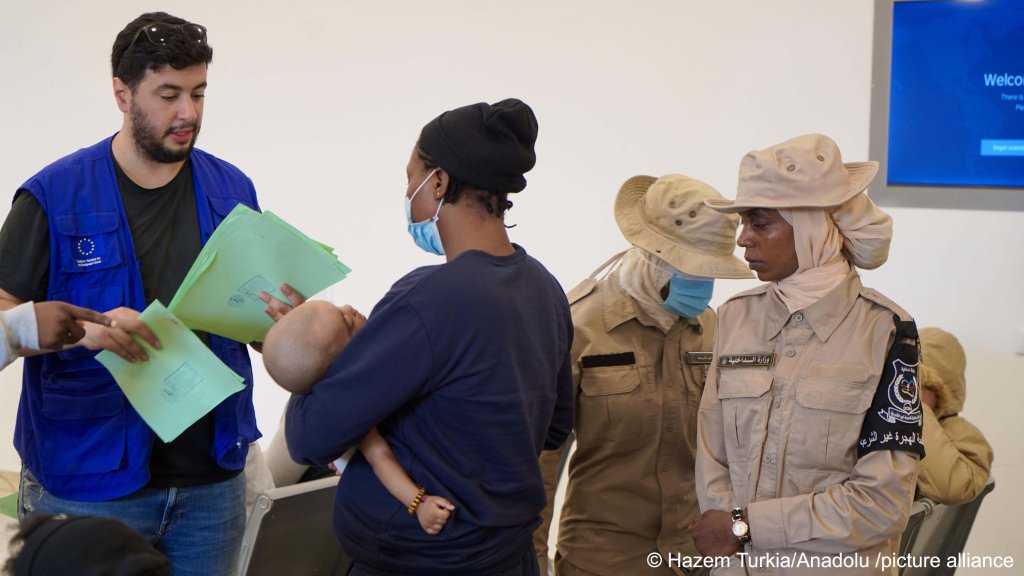
Libya sent 174 irregular migrants back to Nigeria, including 39 women and six children, with more returns planned soon, the country’s interior ministry has announced. The operations are being carried out by plane or road depending on the nationality, according to the ministry.
Libya announced on Tuesday (June 25) the repatriation of 174 irregular migrants to Nigeria, including 39 women and six children, with additional repatriations planned in the coming weeks.
Mohammed Baredaa, the head of Libya's Interior Ministry's department tasked with combating irregular migration, made the announcement.
"We have initiated the repatriation of 174 irregular migrants of Nigerian origin, including 39 women and six children," he stated.
The repatriation efforts, which are carried out by either plane or road depending on the migrants' nationality, are set to continue in the coming weeks.
Also read: Libya to deport 250 migrants as authorities ramp up deportations
Libya – a hotspot for human trafficking and smuggling
Zakaria Abubaker Shueib, is a 20-year-old Nigerian migrant set to be repatriated.
"I have been in Libya for three years, working and saving money with the hope of eventually moving to Europe," French news agency AFP cited Shueib as saying.
Libya has been conducting regular repatriation operations for irregular migrants, sometimes in cooperation with international organizations such as the International Organization for Migration (IOM). The UN agency is also supporting vulnerable migrants stranded in Libya or wishing to return home through its Voluntary Humanitarian Return program. The program aims to provide a safe passage for migrants who are facing hardship or exploitation in Libya.
Libya has been a hotspot for human trafficking and smuggling, exacerbated by the chaos that has prevailed since the 2011 NATO-backed uprising that led to the overthrow of the country's ruler at the time, Muammar Gaddafi.
Libya's proximity to Italy, about 300 kilometers (186 miles) across the Mediterranean, makes it a key departure point for migrants typically guided by people smugglers.
Also read: UK strikes £1M deal with Libya to combat irregular arrivals into Europe
Europe-Libya cooperation against clandestine migration
In May this year, Italian Prime Minister Giorgia Meloni met with officials in Libya for talks on improving mechanisms to curb clandestine migration, among other topics of collaboration.
The two countries already have a series of bilateral agreements in place that include funding to Libya for migration management and infrastructure projects.
The European Union also provides funding to help support the Libyan coast guard as part of its broader strategy to manage migration flows along the Central Mediterranean route.
According to an IOM report, migrant deaths or disappearances rose to 4,984 last year across Middle Eastern and North African migration paths – up from 3,820 in 2022. The report, published in mid-June, indicated that Tunisia recorded the highest number of incidents, followed by Libya, which reported 683 migrant deaths – most of whom embarked on their journey from western Libya, which is governed by the US and European-backed Government of National Unity (GNU).
With AFP