
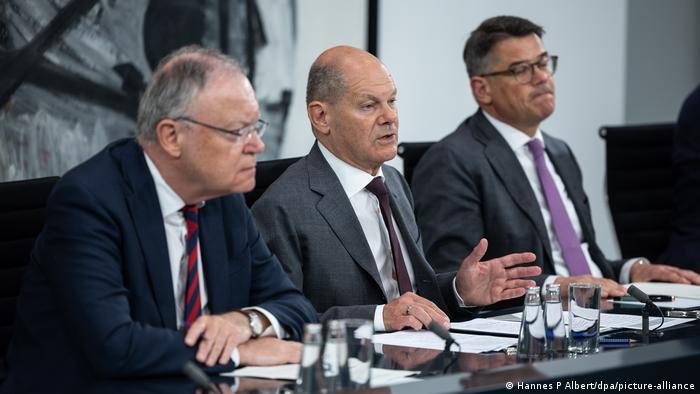
The leaders of Germany's 16 states have agreed to limit cash payments to asylum seekers to 50 euros per month, although three states say the amount was problematic. The premiers also called on the German government to develop concrete models for outsourcing asylum procedures to non-EU countries.
At a conference near Berlin on Thursday (June 20), the leaders of Germany's 16 federal states reportedly agreed on a more uniform practice for the payment card for asylum seekers.
"We have reached a joint agreement that the (...) cash limit will be set at 50 euros," said Hesse state premier Boris Rhein, who's also the Chairman of the Conference of state premiers.
However, three states issued a protocol declaration and do not consider themselves bound by the decision.
According to the news agency dpa, Boris Rhein stated that this decision is an important sign of consensus among the states on this issue.
The payment cards are to be available when the tender for the service provider has been finalized, which is expected during the summer. However, Tagesspiegel reported that three states said they don't consider themselves bound by the decision. Instead, they proposed a graduated cash amount of 50 to 120 euros, depending on local conditions, according to information obtained by Spiegel.
By the end of January, 14 out of the 16 states had already agreed on a joint tender process for the payment card.
How do the payment cards work?
Payment cards (Bezahlkarten in German) look like debit/credit cards on which most (but not all) of their state benefits are booked once a month.
Asylum seekers don't have residency status in Germany and thus cannot have their own bank account nor work legally for at least the first months in the country.
Local authorities have hitherto paid asylum seekers a monthly state benefit of around 400-500 euros -- either in cash or in vouchers.
Asylum seekers can use the Bezahlkarte in any shop where normal credit cards are accepted, which in Germany excludes many small businesses. They may however be restricted to certain postcodes, What's more, they cannot use them to make online payments.
The cards are designed to prevent money transfers abroad and possibly paying criminal traffickers. Other aims include streamlining the distribution of benefits, easing the administrative burden on local government authorities and reducing an alleged incentive to come to Germany in the first place.
However, experts and migrant advocacy groups have criticized the cards as discriminatory -- especially as the country is still much more cash-centric than many other European states.
According to Kiel Institute researcher Matthias Lücke, it's easy for asylum seekers to get around restrictions and send money home. "For example, you can shop for a friend and then have them pay you cash. I don't see how a payment card could change that," he recently told Migration Media Service.
"As long as refugees live on social benefits, they also have very little money that they can transfer. There is not much left over at the end of the month from 460 euros a month in social welfare. Those who transfer money abroad tend to be migrants who work and earn money here. They can of course continue to transfer their money."
The police union also warned against the payment card months ago. Asylum seekers are often under pressure to help cover the medical costs of their families in their country of origin or to pay off debts to smugglers. This could lead to them obtaining the money illegally, the union warned
There are also doubts about the hoped deterrent effect of the payment card. Migration expert Herbert Brücker from the IAB, the think tank of the German Federal Employment Agency, believes it is "very unlikely" that fewer people will come because of the card. According to him, there is no significant correlation between the level of social benefits and asylum application.
Third-country asylum plan
At said Thursday meeting between the state premiers, the 16 politicians also jointly called on the German government to develop concrete potential models for outsourcing asylum procedures to countries that are not members of the European Union (EU).
The Social Democrats (SPD), meanwhile, voiced skepticism about such a model and its effects on irregular immigration, according to dpa. "I don't believe that this will be a solution to our structural problems," said Lower Saxony's state premier Stephan Weil. Interior Minister Nancy Faeser, also of the SPD, had previously expressed a similar view.
According to dpa, the EU has long been pushing for a regulation under which migrants either undergo asylum procedures in transit countries on their way to Europe or are sent to non-EU countries after arriving in Germany.
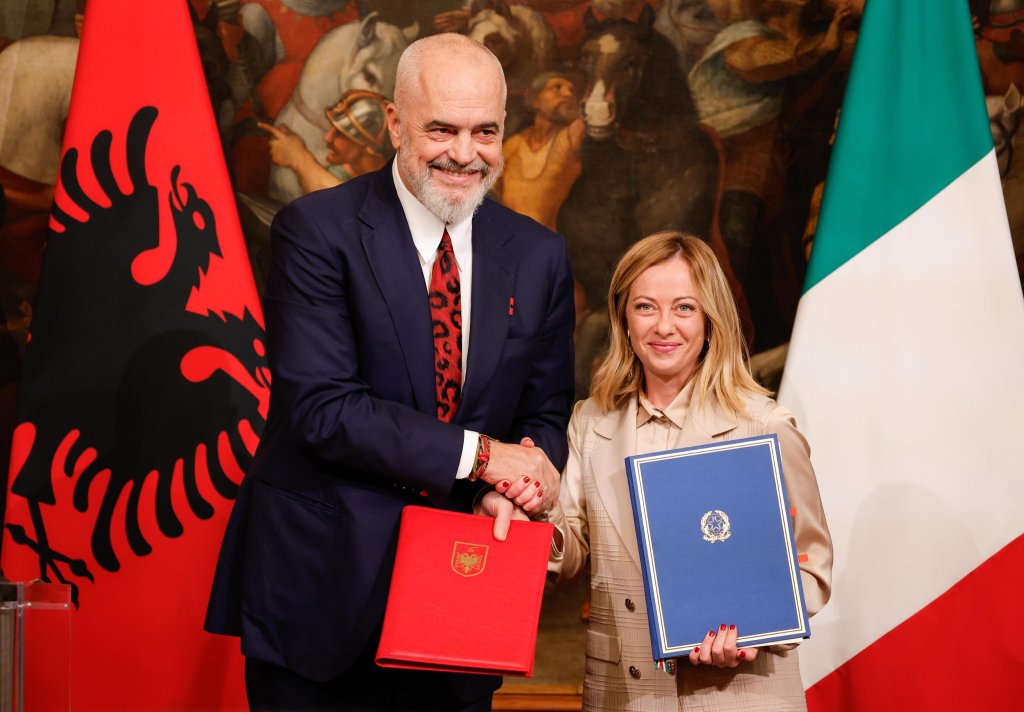
Politicians from Germany's conservative CDU/CSU party in particular have been pushing for a third-country deal, modeled on Italy's draft agreement with Albania to house and process people seeking protection in the EU.
Experts, however, say there are high hurdles and many practical questions and problems for externalizing asylum procedures, albeit it's legally possible, Tagesschau reported.
Also read: Germany to examine asylum processing in third countries
Will deportations to Afghanistan resume?
Another major topic discussed at Thursday's meeting was the possible resumption of deportations of Afghans and Syrians from Germany who have been convicted of serious criminal offenses or are suspected of being radical Islamists.
The German government has banned deportations to Afghanistan since the Taliban took power in Kabul in August 2021.
Resuming deportations to Afghanistan and war-torn Syria has been a hot-button issue in Germany that intensified at the beginning of the month following a deadly knife attack by an Afghan migrant.
Read more: Deportations of Afghans via Tashkent under review by German lawmakers, report
with dpa