
Austrian Interior Minister Gerhard Karner has said that the country’s tougher asylum policy is already proving to be a success, citing a decrease in the number of undocumented migrants attempting to enter Austria. He also underlined the importance of repatriations, including those of convicted criminals to Afghanistan and Syria.
On Thursday (May 16), Gerhard Karner, Austria’s conservative Interior Minister, told the German newspaper Die Welt that his authorities had picked up far fewer migrants without papers in the first quarter of 2024 than in the corresponding quarter of 2023.
According to Karner, in the first quarter of last year, Austrian authorities discovered 4,450 migrants trying to enter the country from neighboring Hungary without papers. In the first quarter of this year, that number had reduced to just 190. "Last year, the majority of those arriving were single men. That has now stopped," added Karner.
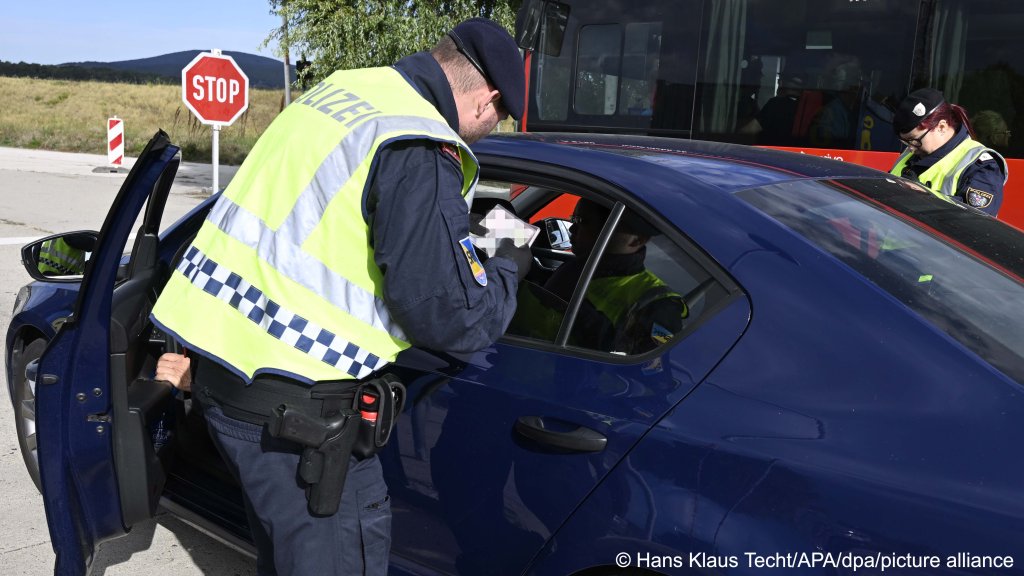
One of the reasons for this reduction in entry attempts is an increase in the number of border controls carried out by Austria, not just at the border itself, but also in surrounding areas, reported the German press agency dpa.
At the same time, Austria has sped up the asylum process, making it easier to process claims, authorities say. "We make sure that through that process, we can send back any migrants who have committed crimes or arrived illegally. That all sends signals to the smuggling mafias," thinks Karner. Telling them that "Austria is not an easy place in which to set up."
Also read: UN criticizes Austria's treatment of asylum seekers
Returns to Afghanistan
Karner used the interview with Die Welt to underline his belief that Afghan migrants who are found to have committed crimes should be able to be returned to their country of origin.
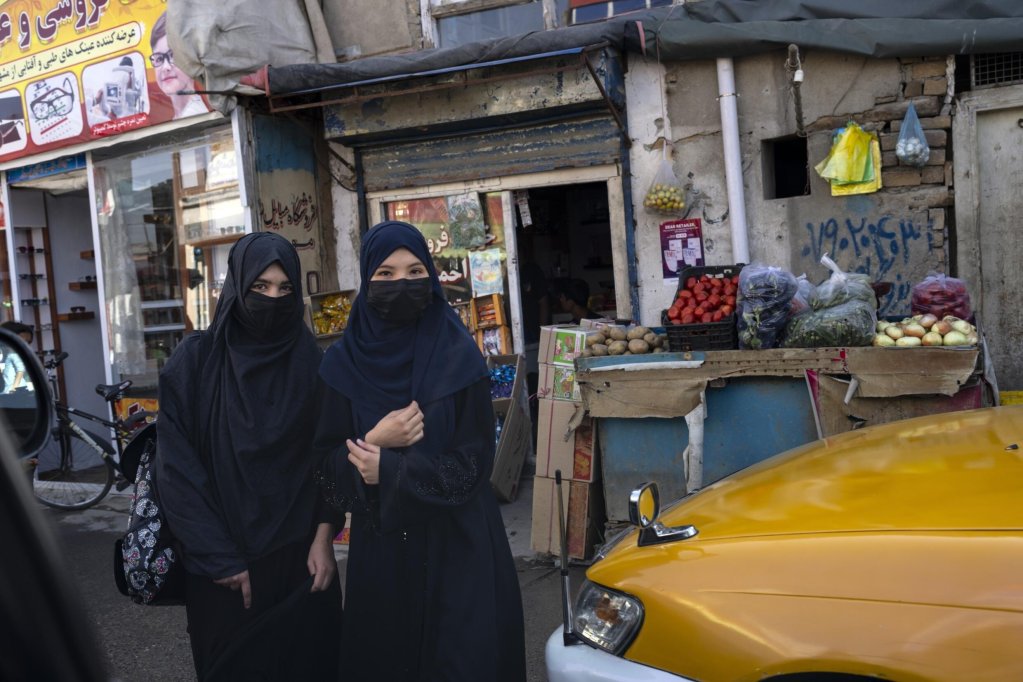
Returns from the EU of Afghan nationals have rarely happened since the Taliban took over. In mid-March, the European Parliament adopted a resolution recognizing the "repressive environment in Afghanistan, including public executions and violence against women."
The resolution adopted noted that the Taliban, who took back control of the country in 2021, had "dismantled the judicial system, ordered judges to implement Sharia law and have virtually eliminated women and girls from public life."
'Swiss presence in Kabul'
Germany suspended returns to Afghanistan in 2021 with the Taliban takeover. However, in 2023, newspaper reports in Die Welt suggested the country was thinking of beginning them again. Yet apart from the potential to contravene international law by sending people back to a country in which they might be in danger, Germany had no diplomatic ties with the Taliban at the time, making the coordination of any returns impossible in both a legal and practical sense.
In order for any country to send back foreign nationals, they need an agreement with the government of the destination country.
In March this year, the Swiss government announced that it would be opening a "humanitarian outpost" in Afghanistan from this summer. "Creating once again a Swiss presence in Kabul."
In February this year, Germany confirmed that it still did not recognize the Taliban and that its embassy in Kabul would remain closed.
Austria has no direct representation in Afghanistan
While Austria has no direct representation in Afghanistan, on the Foreign Ministry website it says that for Austria’s presence in Afghanistan, "see Pakistan." There is an embassy for "The Islamic Republic of Afghanistan" in Austria’s capital Vienna. InfoMigrants asked the Austrian Interior Ministry for a comment on whether they currently return migrants convicted of crimes to either Afghanistan or Syria. We had not received an answer at the time of publication.
Austrian minister praises 'Danish model',
Concerning the return of migrants to Syria, Karner told Die Welt: "In the case of Syrians, I would go even further. There is a region in the country around Latakia, which is regarded as pretty safe now. Why couldn’t we send Syrians who have committed crimes back to that region in the future? We shouldn’t create 'false taboos' in this area and avoid talking about things that are important."
The Austrian minister went on to praise the Danish government and the agreements it has made with the government in Kosovo. According to Karner, the agreement will allow the Danish government to send back those who have been convicted of crimes to Kosovo, as well as people coming from other countries.
"The Austrian People’s Party [ÖVP] would like to sign a similar agreement, along the lines of the Danish model, for Austria," stated Karner.
Also read: Austrian minister pushes EU to consider returns to Syria and Afghanistan
EU Commissioner also underlines importance of returns
This is not the first time that Karner has mentioned his hopes for sending more people back to their own countries. In March this year, he lobbied for this at an EU-wide meeting of Interior and Justice ministers.
Before the new EU Migration Pact was accepted and voted on, Karner was campaigning for stronger EU external borders, as well as a "consequent returns policy" to help "reduce pressure on EU countries hit by illegal migration."
At the time of his comments, reported the German newspaper Merkur, the Green party in Austria, which also forms part of the five-party governing coalition led by the ÖVP, declared they would not support this kind of policy and said "these kinds of 'hot-air' comments come at regular intervals."
The EU’s Home Affairs Commissioner Ylva Johansson has also regularly underlined the importance of returns as part of a functioning EU migration policy. In spring this year, she said that the number of returns had increased by 15 percent compared to the same period last year.
Johansson says that all return decisions should be entered into the Schengen information systems so that EU states can coordinate their policies and that there should be an increase in the number of agreements and cooperation with third countries, where these migrants would be sent.