
The bodies of nine migrants found in a small boat in northern Brazil could have been hoping to travel to the Canary Islands, authorities believe. A person from Mali and one from Mauritania are thought to be among the nine corpses.
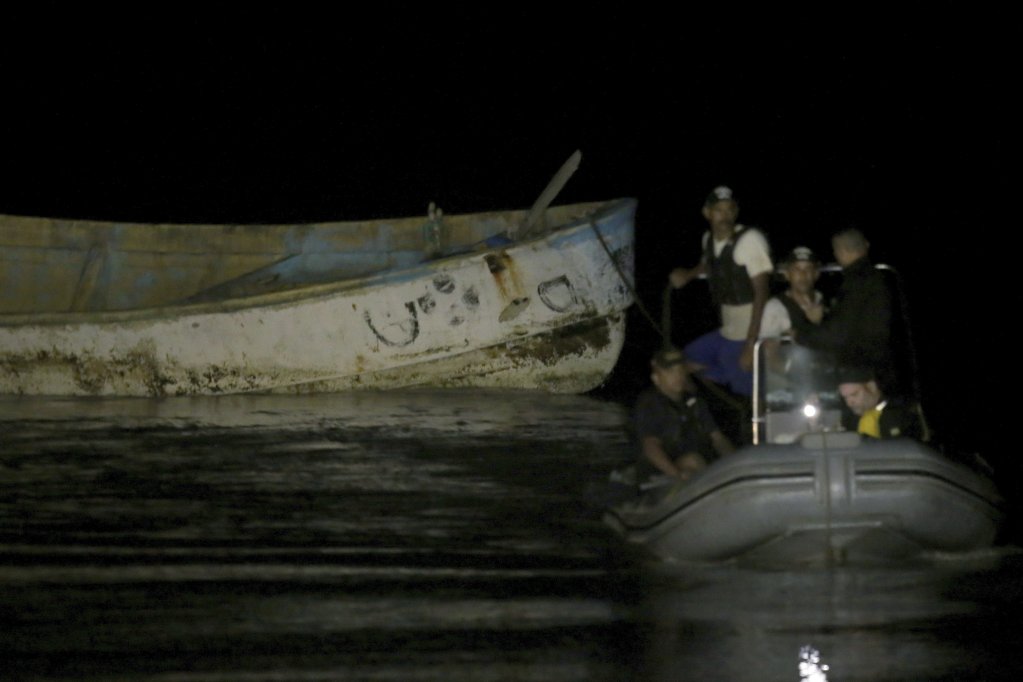
The boat that was found drifting off the coast of Pará in northern Brazil by fishermen on April 13 could have carried "at least" 25 people when it set out, probably from Mauritania, think Brazilian police investigating the incident, reported the news agency Associated Press (AP).
"There are loads of dead bodies here, look, it is so sad," comments the voice of one of the fishermen who found the boat in a video posted publicly on April 13, reports France 24’s Brazil correspondent for InfoMigrants French.
The estimate of how many people set out on the journey is based on the number of raincoats found inside the vessel, reports AP. The Spanish newspaper El Pais reported that the police have not yet confirmed the gender or the age of those found on board.
Documents and objects found nearby indicate migrants' origins
"Documents and objects found near the bodies indicate that the victims were migrants from the African continent, from the region of Mauritania and Mali," stated the police. The police added that other nationalities could also be among the deceased.
By the time the boat reached the coast near the town of Braganca in Brazil, it had just nine bodies left in the small wooden boat.
Also read: Migrant arrivals to Spain up 277 percent
Experts believe the boat may have originally been headed on the so-called Atlantic route from the coast of West Africa towards the Spanish archipelago, the Canary Islands. However, at some point in the voyage, it must have drifted far off course, and ended up right on the other side of the Atlantic, in Brazil.
Boat thought to be a Mauritanian fishing boat
The boat is said to be roughly 12 meters long and made of wood, in the style of a Mauritanian fishing boat, painted blue and white. These boats are frequently used by migrants leaving Mauritania and other neighboring West African countries, aiming for the Canary Islands.
Also read: Senegal, migration plays a key role in election debates
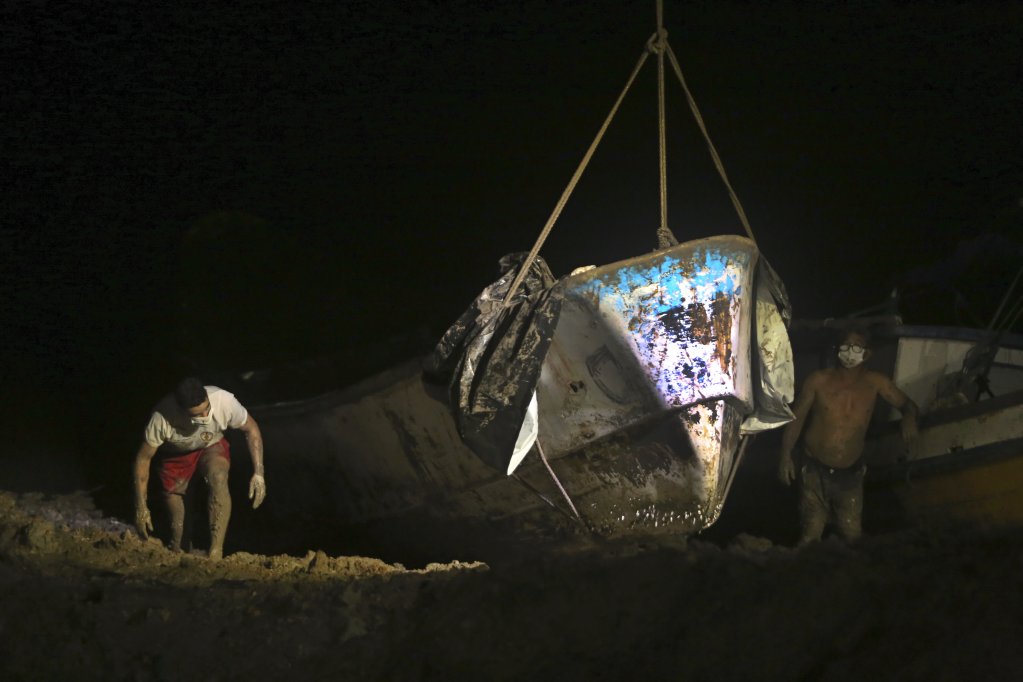
According to AP, authorities said that the bodies "were found in an advanced state of decomposition." This is complicating efforts to determine their identities and causes of death, reported by El Pais. Once a boat misses the Canary Islands, it may drift for months due to trade winds and currents before being discovered, as in this case off Brazil.
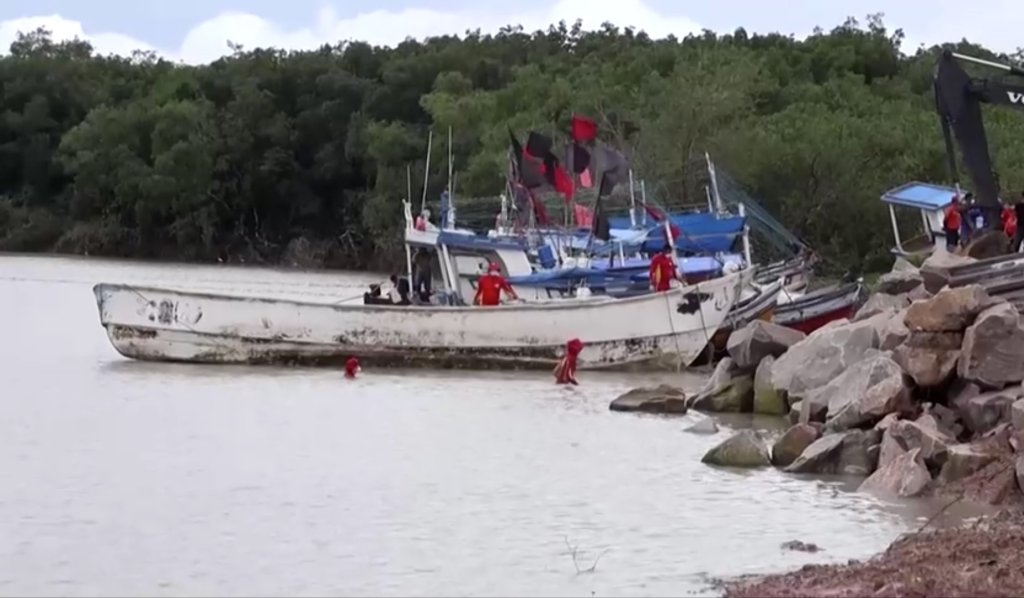
José Roberto Peres, the Federal Police chief in Pará state, told a local TV network that the boat may have drifted at least 4,800 kilometers and probably far more before it ended up on the Pará coastline, reported AP.
According to InfoMigrants French, Peres added that they found a registration of the boat in Mauritania on January 17. "So it could have been drifting for a long time," thinks Peres. "They must have set off at some point after January 17."
EU deal with Mauritania
Earlier this year, the Spanish Prime Minister Pedro Sánchez and the President of the European Commission, Ursula von der Leyen traveled to Mauritania to sign a series of deals between the EU and that country, designed to step up migration management and offer more investment and development in Mauritania to provide alternatives for those there to boarding a boat towards the Canary Islands.

Despite the new deals, the majority of boats leaving for the Canary Islands still depart from Mauritania’s coastline. Since the beginning of 2024, more than 13,000 migrants have arrived on the Canary Islands. Hundreds of others have been reported missing.
In Mauritania families have set up a 'national commission' to try and find out what happened to those who disappeared. Some families contacted AP saying they had been following the news of the boat found in Brazil, fearing their loved ones could have been on board.
Originally, Brazilian police thought the migrants may have come from Haiti, but now they are hoping to piece together the victims’ identities and the time and cause of death.
Also read: EU launches migration partnership with Mauritania
Atlantic route is highly dangerous
Even for those migrants who cross the Atlantic route towards the Canaries successfully, death and illness for some on board is not uncommon. Migrants who have spoken to InfoMigrants in the past have reported passing ‘ghost ships’ full of dead migrants, or just empty drifting boats, during their voyages, and have also talked about the pain of having to throw companions overboard if they succumbed to the lack of food and water, or the hot sun during the voyage.
Some boats have arrived on the Canary Islands with just a handful of survivors on board amid the dead bodies, after drifting off course, or being caught in storms, or running out of sustenance on board.
Last year, more than 1,400 migrants died on the Canary route, according to data from the UN Refugee Agency UNHCR.
Also read: Crossing the vast Atlantic Ocean
Not the first time boats have washed up in the region
Last week, El Pais reported that the bodies of the migrants would be taken from Braganca by refrigerated truck to Belém, the capital of the northern Pará state to be put through forensic tests, so that the Brazilian authorities can begin contacting the consulate authorities of their presumed countries of origin.
In fact, this is not the first time that boats perhaps originally bound for the Canary Islands have washed up on the other side of the Atlantic. In April 2021, the bodies of two men and one woman, as well as 32 telephones and African currencies were found on the coast in the north east of the country.
That same year, six other boats with the bodies of migrants washed up along the coast of Caribbean islands and the Central American country Nicaragua, according to an AP investigation.
With AP and AFP
Also read: Dying to reach Europe, the Atlantic crossing