
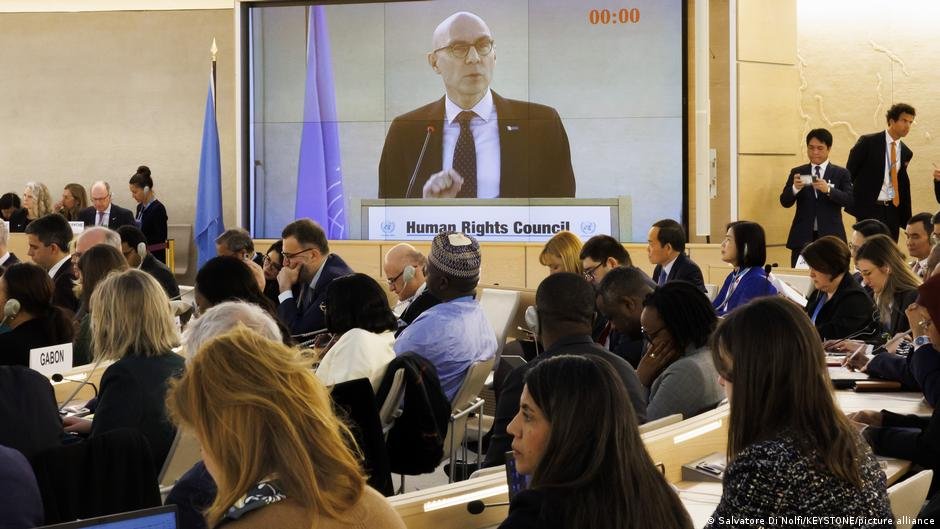
United Nations High Commissioner for Human Rights Volker Turk says that Britain's divisive plans to send asylum seekers to Rwanda will contravene basic principles of the rule of law and also risk undercutting human rights. Meanwhile, Rwanda seems to be preparing for a suspension of its own rule of law, as the government warns of the possibility of an impending war with its neighbors.
Turk urged the UK in a statement to "take all necessary steps to ensure full compliance with the UK's international legal obligations, and to uphold the country's proud history of effective, independent judicial scrutiny," highlighting that Britain's controversial plan to send asylum seekers to Rwanda could become a threat to the rule of law in Britain.
The United Nations High Commissioner for Human Rights particularly called for the Safety of Rwanda (Asylum and Immigration) Bill, tabled by British Prime Minister Rishi Sunak late last year, to be reconsidered in this context.
If the bill is passed, it would mean that British judges would have to treat Rwanda as a safe third country to which asylum seekers could legally be deported.
This comes after earlier, the UK Supreme Court had ruled that deporting asylum seekers to Rwanda would be illegal under international law, since Rwanda could not be deemed safe.
It is, however, likely that after ongoing scrutiny in both houses of parliament, deportations to Rwanda will eventually be regarded as legal.
Also read: UK: 'Illegal Migration Bill' to become law
Flights to take off before general election
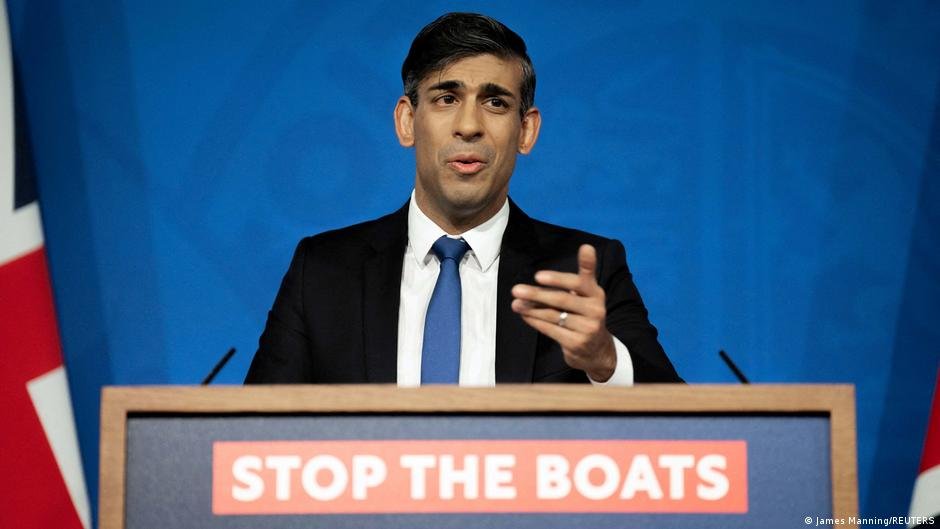
Prime Minister Sunak has vowed to get the bill through parliament and fly the first asylum seekers to Rwanda before general elections in the UK later this year. In a controversial move, he even bet money on it against television host Piers Morgan.
The Rwanda plan is part of the government's initiative to cut irregular immigration to the UK, which has reached record levels despite tighter border controls being introduced on land and at sea.
Sunak has stated earlier that enacting the Rwanda plan was crucial to deterring future migrants from considering coming to Britain using irregular routes, and to help destroy the business model of people smugglers.
However, despite the threat of Rwanda hanging over would-be asylum seekers' heads, the number of boats crossing the English Channel has risen dramatically in the past year.
This is why the issue of immigration is also going to be a major talking point in the upcoming general election in the UK, which is planned to take place in the second half of 2024.
Also read: British PM starts election year with long shadow of immigration hanging over his head
Turk: Rwanda policy harmful to UK as well
In his statement, Turk also highlighted that the Rwanda legislation would be dangerous not only to asylum seekers but to Britain itself, as it would give the British government powers to disregard international law as well as existing British human rights legislation.
"The combined effects of this bill, attempting to shield government action from standard legal scrutiny, directly undercut basic human rights principles," he said in his statement. "Governments cannot revoke their international human rights and asylum-related obligations by legislation."
Turk stressed that the legislation would also weaken the independence of courts by hindering judges from scrutinizing removal decisions to Rwanda and forcing them by decree to treat the East African nation as a safe country.
"It should be for the courts to decide whether the measures taken by the government since the Supreme Court's ruling on risks in Rwanda are enough," he said.
Also read: UK to challenge Supreme Court decision on Rwanda
Everything but safe: Rwanda in 2024
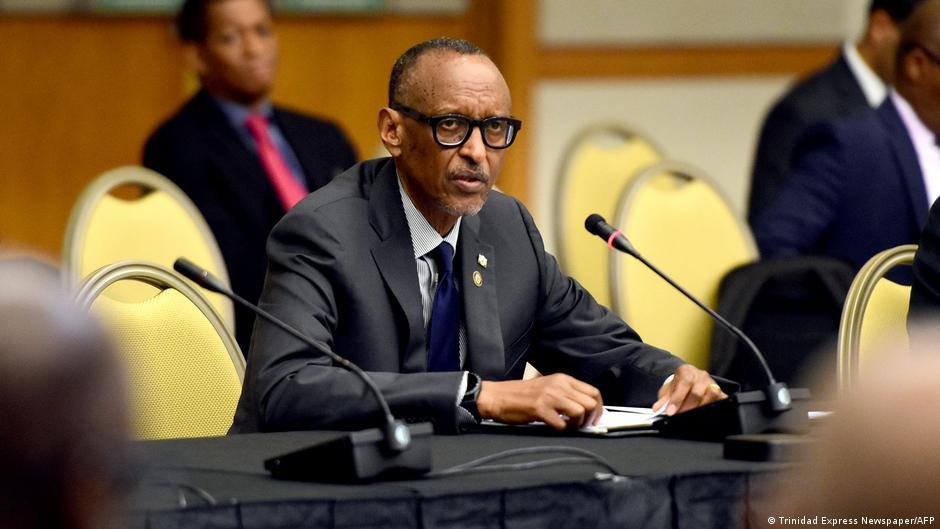
Turk's warning comes as Rwanda appears to be inching toward conflict itself: President Paul Kagame announced that it was facing the threat of war from neighboring Burundi and the Democratic Republic of Congo (DRC), and was prepared to respond to any attack.
This comes after the two neighboring countries recently formed a defense pact against rebel groups in their own countries, in particular against the M23 movement fighting in eastern DRC. Rwanda meanwhile regards the pact as a threat against itself:
"The Congolese political and military leadership, including President Félix Tshisekedi, has also repeatedly declared their intention to invade Rwanda and change its government by force," the Rwandan government said in a statement.
Numerous governments, including the United States, have, however, linked M23 to Rwanda -- a connection that the government in Kigali denies.
US State Department spokesperson Mathew Miller said the crisis in the region had already put millions at risk who were already "exposed to human rights abuses, including displacement, deprivation, and attacks."
Also read: Rwanda explained: From politics to human rights and refugees
Over 120,000 people have been displaced in the eastern DRC alone, threatening to spill over into neighboring countries and beyond.
In fact the UK has had to accept several Rwandan opposition voices as asylum seekers in recent weeks, according to a recent report in the weekly Observer newspaper.
But without a single asylum seeker yet being sent from the UK to Rwanda, there are questions about whether the €280 million scheme has helped line the pockets of Kagame's regime to prop up M23, while lawmakers in the UK are busy deciding whether or not Rwanda can be regarded as safe.
Also read: The UK: A haven for Rwandan refugees -- but not vice versa
with AFP