
Proxies or substitutes were reportedly used to answer a computer-based portion of qualifying exams that would allow foreign nurses to practice in the UK.
British authorities are investigating a scam potentially involving more than 700 healthcare staff who reportedly used proxies to pass a qualifications test in Nigeria so that they could work in the UK, the British newspaper The Guardian reported yesterday (February 14).
The quick completion of a computer-based qualifying exam at the Yunnik test center in Ibadan, Nigeria, prompted an investigation by the Nursing and Midwifery Council (NMC), the UK's chief regulating body, wrote the paper.
According to a statement on the NMC website, the recorded testing times were among the fastest ever observed.
Forty-eight of the nurses under investigation are already working as nurses in the NHS because the NMC is unable to revoke their admission to its register. However, they have been required to retake the test to prove their skills meet NHS standards.
The 48 will face individual hearings, starting in March, at which they will be asked to explain how they took and passed the computer-based test (CBT) of numeracy and clinical knowledge.
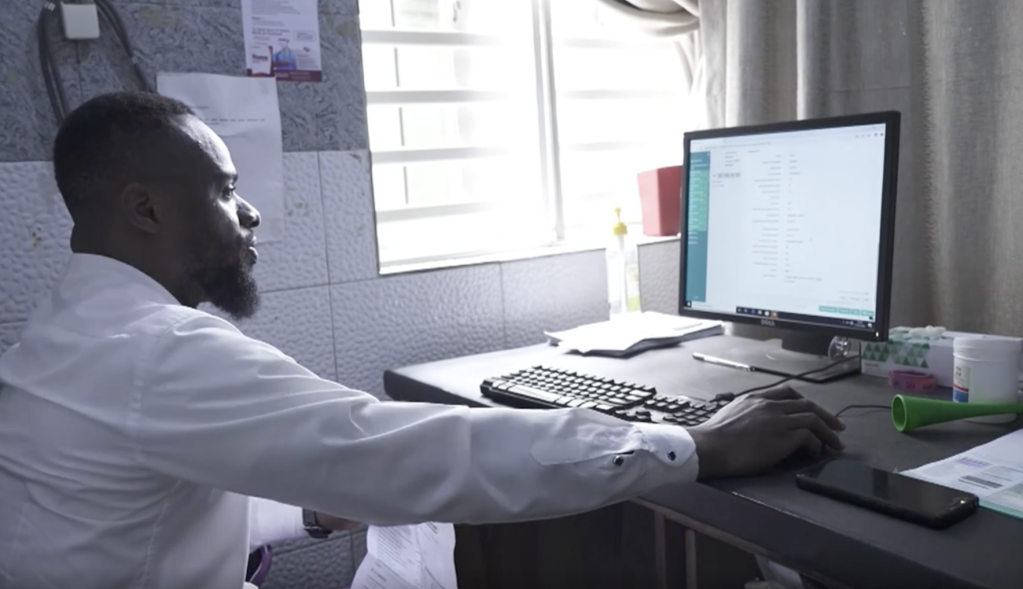
In a statement emailed to InfoMigrants, the NMC explained that based on the evidence, it is only looking into allegations of fraud against 717 of the 1,955 individuals who obtained their CBT results at the Yunnik site.
"However, the scale of the suspected fraud means we must treat any test result obtained there as invalid. We have written to individuals explaining this and what it means for them. For those about whom we are not considering fraud, they only need to successfully obtain a new, valid CBT result, and they will either be able to stay on the register with no further action or continue their application to join the register as normal," said Andrea Sutcliffe NMC Chief Executive and Registrar.
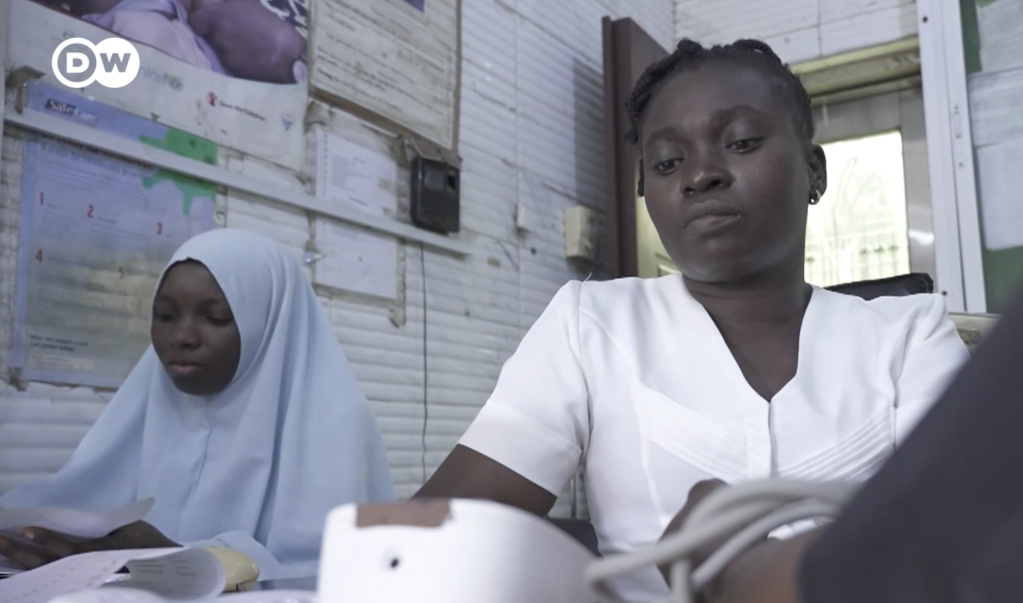
"Each year, thousands of international nurses and midwives take their test at hundreds of centers worldwide and go on to make a welcome and vital contribution to UK health and social care. Occasionally, we identify individual concerns that we deal with through our normal regulatory processes, however, this is the first time we’ve found evidence of widespread fraud at a test center," Sutcliffe added.
Additionally, Sutcliffe stressed that the NMC thinks, "the scale of the fraud means we’ve had to ask them to retake the test. We’ve given everyone up to three retest attempts, and their exam fees have been covered."
According to the NMC, hundreds of people who were not believed to have acted fraudulently have now successfully retaken the CBT and will face no regulatory action.
Preventing stigma and discrimination
According to UK government data, approximately 265,000 out of 1.5 million National Health Services (NHS) staff are non-British nationals, with Nigerians ranking as the fourth most numerous group among foreign nationals within the NHS.
This revelation has sent shockwaves through the NHS and care homes where these nurses currently serve. The investigation raises concerns about the authenticity of qualifications, posing a significant risk to the healthcare system.
"We know employers will have been thinking of the potential for unfair and discriminatory behavior towards individuals affected by the issues at Yunnik, as well as other internationally educated or ethnically diverse colleagues. We’ve asked employers to be proactive and take any further steps they can to eradicate any unfair, racist or discriminatory behavior from their workplaces," said Sutcliffe.
Shock and anxiety over the healthcare system
"It’s very, very worrying if … there’s an organization that's involving themselves in fraudulent activity, enabling nurses to bypass these tests, or if they are using surrogates to do exams for them because the implication is that we end up in the UK with nurses who aren’t competent," Peter Carter, who held positions as chief executive of the Royal College of Nursing and chair of three NHS trusts told The Guardian.
According to reports in the Nigerian local press, the Nursing and Midwifery Council of Nigeria (NMCN) has introduced new regulations in response to the ongoing investigation. Under these guidelines, graduates from foreign nursing schools are obligated to register with the NMCN, and secure a practicing license, a process that may extend their qualification for the UK by up to 18 months. Additionally, applicants must possess two years of post-qualification experience and pay a non-refundable fee.
In response, the National Association of Nigeria Nurses and Midwives (NANNM) stormed the streets of Abuja to protest against the stricter verification guidelines that they claim are a violation of their human rights and hindrances to career opportunities.
Global nursing shortage
In 2020, the World Health Organization (WHO) set a goal of reaching a target of at least 9 million more nurses and midwives by 2030 to plug existing healthcare workforce gaps.
An aging population, increasing healthcare demands, and a low number of nursing students are pushing Western countries to look beyond their borders to fill the headcount needed in hospitals and care homes. The COVID-19 pandemic further exacerbated this shortage, with the WHO estimating that about 115,500 health and care workers have died from COVID-19 in the period between January 2020 to May 2021.
The UK has achieved an all-time high number of nurses and midwives, reaching 372,411. Despite this milestone, there is still a demand for nearly 50,000 additional nursing and care professionals.
World’s largest supplier of foreign nurses
The Philippines in Southeast Asia is the world’s largest supplier of foreign nurses. Government data puts the number of active registered nurses at more than 500,000. More than half – or over 300,000 have left for countries such as Austria, Germany, and the United States.
Eleanor Nolasco, national president of the Filipino Nurses Union (FNU) told InfoMigrants that the average salary for a government nurse is P36,000 (€600)--adjusted from the paltry sum of P25,000 (€400) after an 18-year legislative battle.
Amidst these deplorable working conditions, nurses are lured into working in foreign countries. "Countries like Germany and the UK are aggressively recruiting nurses from the Philippines," said Nolasco.
Apart from the promise of quadrupling the salary, recruiting governments also add on other perks like shouldering language proficiency classes and review classes for board certification.
"Filipino nurses are exhausted. They are forced to work abroad because of the limited options here," said Nolasco.
Forced labor even in a regulated profession
Exhaustion, stemming from low salaries and grueling working hours, fuels a desperate desire among nurses to leave and creates an environment where scammers and unethical recruiters exploit vulnerable situations for quick profits.
In a recent case, the Philippine Nurses Association (PNA) assisted Filipino nurses in Qatar who fell prey to contract substitution or were paid lower than what was promised.
The victims had reportedly signed a contract promising a P30,000 salary (about €499). When they got to Qatar, they were made to sign a different contract and received only half upon arrival, Chay Bondoc president of the Philippine Nurses Association (PNA), the largest nursing association in the country told InfoMigrants.
"Instances of forced labor and contract substitution typically associated with unregulated, low-income jobs have found their way into regulated professions like nursing," said Bondoc.