
International help started pouring in after a devastating earthquake struck Turkey and Syria in February last year. Various European countries offered special three-month visas to help those displaced by the disaster. But access to those visas has been difficult to obtain, Syrian refugees stuck in Turkey say.
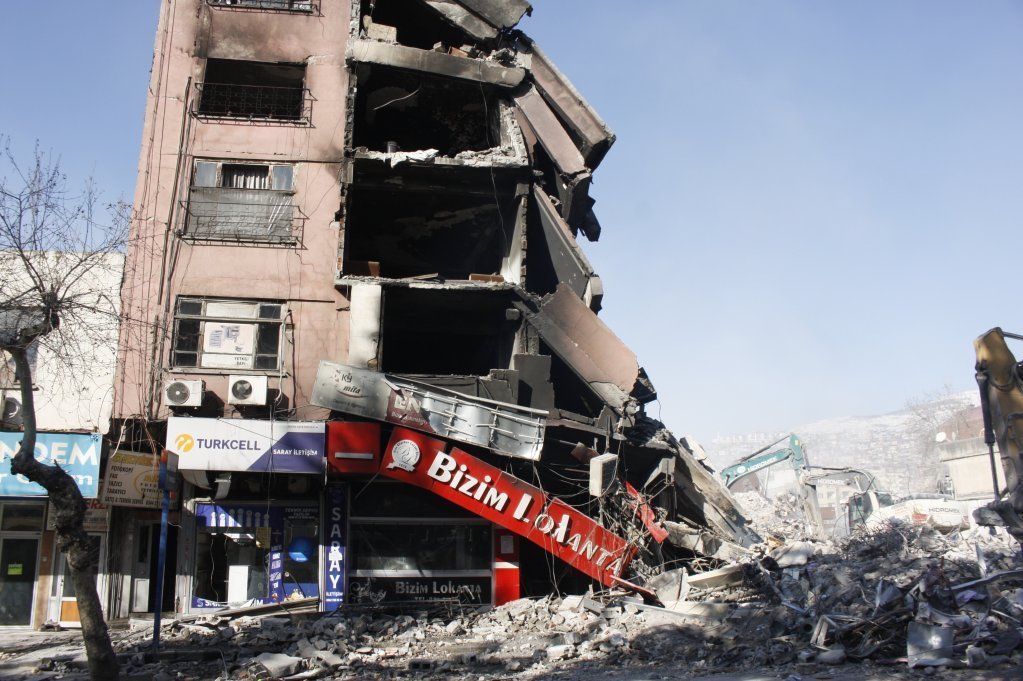
Millions are still living in tents a year after a devastating earthquake hit parts of northern Syria and southeastern Turkey in the early hours of February 6, 2023.
Hussein, a Syrian teacher living in a camp in Turkey, is one of those still severely affected a year later.
Hussein spoke to Rama Jamarkani from InfoMigrants Arabic department. He told her that the camp he had been living in in Turkey prior to the quake collapsed.
At first, Hussein and his family were moved into large tents provided by the Turkish government. The state provided them with one meal a day.
Fears of being returned to Syria
Later, Hussein and his family were forced to buy a poor-quality tent to accommodate three families after official aid was stopped and they were sent back to their original camp, even though it was no longer offering any services to residents.
Since then, Hussein, along with 12,000 other teachers in camps around Turkey, have lost their jobs.
Just 3,000 had their jobs reinstated. Hussein was not one of them. He is struggling to provide for himself and his family amid a threat by the Turkish government that he will be returned to Syria.
After the quake, two of Hussein's brothers living in the Netherlands attempted to bring him to Europe. But they were unable to do so, because of the lack of guarantee Hussein would return when the temporary visa elapsed.
In the year since, Hussein has attempted to reach Europe on his own, but didn't make it and in the end turned back to Turkey.
'Daily life is a struggle'
"Daily life is a struggle," says Hussein. "There is nothing but despair, this is what I live every day. I have no hope. My only concern today is not to be sent to death in northern Syria again. Despite everything that is happening here, the situation is still better than over there."
Hussein knows this from bitter experience, he explains. His sister is still living in northern Syria. She and her family have been living in tents for a year now.
They also bought the tents themselves when nothing adequate was provided to them and they were unable to rebuild their home.
Also read: Tens of thousands of Syrian refugees return to Syria after quake
In the camp, Hussein says, there is no sanitation, no services, diseases are spreading and there is no access to medical help. On some days, there is no food available. There are no jobs, Hussein says, describing daily life as "suicidal."
Humanitarian aid cut in the year following the quake
Help from the United Nations has been cut and international aid is also missing in the quantities that are needed, stated Malteser International in a press release from January 30 this year.
"In the northern Syrian city of Afrin, for example, things look as though the earthquake had just happened," commented Lena Schellhammer, country director for Syria and Turkey with Malteser International.
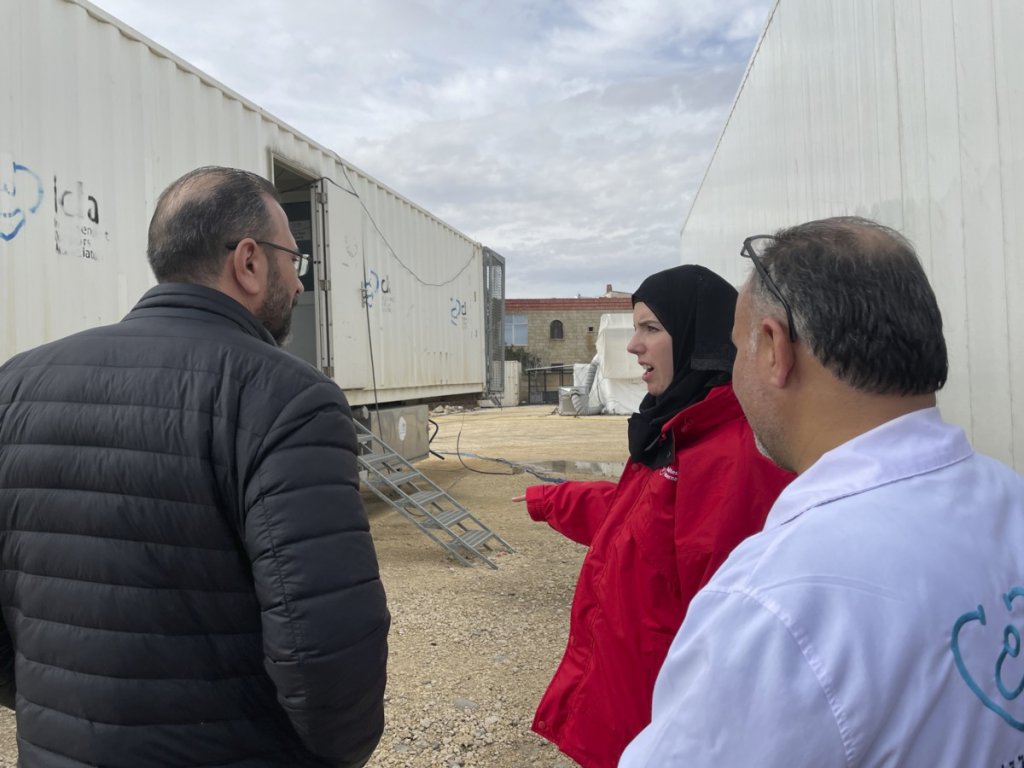
"What I have seen has shaken me," continued Schellhammer. "Damaged houses are still standing, completely unlivable, on the streets. Right next door are tents and containers for those who lost their houses in the earthquake."
Malnourished children
Schellhammer explains that many of the people living in the region before the quake struck were already refugees fleeing war in other parts of Syria. They thought they would escape the fighting in that region. The quake took away the little they had left.
Also read: Somber procession of refugees killed in quake
More and more children are turning up at clinics like the Al-Dana Maternity Hospital with malnourishment, reports Schellhammer. Malteser International and its partners are trying hard to support the rebuilding efforts, including getting people back to working the land to produce fruit and vegetables in order to feed themselves.
The situation is not much better over the border in Turkey. Turkish President Recep Tayyip Erdogan has unveiled a few new communal buildings and apartment blocks for people, but millions are still living in tents.
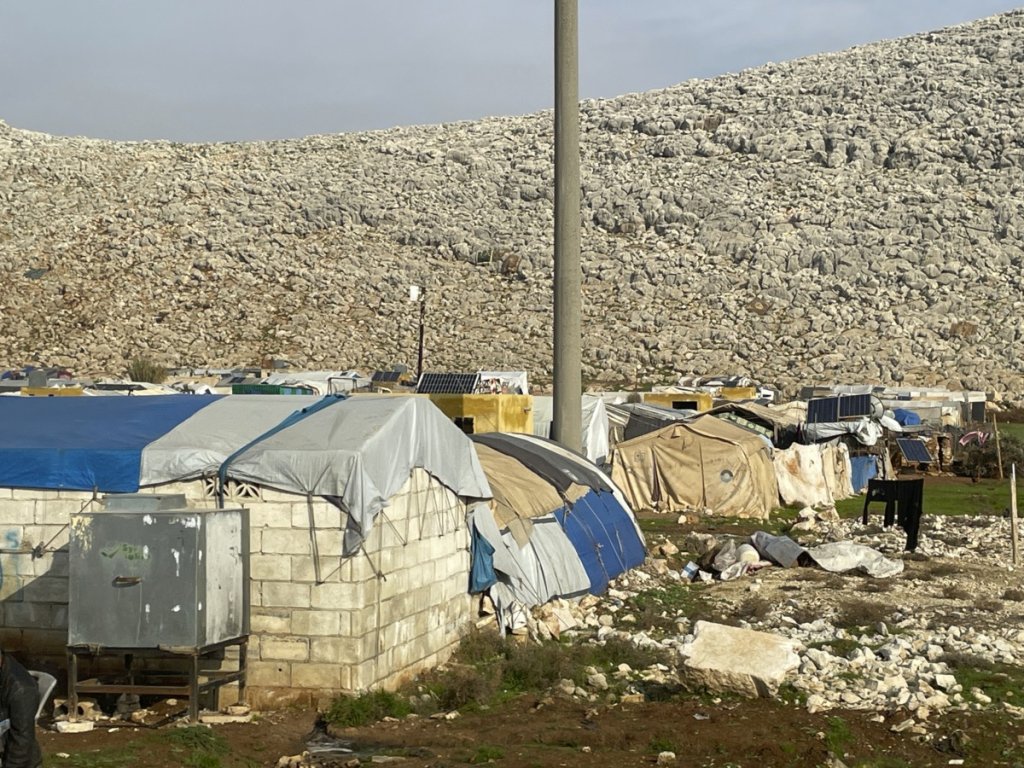
Many of those living in the makeshift camps are Syrian refugees who had already fled to Turkey prior to the quake. Some of them should have been able to leave for countries in Europe following the quake, but many found the red tape and rules impossible to follow. InfoMigrants Arabic spoke with sources associated with these individuals.
'At that time, everything was difficult'
Maha is a Syrian refugee. She lives in Essen, Germany, and works with a local organization that assists migrants.
Since the earthquake, Maha has been attempting to evacuate her relatives from northern Syria, as well as a friend, but she has not been successful, as she found they did not meet Germany's requirements for the temporary visa.
Also read: 'Where should we go? Syrians leave Turkey after quake
"At that time, everything was difficult," Maha told Jamarkani. "Especially for individuals who had lost everything, including their identification papers. Accessing government offices that were not even present in northern Syria was another insurmountable hurdle. Most people were just unable to pursue these special visas, both because of psychological blockages as well as physical ones, perhaps because of injuries sustained during the earthquake."
Maha points out that German bureaucracy is notoriously complicated. Even with the supposed simplification, Maha thinks that most people -- even those with family in Germany -- found it difficult to follow up on the process. "Most people just lost hope," says Maha.
'Some are secretly awaiting death'
Maha says she believes that people residing in Turkey had a better chance of success in the process, an observation borne out by data from the German government.
"Their situation is very dire, they have lost the ability to voice their complaints. They are convinced they are trapped in miserable circumstances. Some are secretly awaiting death," Maha says about people she knows who are still in northern Syria.
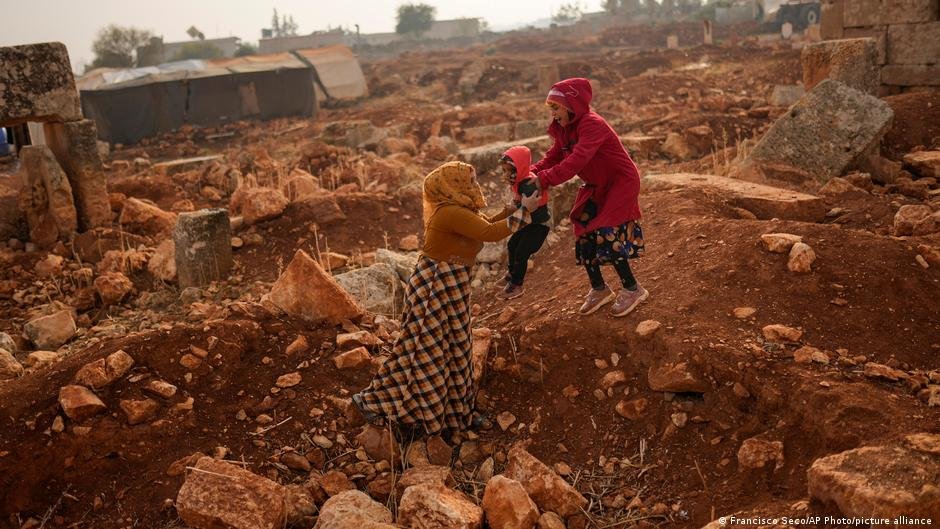
One of Maha's relatives, who she attempted to help last year, is living in awful conditions, with three children and no husband or provider, she says. Maha believes if things had been made easier in Germany, this family, who hasn't received any help, could have been saved.
"Sometimes they go days without food, not all buildings have been reconstructed, the situation is bleak, and there is social stigma associated with seeking assistance, along with fear of exploitation as a vulnerable woman. This family simply awaits death because there is no longer any hope," says Maha sadly.
Ahmed* is a Syrian journalist living in Turkey. He says many of the earthquake survivors he has spoken with say they have had trouble understanding the visa process for Germany.
Also read: Survivors face long delays for German visas
He told Rama Jamarkani: "In the past year, while I have been investigating these cases, I have not come across a single case of Syrians obtaining an emergency visa. Mainly because they did not meet what they believe to be the 'onerous' conditions imposed on them about guaranteeing their return at the end of the visa's duration."
Exceptions to the rule?
Ahmed admitted to Jamarkani that of course there may be exceptions to this rule.
He said he's found in his reporting that only those who had already lodged family reunification files with the German government had any hope of meeting the necessary criteria.
Most people Ahmed spoke to believe that no new visas were actually issued. This is partly because anyone with a first degree relative in Germany had already applied for family reunification even before the earthquake hit.
Also read: 'I heard voices from under the rubble'
Ahmed added that there were a few Syrian Palestinians nominated by UNRWA to be considered for German resettlement programs. After the earthquake hit, some of those in this category were take to Germany via this route.
In May 2023, the German government announced help for victims of the earthquake living in Turkey. They offered a three-month emergency visa that should have lasted until August 2023. The emergency visa came into effect on May 7, stated a press release from the German Interior Ministry at the time.
Temporary visas
The temporary visa promised a quick and easy process and temporary route to Germany. German Interior Minister Nancy Faeser commented: "Germany has offered a lot of help in the affected regions. We want to support those who have lost everything. That is why we have made it very easy for those with close relatives in Germany to come over for a short time to regroup after such a shock."

German Foreign Minister Annalena Baerbock added: "True friendship is that which holds even in an emergency. That is true for the friendship between Germany and Turkey."
Baerbock said that Germany had offered €238 million worth of aid to those affected in Turkey and Syria. She recognized that although money wouldn’t bring back the estimated 52,000 people who lost their lives, they could make the bureaucratic process for family reunion a little simpler.
Also read: Germany simplifies visa process for quake victims
Baerbock said that between February and May, around 9,500 Turkish people had come to stay with relatives in Germany. The foreign ministry's May announcement allowed those people a little longer to stay in Germany with their relatives, while the rebuilding continued in Turkey, she said.
In the government press release, visas for Syrians living in the affected earthquake zones were also going to be "prioritized." At that time, in May 2023, the press release stated that "more than 1,200 Syrians from the affected zones have visas to join their families in Germany."
Those who wanted to apply were directed to a mobile "Visa bus" to file their documents.
Germany provided around €240 million in aid
Last week, InfoMigrants asked the German Interior Ministry, the Development Ministry and the Foreign Ministry what had become of the people that received those visas since then. We received replies by email from the German Interior Ministry and the Foreign Ministry.
The Foreign Office press spokesperson confirmed that, according to their records, "a total of 17,000 visas for people in the affected earthquake zones were granted." They added that Germany had sent around €240 million in aid, split between €125 million for Turkey and €123.4 million for Syria. The aid included costs for the search and rescue teams, as well as humanitarian help offered at the scene.
The financial and humanitarian help continued until the end of 2023. The spokesperson added that further humanitarian help is set to continue in northwest Syria.
Also read: Earthquakes in Turkey and Syria also affect millions of displaced people
The Interior Ministry spokesperson also answered InfoMigrants' request for information. They confirmed that the visas had been given out, but said that they had no statistical information about how many people might have stayed on after the end of the temporary visas.
InfoMigrants asked the German Interior Ministry on Tuesday afternoon if there were any other routes available to Germany for those affected by the earthquake but without close family in the country. They replied the same day with the following email statement from their press spokesperson:
"The simplified visa process was designed just to meet the emergency situation, and allow Turkish people who had been affected by the earthquake a quick and unbureaucratic process to join close family in Germany. A pre-requisite for this process was that those close family members would issue a guarantee of responsibilitiy for those family members, to allow them to be granted temporary residence in Germany. This process was extended in May until the beginning of August 2023."
They added, "Both Turkish and Syrian applicants, who didn't have close family already in Germany were also given priority in the more general visa application process. Syrian applicants who were also in the process of applying were given priority to find routes to permanent residence in Germany, perhaps through family reunification, or other routes.
But the special priority and the emergency visas expired in August 2023. Syrian citizens who were affected by the earthquake were also brought to Germany via the humanitarian relocation programme run by the German government, which is part of the EU-Turkey agreement. Those affected were also given a special priority following the earthquake.
With additional reporting and interviews in Arabic by Rama Jamarkani, DW Arabic / InfoMigrants
*Not his real name, chosen to protect his identity