
A migrant from Cameroon has filed a lawsuit against Spain over his treatment in the Spanish exclave of Ceuta a decade ago. The young man was an unaccompanied minor at the time of the incident.
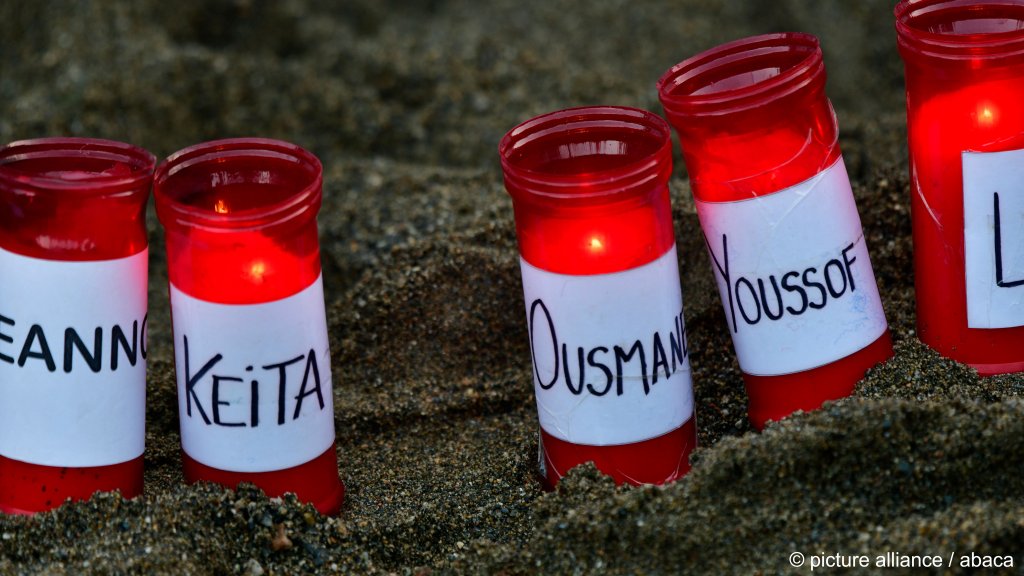
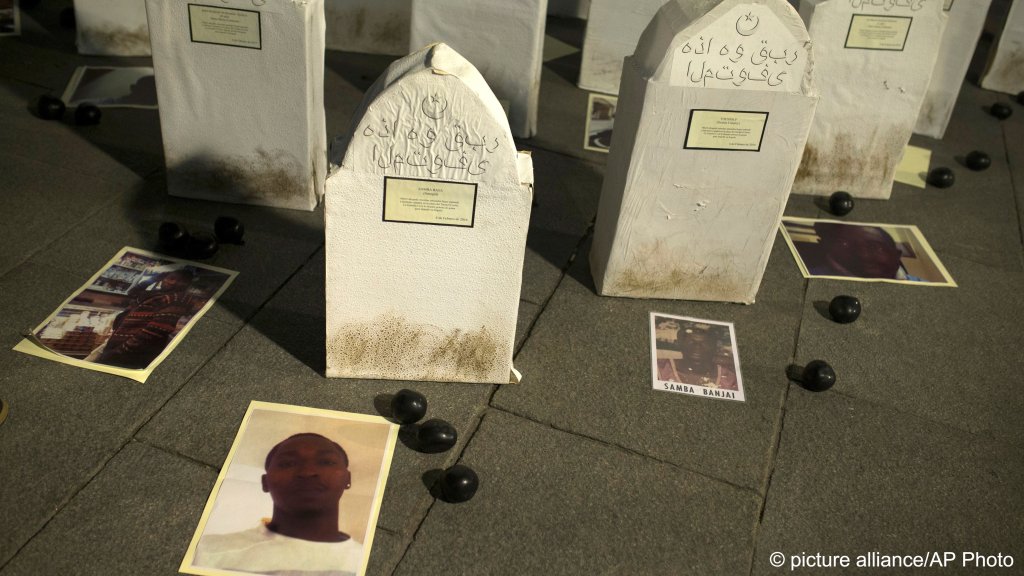
In 2014, at least 15 migrants died and countless more were injured while trying to swim from Morocco to Ceuta, a Spanish exclave on the African continent. In a summary of the case, the European Center for Constitutional and Human Rights reported that 23 migrants who survived the incident were subsequently pushed back to Morocco.
Now, one of the youngest survivors has filed a lawsuit against Spain via the UN Committee against Torture and the European Center for Constitutional and Human Rights (ECCHR).
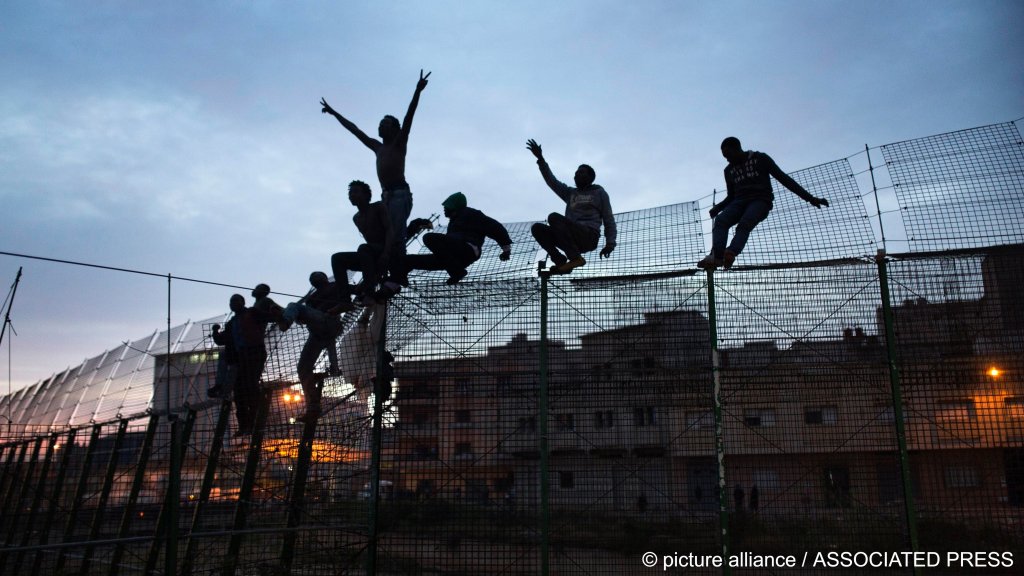
According to wire reports, Ludovic N.* was just 15 and an unaccompanied minor from Cameroon when he attempted to enter Ceuta via Tarajal beach. He was unable to swim and wore a floating device to make his way towards Spain, holding on to the border wall with one hand and paddling forward with the other, states the ECCHR.
'Beaten and tear-gassed'
Ludovic N. says he was beaten and tear-gassed by Spanish Guardia Civil officers while trying to hold onto the sea wall border that divides Moroccan and Spanish territory. He alleges that an officer beat his arm with a baton so hard his "skin tore."
Despite his bleeding arm, he carried on, struggling to breathe because of the tear gas, and fearing for his life, states the ECCHR. Once stopped by the Civil Guard, Ludocvic N. says he was not identified as a minor, nor offered any medical aid, translation or legal assistance. He was not given the chance to speak, and was not spoken to. He was simply pushed back through a door in the border fence to Morocco. At that point, he says, he saw the bodies of those who had died in the water.
Ludovic N. says that in Morocco, he was taken to a hospital in Nador and given "informal treatment" before being taken a day later and expelled at the Algerian border.
Case closed
In the intervening years, the young man moved to Germany, where the ECCHR is based. His Berlin-based lawyer Carsten Gericke told the French news agency Agence France Presse AFP: "The UN must insist that Spain re-opens its investigation into the Tarajal events and that it brings impunity to an end."
In fact, a case about the events at Tarajal beach on February 6, 2014, went all the way to the Spanish Supreme Court in 2022, but the case was shelved due to a lack of evidence, reports AFP. Previously several lower courts had also opened and closed the case.
Also read: Spain and Morocco mend ties with migration agreements
Elena Munoz from the Spanish Commission for Aid to Refugees (CEAR) told AFP, "there is still no truth, no justice, the families have not been compensated and therefore there is no guarantee of non-repetition."
According to the ECCHR website, Ludovic N. is hoping that by bringing the case, he will finally see "justice done." Ludovic N. was one of about 400 people that day who tried to breach the border between Morocco and Spain.
'There is still no truth, justice or compensation paid'
"There is still no truth, justice or compensation paid. A decade has passed and no one has been convicted for the deaths and injuries of so many people. Violence at the border has continued in court. We are not being treated like human beings," Ludovic N. told ECCHR.
Ludovic N. added that he had never been called as a witness or to testify in court in the cases that have been brought about that day. After pressure from civil society and human rights organizations, an investigation was launched against 16 officers from the Guardia Civil who were present when the incident occurred, but the case was closed in June 2022.
Also read: Spanish list reveals extensive use of tear gas against migrants in Melilla tragedy
Hanaa Hakiki from the ECCHR said that "the brutal crackdown in Playa del Tarajal is representative of Europe’s racist and deadly border policies and shows complete disregard for human life –especially Black people.” Hakiki added that "Ceuta and Melilla serve as Europe’s laboratory for lawlessness at the EU’s external borders."
According to the ECCHR case, there is a long list of failings in the investigation and case work into what occurred that day in 2014 in Ceuta. They say bodies weren’t identified, no one interviewed the survivors and the families of victims were prevented from attending Spanish court proceedings.
Legal precedent?
On January 22, Spain’s Supreme Court did rule that the deportation of child migrants was illegal in another case involving a May 2021 mass border crossing into Ceuta.
The Supreme Court dismissed the Spanish government’s attempts to appeal the ruling, arguing that expelling minors violates both domestic immigration laws as well as the European Human Rights Convention.
In the ruling, the court said that every minor is entitled to an "individual administrative procedure" before they can be deported, reported AFP. The court recognized that deportation can put minors at "serious risk" of "physical or mental suffering."
Also read: 'Despite my best efforts, I am still a migrant'
Spain’s government tried to argue that they could deport people based on a bilateral agreement signed between Spain and Morocco in 2007 allowing the return of minors under "exceptional circumstances."
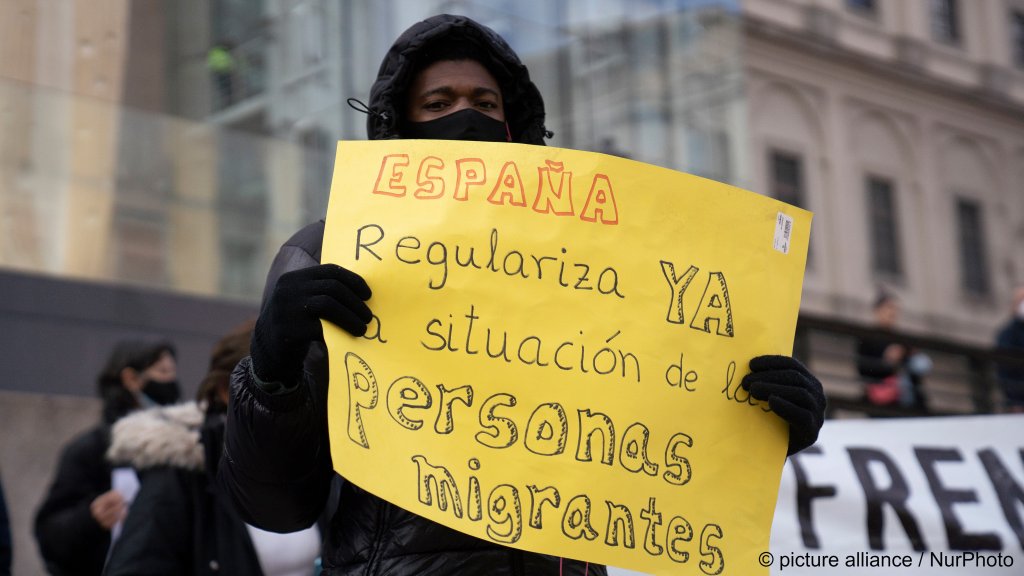
In fact, Spain is legally obliged to care for young migrants until their relatives can be located, or until they turn 18, reports the news agency Associated Press (AP).
A spokesperson for the Interior Ministry told the news agency Reuters that the government had “maximum respect for judicial decisions” but declined to comment further on the ruling or any practical consequences that could stem from it, reported the news agency Reuters.
'What happened in Tarajal paved the way for violence at the borders'
According to Sani Ladan from the Elin Association, a grassroots group working with migrants and refugees in Ceuta, "what happened in Tarajal paved the way for violence at the borders to become something that was tolerated. We believe it had a direct link to the massacre that took place in Melilla [another Spanish exclave on the African continent] on June 24, 2022."
Ludovic N.’s complaint to the UN Committee against Torture is based on his "ill-treatment…his expulsion…as well as the failure to investigate his case ex officio,” states the ECCHR case summary. He says he believes the Spanish authorities' lack of interest in interviewing him over eight years of investigations and court cases is "symptomatic" of their "unwillingness …to conduct an effective, prompt and impartial investigation to clarify the circumstances in which so many lost their lives, disappeared and were injured."
Also read: One dead as Spain extends closure of land border with Morocco
The case calls for the addressing of "major shortcomings" addressed, including "bias towards Guardia Civil officers and against Black migrants, non-independence of investigative forces, obstruction of victims’ involvement and failure to take basic investigative steps."
Ludovic N.’s case, states the ECCHR, "is part of a series of legal challenges to address the impunity for systematic human rights violations inherent to pushbacks at the EU’s external borders, for which Spain’s policy at the borders of its African enclaves of Ceuta and Melilla provides a blueprint."
With AFP, AP, Reuters
*Name changed by the ECCHR to protect the claimant’s identity.