
Over the weekend, hundreds of migrants have been rescued by the Greek and Cypriot coast guards in the eastern Mediterranean area. Some have also been reported missing after shipwrecks.
At least four people have been missing since Saturday (January 20) in the Aegean Sea after a boat carrying more than 20 people capsized on its way from Turkey towards Greece.
The rubber dinghy capsized off the small Greek island of Farmakonisi, reported the German news agency dpa citing Greek public radio ERT, which explained that the search for those missing was hampered by strong winds. About 20 people from the boat managed to reach the coast of the island without assistance.
The coast guard and passing merchant ships have also rescued a total of 149 migrants over the past 48 hours, reported dpa on Sunday, (January 21). These migrants reportedly had set off from Tobruk in Libya towards Crete, paying between €1,000 to €3,500 for their journey to smugglers.
In a statement published late on Saturday, the Greek coast guard explained that it had been informed of migrants in difficulty off the coast of the small island of Gavdos, Greece's southernmost island, not far from Crete, on Saturday afternoon. The coast guard also posted pictures of some of the migrants rescued.
Merchant ship helps with rescue
A Danish merchant ship, the Maersk Brownsville, helped locate the migrants and pick them up, bringing them to port in Kali Limeni. Two suspected smugglers were identified on board this ship, states the Greek coast guard, a 31-year-old and a 26-year-old, they have both been arrested on suspicion of putting life at risk and belonging to a gang organization.
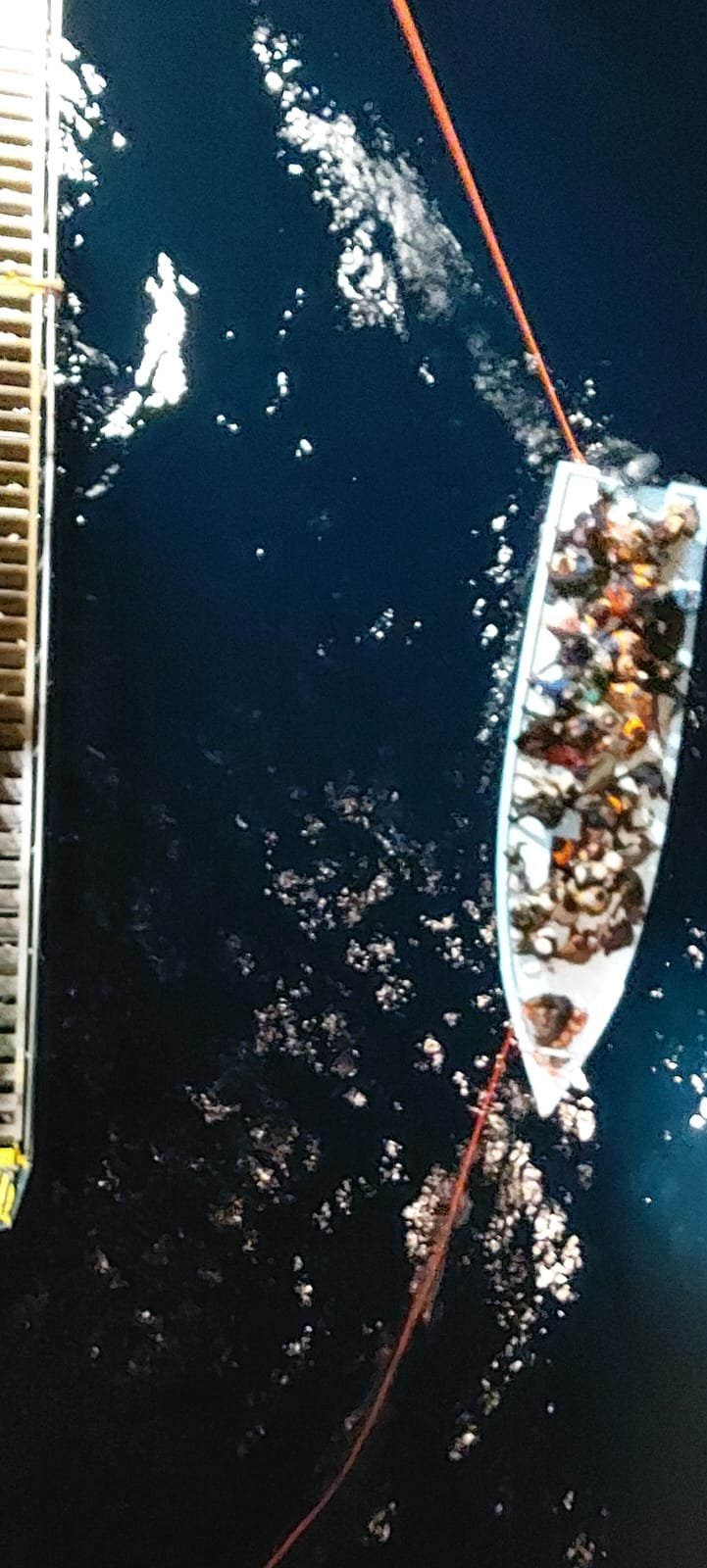
The Greek newspaper Ekathimerini also reported on one of the ships that arrived from Libya on Saturday (January 20). According to its newsroom, the migrants told the merchant ship that their ship had experienced a "mechanical failure." At that point, they were about 35 nautical miles off Crete.
On arrival in Kali Limeni, two of the group required hospitalization, one for low blood sugar and one because of a knee injury, reported Ekathimerini.
ERT reported that the group included 32 Egyptian nationals (including four minors) and ten Bangladeshi nationals. The Greek authorities said that initial information suggested the boat had set sail from Libya on Thursday and had initially hoped to reach Italy.
These arrivals follow on from 117 migrants who reached Greece after setting off from Tobruk a week ago.
Also read: Greece passes law to grant undocumented migrants residency
Suspected smuggler arrested in Thessaloniki
Ekathimerini also reported that a 32-year-old from Bosnia-Herzegovina was arrested in the northern Greek city of Thessaloniki, not far from the land border with Turkey, after he was found to be, according to the police, “illegally transporting four migrants into the country.”
Police told Ekathimerini that the four migrants were reportedly Eritrean and that the man was driving a rented car from Evros. Police say he was being paid to transport them to Thessaloniki.
Rescues off Cyprus
Meanwhile, the Cypriot coast guard said on Sunday that it had intercepted 188 migrants in Cypriot waters, just two miles off the coast. The island state of Cyprus is located off the coast of the Arabic peninsula in the Mediterranean.
The migrants picked up by the Cypriot authorities were on board three boats that set off from Lebanon, reported dpa, citing Cypriot broadcaster RIK.
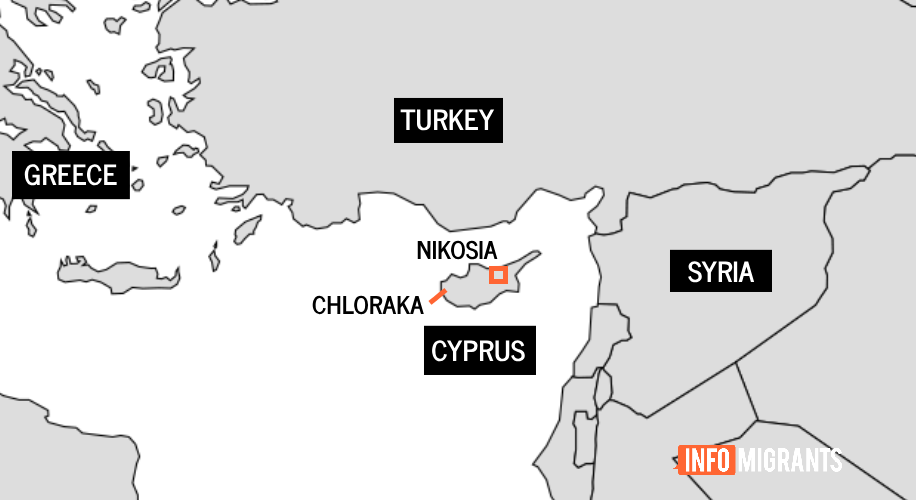
The Cypriot authorities said they were also searching for one man who is reported to have jumped off one of the boats when he saw the coast guard approaching. The migrants on board later told the authorities he hoped to reach land alone. But the boat was around two sea miles, or 3.7 kilometers from land at the point the man is thought to have jumped.
According to dpa, the Cypriot authorities have not yet declared the origin of the migrants who set off from Lebanon.
The Republic of Cyprus, which covers the southern portion of the Mediterranean island is part of the EU, but leaving the island to reach other parts of the EU can be difficult. The northern part of the island is recognized only by Turkey.
Cyprus finds it difficult to cope with migrant arrivals
Migrants still try and reach the southern part of the island by boat, but many migrants fly, often with legitimate visas, via Turkey and then land in the northern part before later crossing the green line and in order to enter the EU and apply for asylum.
Last year, according to EU statistics, Cyprus registered the highest number of asylum applications per capita of the population in comparison to other EU states.
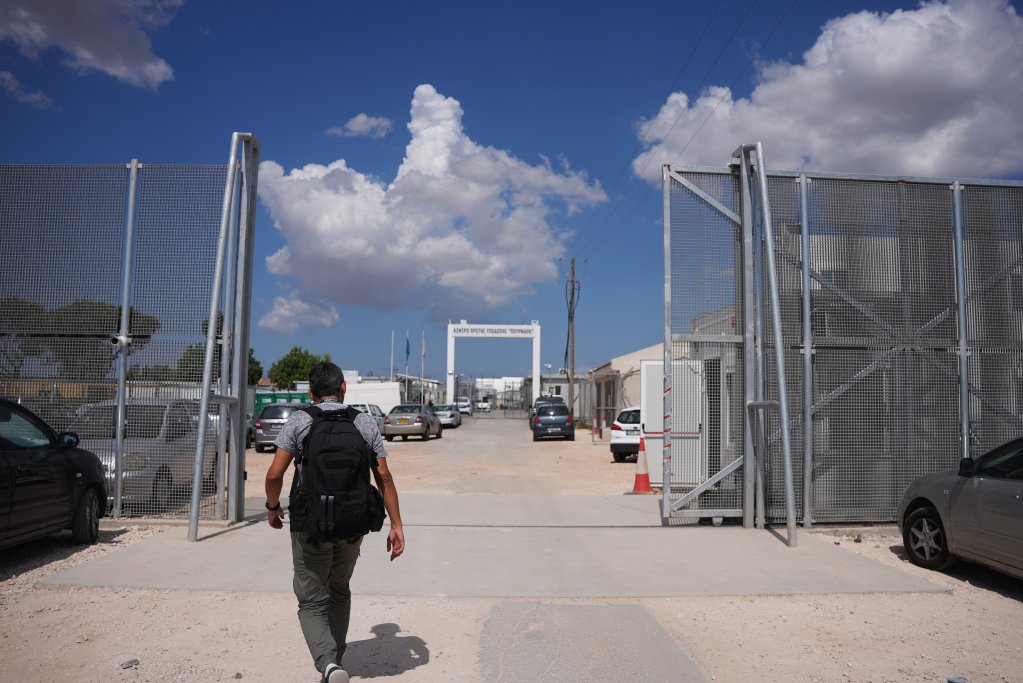
The Republic of Cyprus government has consistently asserted over the past few years that it lacks the facilities to cope with the increasing number of asylum applicants. Reportedly, the asylum application processes can extend over months, if not years, before applicants receive an answer.
Despite substantial amounts of funding from the EU to improve its reception centers and facilities, they are often reported to be operating at full capacity.
Greek soldiers on Cyprus allege migrants attacked them
At the weekend, the Greek City Times reported that two soldiers from Greece, serving in the Hellenic Force of Cyprus (ELDYK) reported being attacked by migrants while they were returning to their unit in the Nicosia area.
Police in Cyprus said they were trying to identify the “migrants who allegedly hit the soldiers.” The two soldiers made statements and were taken to hospital for tests. The Ministry of Defense and the ELDYK authorities, as well as the General Staff of the National Guard (GEEF) are said to be monitoring the reported incident.
Last summer, there were numerous reports of violence against migrants on the island.

According to the UN Refugee Agency UNHCR’s latest figures updated on January 14, more than 1,330 migrants have already traveled to Greece since the beginning of the year. Over 1,000 of them traveled by sea. At least three migrants were reported dead off Lesbos in the first half of January this year.
The Italian news agency ANSA, citing Lebanese media, reported in early January that over 80 people who left Lebanon a month previously were still missing after setting off for Cyprus.
In the first two weeks of 2024, the Greek coast guard registered about 100 people crossing on average per week towards Greece. However, they assume the number of unreported arrivals is even greater.
In 2023, the number of arrivals had increased, tripling compared to the number that arrived in 2022. Syrian nationals made up the majority of those arriving (more than 30%) last year, with Afghans accounting for about 20% of all arrivals and Palestinians for about 16%.
In 2023, the number of those who died or went missing in the eastern Mediterranean also "soared" according to the UNHCR. The agency found that at least 710 people drowned or were reported missing at sea, compared to 343 in 2022.
With dpa, AP