
Albania’s constitutional court is reviewing the asylum deal the country signed with Italy. Under the agreement, claims for asylum in the European Union would be processed externally on Albanian soil.
Albania's constitutional court has until early March to decide whether the asylum deal signed between Italy and Albania in November last year is legitimate and can go ahead as planned. Judges are looking at whether the deal could violate the Albanian constitution, by using Albanian territory to process the asylum claims of people seeking to enter the EU by sea.
Sources close to the court said that the ruling would probably come much sooner than the March 6 deadline, "given the interest in this case for both Albania and Italy," the French news agency Agence France Presse (AFP) reported.
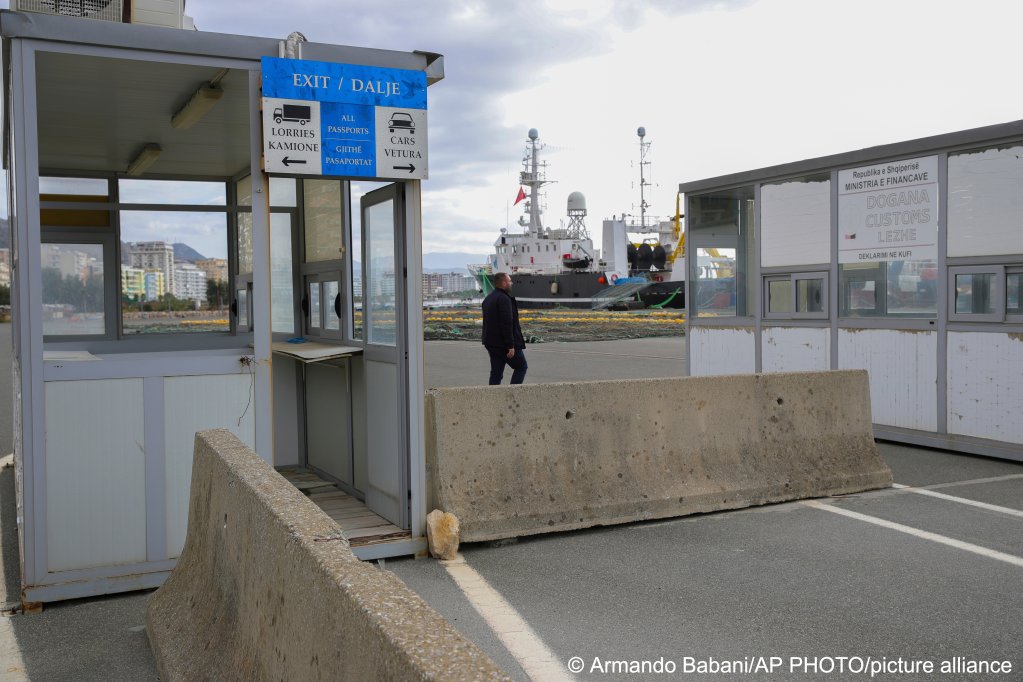
If the court finds that the agreement is legitimate, two asylum processing centers are due to be built near the port of Shengjin in Albania. Albania is not an EU member, but the Italian government has been clear that all processing would take place under Italian law and rules, and would therefore comply with the EU’s human rights law.
Potential for hosting as many as 36,000 asylum seekers per year
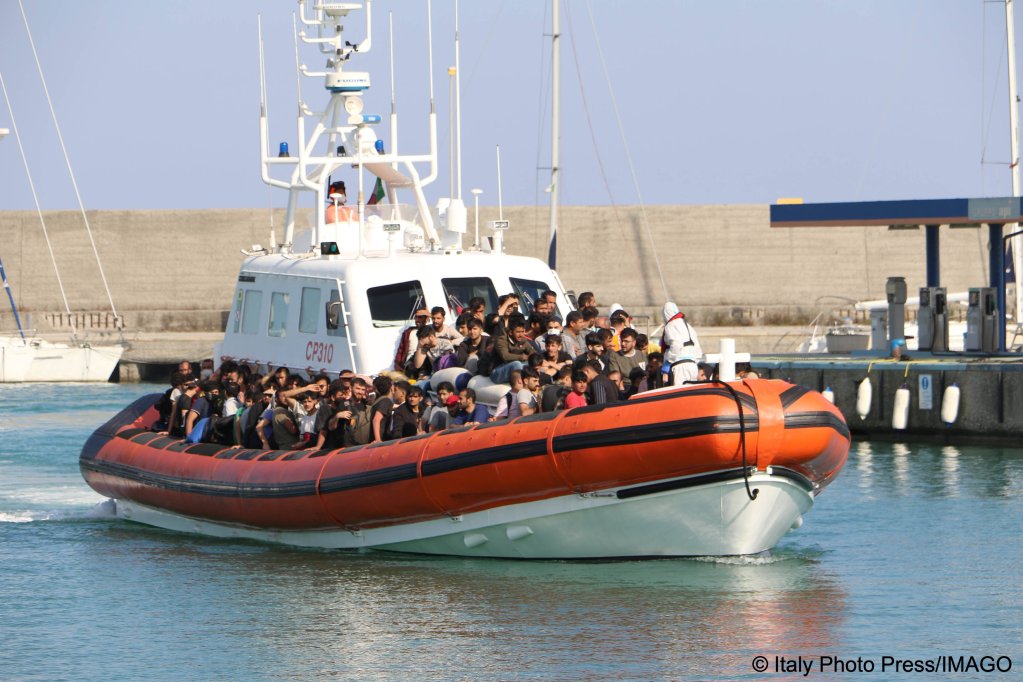
Initially, Albania would begin by hosting about 3,000 asylum seekers per month rescued by Italian boats in the central Mediterranean. If the scheme progresses, reports the British broadsheet The Guardian, it could process as many as 36,000 asylum seekers per year.
Those who might be sent to Albania under the deal would be mostly young men without any specific vulnerabilities or likelihood to be granted asylum directly in Italy. Minors, pregnant women and vulnerable individuals would instead be taken to Italy, the Italian government has promised.
The deal was signed by Italy’s Prime Minister Giorgia Meloni and Albania's Premier Edi Rama. However, there has been political opposition to the deal. In December, the Albanian constitutional court refused to ratify the legislation put before parliament without first instigating a public hearing.
Other European states considering similar deals
Parts of the EU leadership have been supportive of the Italy-Albania plan, with other countries like Germany, Austria and Denmark saying processing asylum claims in countries external to the EU might be possible. Most politicians, including those in Italy who pushed the deal through, have resisted calling it 'outsourcing', instead emphasizing that the entire procedure would come under Italian jurisdiction.
This is a constitutional sticking point, according to The Guardian, because it requires Albania to cede part of its territory to Italy.
Also watch: Albanians divided by migrant camp deal
The Albanian-Italy agreement has often been likened to the UK’s Rwanda deal. Some of Britain’s ruling Conservatives have expressed interest in investigating whether they too might be able to reach a similar agreement with Albania. For now, the UK’s migration deal with Albania is limited to returning Albanians who try to enter the UK without the necessary papers back to their country of origin with very little delay.
'Illegal and unworkable'
NGOs and international organizations working with migrants have criticized the Albania-Italy agreement. When it was announced towards the end of 2023, Doctors Without Borders (MSF) said: "The aim is no longer to only discourage departures, but to actively prevent people from fleeing and those rescued at sea from gaining safe and rapid access to European territory."
Amnesty International called the deal "illegal and unworkable." "People rescued at sea by Italian authorities, including those seeking safety in Europe, are under Italian jurisdiction and cannot be taken to another country before their asylum request and individual circumstances have been examined. It is as simple as that," said Elisa De Pieri, a researcher at Amnesty.
Amnesty labeled the agreement "refoulement" (the forcible return of people to a state where they could be at risk of human rights violations) in disguise, and pointed out that it is a practice banned under international and European law.
Also read: Albania deal worries the Council of Europe
Amnesty added that, although Italy claimed that the people detained would remain under Italian jurisdiction, "the reality is that the deal will be used to circumvent national, international and EU law." The organization said this could have "devastating consequences for people seeking asylum, who could be subjected to lengthy detention and other violations, outside the scrutiny of Italian judicial authorities."
'An irresponsible act, and dangerous for national security'
Ahead of the court hearing, Albanian opposition parties released a statement, reported the Italian news agency ANSA. "This agreement, that needs to be authorized by the President of the Republic, goes against the rights of migrants as set down in various international laws."
Right-wing opposition parties in Albania, reported the Italian online newspaper Fanpage.it, have denounced the deal as "an irresponsible act, and dangerous for national security."

'Territory remains in Albanian hands'
The Albanian government has tried to reassure voters that it is not selling off a piece of the country. "We are instead offering a piece of territory, just as we would do if a country were to open an embassy," Interior Minister Taulant Balla said in an interview last month, according to Fanpage.it. "The jurisdiction inside the camps would be under Italian control but the territory remains in Albanian hands," he explained.

The Albanian government has also stressed that Italy would cover all costs, including the construction of the processing centers and all other infrastructure necessary, including medical care and accommodation for the asylum seekers.
Rama has called the deal a "gesture of solidarity" with Italy, reported Fanpage.it. Since the 1990s, when the Communist regime fell in Albania, Italy has welcomed thousands of Albanians to live and work in the country.
With ANSA, AFP