
Migrants are returning to the route northwards towards the Mediterranean via the state of Niger. And this time, they can choose to travel by military convoy, following the repeal of an anti-smuggling law in November.
Niger has always been a transit country for migrants hoping to make their way towards North Africa, the Mediterranean and eventually Europe. The desert town of Agadez was a busy migration traffic hub and stop-off point before finding a smuggler to take you across the desert.
Legislation in 2015 made smuggling and 'aiding and abetting migration' criminal offenses. It didn’t stop the trade entirely, but it made it more difficult, often pushing migrants to seek ever more dangerous and remote routes across the desert towards Libya.
In July 2023, Niger was overtaken by a military coup. By November, the new regime had repealed the law criminalizing the trafficking of migrants. And now, reports the French news agency Agence France Presse (AFP), Niger is once again a bustling smuggling hub.
Trade is returning
It is not just the smugglers themselves, waiting with pick-up trucks to drive across the desert. Towns like Agadez attract hawkers selling everything that a migrant might need for their journey, from cloths to protect from the sand, wind and extreme heat or cold, to cigarettes, water and food.
In an effort to kickstart the struggling economy, the military leaders are now offering a convoy across the desert to accompany the migrants, cash in on the price they pay for their journeys and offer a modicum of safety.
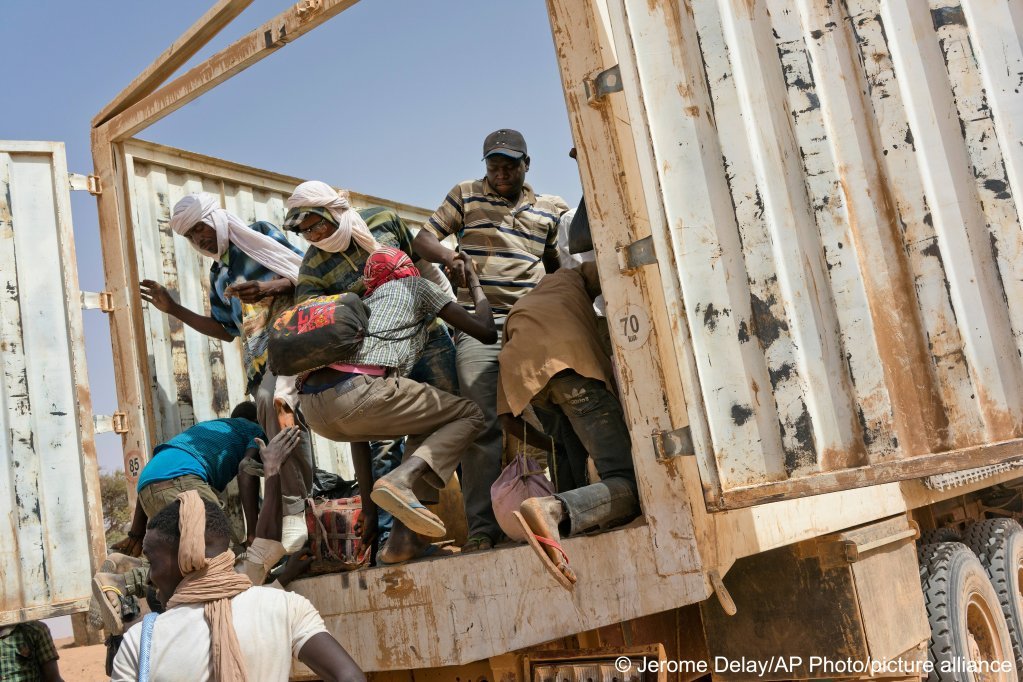
One of those involved in the transport convoy, Aboubacar Halilou, told AFP that people "applauded this repeal." He said although the trucks making the journey "pack [people] in like sardines," it doesn’t stop people from wanting to make the journey. "People need to go," he explains.
When AFP reported from the region, it said that people paid their fare and showed their travel documents to the police. Those who had been imprisoned because of their part in working as couriers have been released and have resumed their trade. "It’s a very lucrative activity," explains Halilou.
'They have got used to circumventing'
However, many still shy away from talking to reporters, according to AFP. "They have got used to circumventing… and don’t yet have confidence in the system," said Mohamed Anacko, president of the Agadez regional authority.
Despite the new official routes, some smugglers continue to offer clandestine routes. These leave at night, avoid the bus station and shy away from administrative formalities, reports AFP.
Local NGOs who work with migrants are hoping that the new regime’s involvement in the sector will actually offer more regulation and could keep the migrants safer on the dangerous journey than they would have been otherwise.
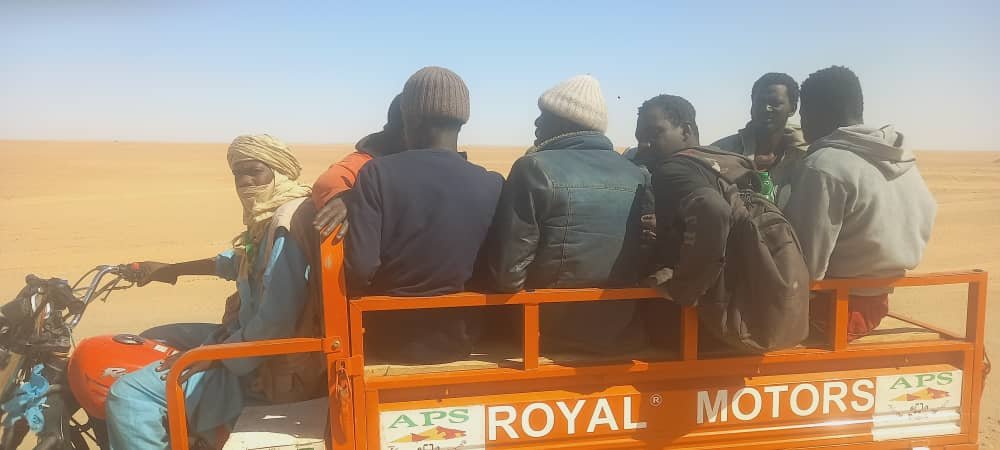
Azizou Chehou, coordinator of the local NGO Alarm Phone Sahara that rescues migrants lost in the desert, says that without regulation, no one knows who the passengers are, who the driver is, where they originate from and where they are headed. In contrast, with regulation, there is a record of who got on the transport and where they were going.
Migration needed to help revive region's economy
It is not just the couriers who welcome the regime’s repeal of the 2015 law. Most Niger citizens, reports AFP, are pleased too. Financial backing for fighting migration in Niger came through the European Union. When the military took over the country on July 26, the EU turned off its financial backing, and therefore a large tranche of funding in the country.
The mayor of Agadez, Abdourahamane Touaroua, said that once the international community turned its back on Niger, the country was forced to "reopen the valve [of migration]." Touaroua says that since the repeal of the law last year, migrant departures have tripled from his town.
The head of one local courier association, Bachir Amma, told AFP that many of those working as couriers are former rebels. Once migrant smuggling was made illegal, they just smuggled other things across the border, as well as turning to armed theft. Amma told AFP that "for us this isn’t trafficking. The migrant pays for his ticket. We do roadmaps, we work like any travel agency."
Persistent dangers
Migrants wanting to travel typically pay around 300,000 CFA Francs (about €458) for the journey to Libya. There are still risks. They are often asked by the couriers to hand over not just money but also their phone, before being held in a safe house prior to departure.
One migrant, Yousssouf Sakho, waiting in a safe house, told AFP, "you can’t have 100 percent confidence in the transporter." Some migrants have reported turning up for the journey and finding that the money they paid has not been handed over the driver.
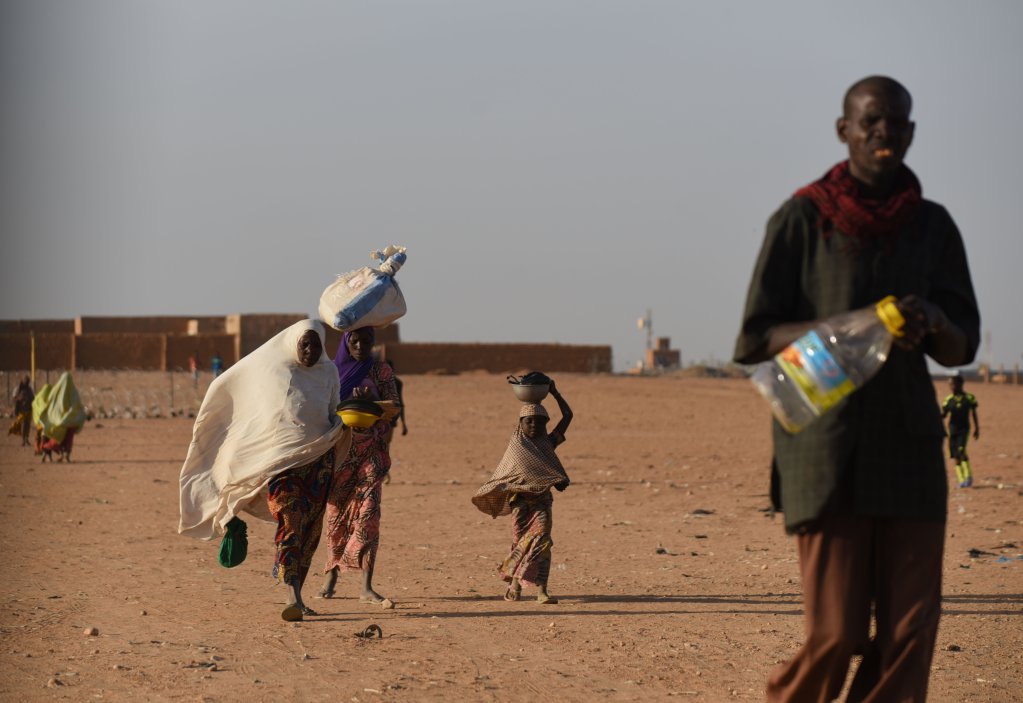
There are also still risks of being stranded in the desert halfway across, attacks by bandits or even security forces roaming the area. Stability in the Agadez region is also an issue. After nine years of the government clampdown on clandestine migration, there are many established ways around the authorities. The border regions are porous between Niger, Libya and Algeria and the region has seen several rebellions over the years against the power held in the capital Niamey.
For now though, the couriers have told AFP that although business is slower than it was, they are hoping it will soon pick up and return to what it once was.
New powers vie for dominance in the region
On the international stage, the withdrawal of French troops and the discontinuation of cooperation with the military regime on the part of Europe has left the possibility open that the Russians might try to gain a bigger footing in the country.
A Russian delegation arrived in Niamey in early December, reported AFP. China is busy building an oil pipeline in the country that is expected to be inaugurated soon and the United States, which has an airbase in the north, says it is ready to resume military cooperation with Niger.
Towards the end of December, the German news agency dpa reported that Germany too has indicated it would be interested in a "resumption of projects" with Niger’s military power. German Defense Minister Boris Pistorius made a visit to Niger and suggested Germany might restart the construction of a military hospital in the country.
"We didn’t just stop everything after the takeover," Pistorius told reporters. "We left our military advisor here. We left the special forces in Niger. We left the Nigerien soldiers in training with us. We have not burned all our bridges."
With AFP, dpa **This article is based on a feature written by AFP