
Net immigration to Germany reached the highest level ever recorded in 2022 in the wake of the war in Ukraine. Almost two years since the start of the war, experts are looking at integration and reconstruction.
In 2022, 2.7 million people immigrated to Germany while less than half -- 1.2 million moved away. As a result, net immigration reached its highest level -- 1.5 million -- since records began in 1950, according to the Migration Report 2022, which was published by Germany's Federal Office for Migration and Refugees (BAMF) on Wednesday (January 10).
According to BAMF, the main reason for this is the war in Ukraine, with Ukrainian refugees making up 41% of all immigrants in 2022. As a result, the proportion of female immigrants has also increased, as mainly women and children have fled the country. There has also been migration from Romania (8%), Poland (4%) and Turkey (3%).
Russia's invasion of Ukraine in early 2022 prompted many Ukrainians to seek refuge in Germany. Statistician Susanne Worbs explains that this has to do with "catch-up effects after the coronavirus years of 2020 and 2021, but above all with the Russian war of aggression in Ukraine, which has driven millions of people to flee."
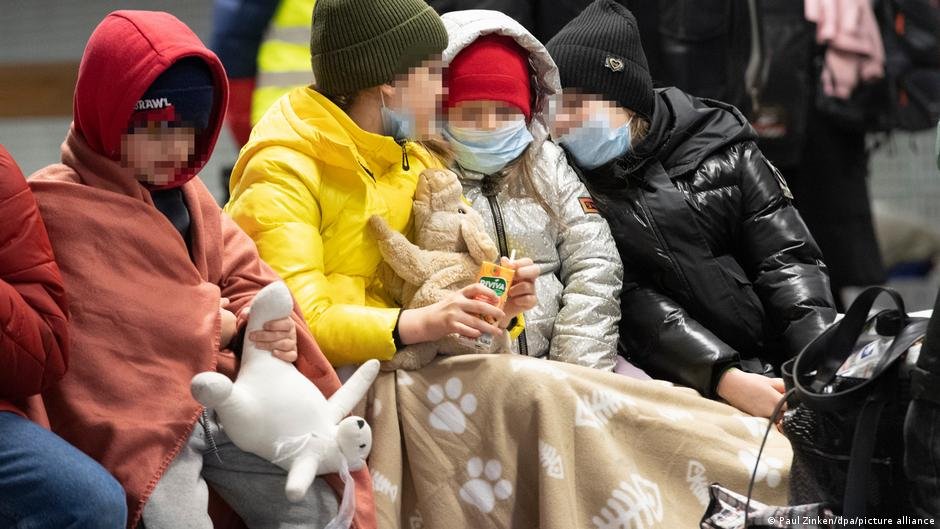
The number of people who have come to Germany for humanitarian reasons has also increased for the second time since 2016: up 47%. Almost 218,000 asylum applications were received. Family reunification from third countries as well as education and employment migration also played a role. The people who left Germany in 2022 mainly went to Romania, Ukraine, Poland and Bulgaria.
Also read: Germany: Asylum applications rose sharply in 2023
Immigrants account for almost 20% of Germany's population
In comparison to other EU member states, Germany remains the main destination country for migrants in Europe. Today immigrants make up over 18% of the German population. In 2022, 20.2 million people in Germany had either moved to the country themselves or were born to two people who moved there.
Microcensus figures show that in 2022, there were 23.8 million people living in private households in Germany either themselves or at least one of their parents not having been German citizens since birth.
This corresponds to a population share of 28.7% of people with a migration background. More than half of these are German nationals, and almost two-thirds are people who have immigrated to Germany themselves.
According to the Migration Report, people who have immigrated to Germany have been living in the country for around 21 years on average. However, more than a third (39.7%) have lived in Germany for less than 10 years. When taking into account the German concept of "persons with a history of immigration" or "migration background", these numbers amounted to around 20.2 million in 2022. This includes people who themselves or both parents have immigrated to Germany since 1950.
Despite the growing immigrant population, German immigration authorities have been criticized for being too hostile towards immigrants. Last year, Economy Minister Robert Habeck stated that this was an obstacle to much-needed skilled labor in the country.
Germany is currently facing a significant labor shortage which is set to increase further as the population ages. Habeck has previously also stated that Germany should also embrace the potential of irregular migrants to tackle the need for workers in the country.
Also read: Changes to Germany's skilled immigration rules take effect
Calls for a long term strategy in Ukraine
Almost two years after the Russian invasion of Ukraine, experts are calling for a long-term strategy for war refugees from Ukraine.
Temporary protection for Ukrainians will end in March 2025, said Jan Schneider, Head of Research at the Expert Council on Integration and Migration, in Berlin on Thursday.
Therefore viable follow-up solutions are needed, he says, "otherwise several million people in Europe may find themselves without a residence permit in just over a year's time".
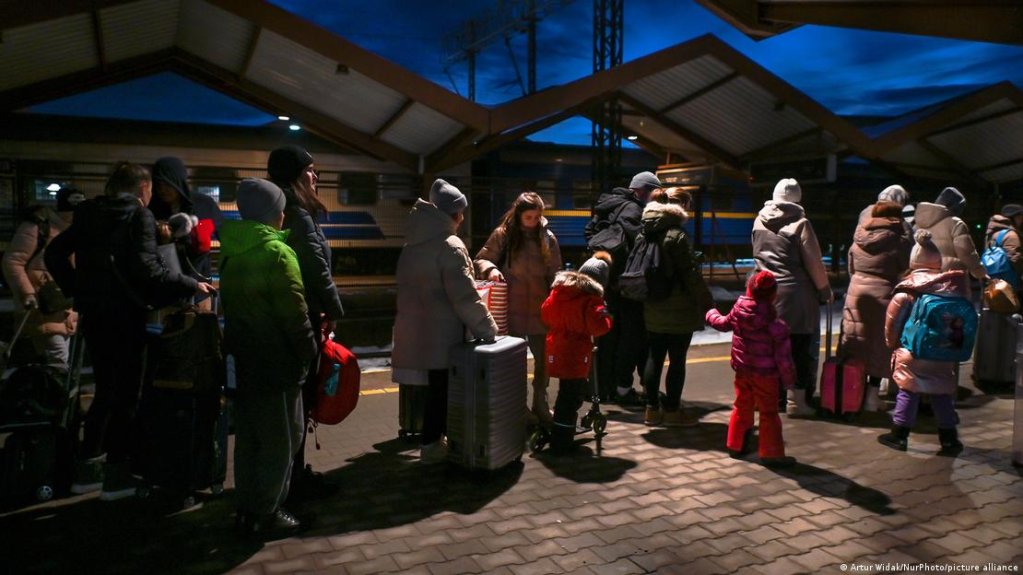
In view of the European elections in June, it is important to hold political talks as soon as possible that take into account both the interests of Ukraine and those of the refugees, according to Schneider. At the same time, the host countries in Europe have already invested a great deal in integration. Refugees who have found work in Germany and elsewhere can now more often imagine staying in the host country, he pointed out.
However, well-educated refugees, often women, are also pillars of reconstruction in Ukraine. "Circular mobility" and mobile working could be part of a transnational strategy here, according to Schneider. The mobility of Ukrainians within the European Union in particular should be maintained with a view to Ukraine's possible accession to the EU.
If the countries do not agree on new residence rules, there is a risk of "what the activation of the EU Temporary Protection Directive was intended to prevent: an overload of the asylum systems due to large numbers of individual asylum applications."
Also read: Refugees overqualified and underpaid in Germany
With dpa and KNA