
The medical charity MSF says it has begun providing primary healthcare to asylum seekers held in a former military barracks in southeast England.
MSF, also known as Doctors Without Borders, provides medical assistance to people in conflict zones such as Gaza and Ukraine and has been treating asylum seekers in migrant camps on the Greek Islands since 2016. This week it announced that, for the first time, it has begun working with asylum seekers in the UK, providing a mobile clinic outside the Wethersfield site in Essex, northeast of London.
About 650 men aged between 18 and 65 are being held at the former military barracks, which began accommodating asylum seekers in July last year and can take up to 1,700 people.
The Home Office says the site is suitable for asylum seekers who would otherwise be destitute and is cheaper than housing them in hotels. It has also sought to cut costs by accommodating people arriving in boats across the Channel in the Bibby Stockholm barge.
The site at Wethersfield has an on-site medical center supported with extra funding provided to the National Health Service and staffed by a doctor and nurses on weekdays (not at weekends, according to a government factsheet). There is also a welfare facility and an accredited mental health nurse on site.
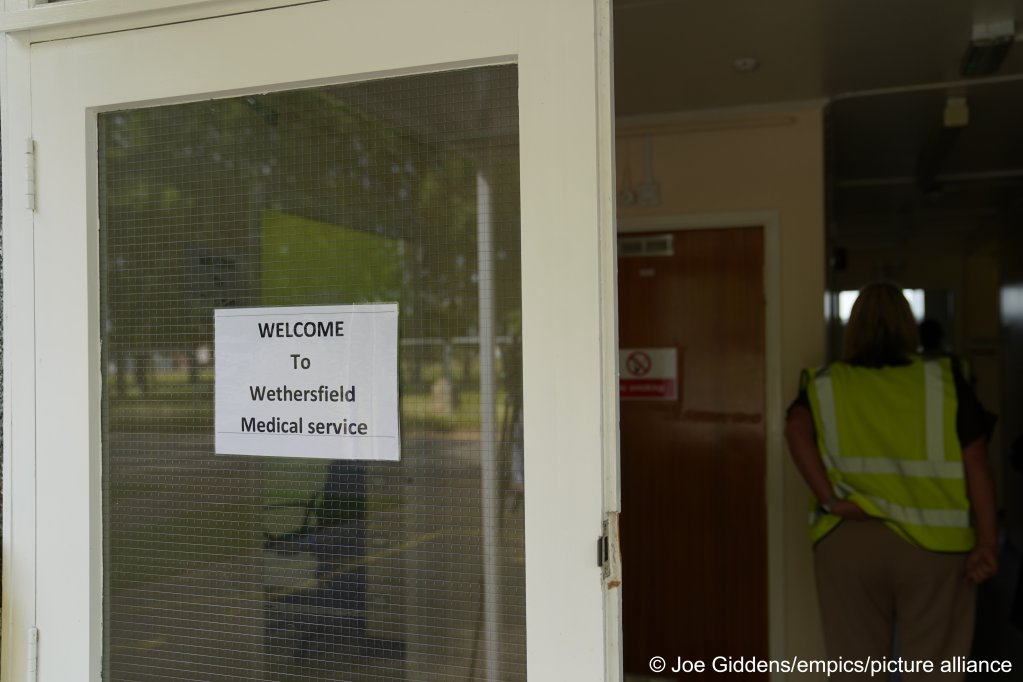
Despite these provisions, according to MSF and Doctors of the World (DOTW), which is also working at the site, residents in Wethersfield say their needs are not being met and their mental health has worsened since they arrived at the base.
Large-scale containment 'dangerous'
Simon Tyler, the executive director of DOTW UK, said people are being forced into sites that operate like "open prisons."
The charity Care4Calais, which supports asylum seekers at Wethersfield, described the facility, located more than 19 kilometers from the nearest large town and not served by public transport, as a "de facto prison camp."
In December, an asylum seeker from Iran reported that isolation and poor conditions in the Wethersfield center had led him to attempt suicide by hanging and then setting himself on fire together with a group of six or seven other people. Another young man, Leonard Farruku, died last month in a suspected suicide on board the Bibby Stockholm.
Also read: Barges and cruise ships – are they suitable housing for asylum seekers?
MSF says it expects the mental health of men in the Essex facility to deteriorate further as they wait for their asylum applications to be processed and as the number of people held in the former barracks increases.
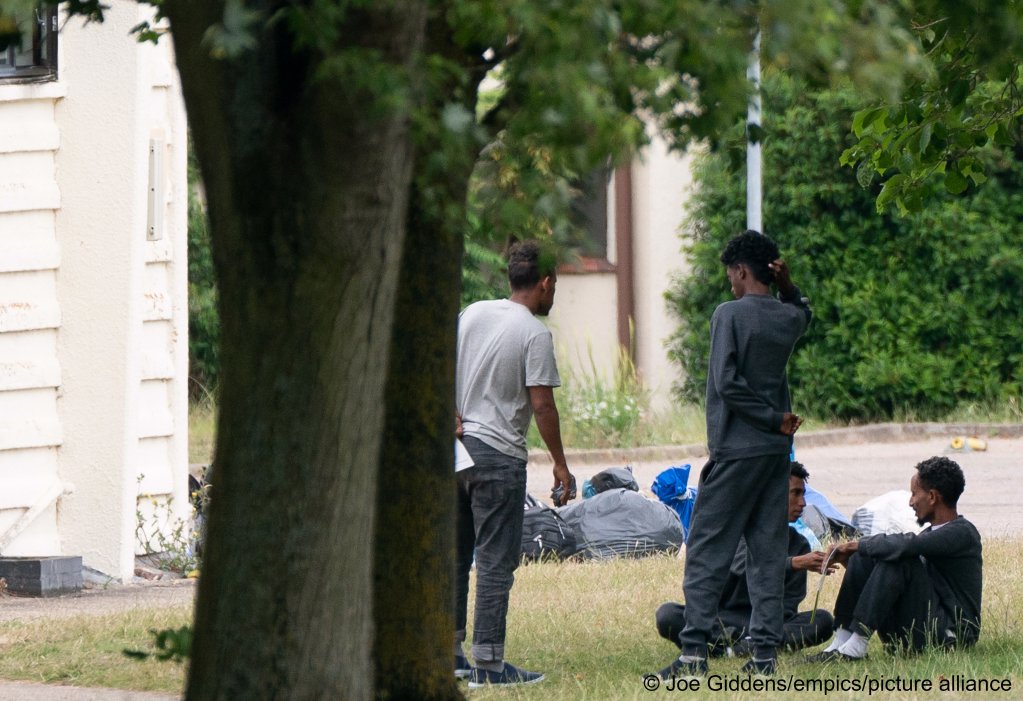
Dr Javid Abdelmoneim, who has been running MSF’s project at Wethersfield, said holding asylum seekers in mass containment sites was "a recipe for disaster which ultimately costs lives."
Those who have been assessed as 'vulnerable', including victims of torture, rape or other forms of physical or psychological abuse, according to Home Office guidelines, are not meant to be sent to sites like Wethersfield. But according to Abdelmoneim, many of the men there are likely to have experienced violence, war, arbitrary detention and other trauma and to need specialist care.
The Home Office said asylum seekers who need help, advice or guidance could contact the government-funded Migrant Help hotline 24 hours a day, 365 days a year.
If you are in the UK and you need to talk to someone, you can call the Samaritans helpline 116 123 anytime, from any phone, for free.