
The Danish migration minister says Germany should tackle migrant 'pull factors' and focus on deporting rejected asylum seekers.
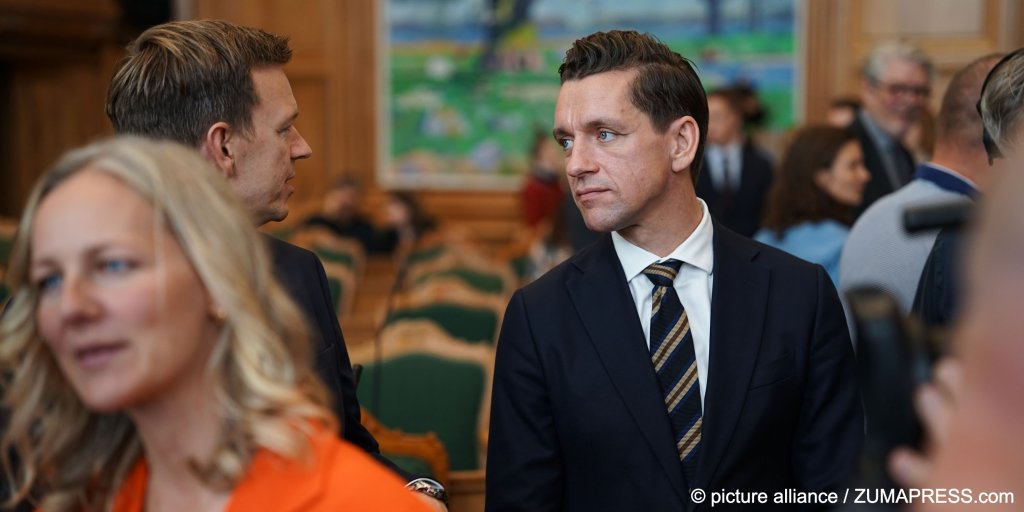
The Danish migration and integration minister, Kaare Dybvad Bek, has suggested that European nations including Germany could emulate his country's success in handling migration.
Speaking after the annual policy conference of the Christian Social Union (CSU) in Bavaria at the weekend, Bek described as "unsustainable" the number of migrants arriving in the EU in 2023. "We have to change the situation," he said.
Many policy-makers in Europe, like Alexander Dobrindt, a Christian Social Union MP, consider Denmark a model of successful asylum policy.
In the past few years, the Scandinavian nation has taken an increasingly strict approach to migration, declaring a goal of zero asylum seekers and becoming the first EU country to say that refugees could be sent back to Syria.
Focus on deportation
Key to Denmark’s efforts to control irregular migration, according to Bek, has been the deportation of rejected asylum seekers, resulting in a relatively small number – just 400 people – currently due to be sent back to their home countries.
"We have had some very good experience, especially with the return of rejected asylum seekers," the minister said in an interview with DW on Monday. "People who don't (…) have any legal claim (to) asylum return to their countries of origin."
Bek urged Germany to make a distinction between those fleeing war or persecution who "actually need asylum" and people migrating for economic reasons. "I don't think those two groups should be treated equally."
It is already the case in Germany that those whose asylum applications are rejected are ordered to leave within a short time. An increased focus on the country's failure to carry out deportations – blamed on legal and practical hurdles – led the German government last year to introduce tougher laws aimed at more effective returns.
Also read: What's changing in German immigration policy in 2024
Outsourcing plans
Germany has also been talking about the idea of processing asylum seekers in third countries such as Rwanda – another approach first promoted by Denmark. While the policy was criticized last November by the UN Committee Against Torture, which said it could put the safety of some returnees at risk, Bek emphasized the importance of respect for human rights in all discussions about such plans.
Last November, the German Chancellor Olaf Scholz signaled that he was open to studying Italy’s agreement to hold asylum seekers in centers in Albania. "Such deals (…) are possible, and we will all look at that very closely," he said.
The possibility of third-country asylum processing has since gained increasing traction among EU member states. Bek told DW that the creation of asylum centers outside the EU is now being seen by many as a "sustainable solution to the migration crisis."