
Poland's new Prime Minister Donald Tusk has said his country would not accept any asylum seekers who would be relocated there under the EU's new migrant pact. However, he did not specify what that could mean in practice.
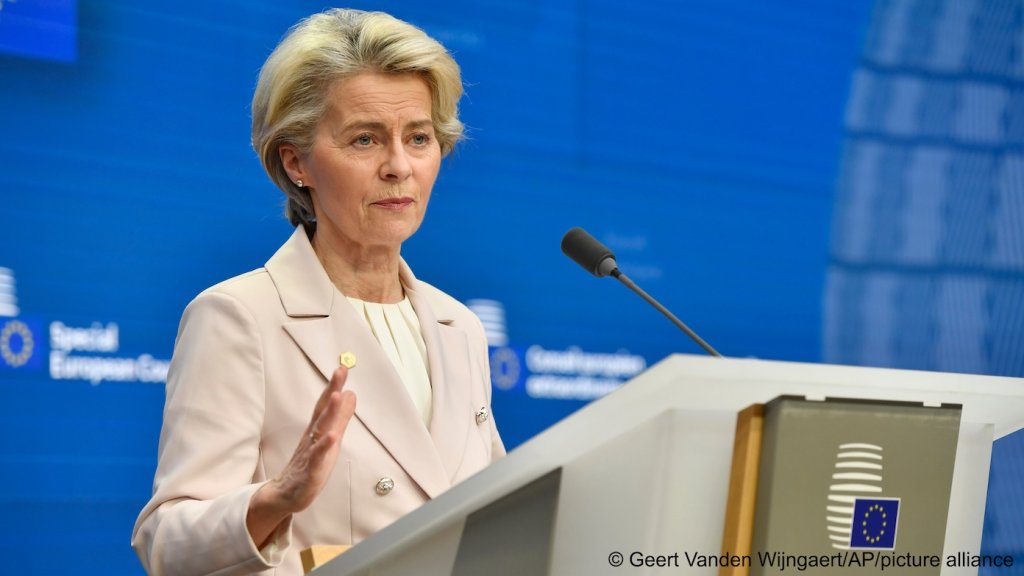
Poland will refuse to accept any asylum seekers relocated under the EU's new migration pact, according to Prime Minister Donald Tusk.
His exact words uttered on January 2 were: "I want to assure you that Poland will not accept illegal migrants under any such mechanism."
Tusk specified that his government was categorically opposed to the introduction of a relocation system: "Poland will never be part of such a mechanism," he told reporters.
The comments came after Tusk's political opponents claimed that he was an advocate of the plan.
The EU migrant pact explained
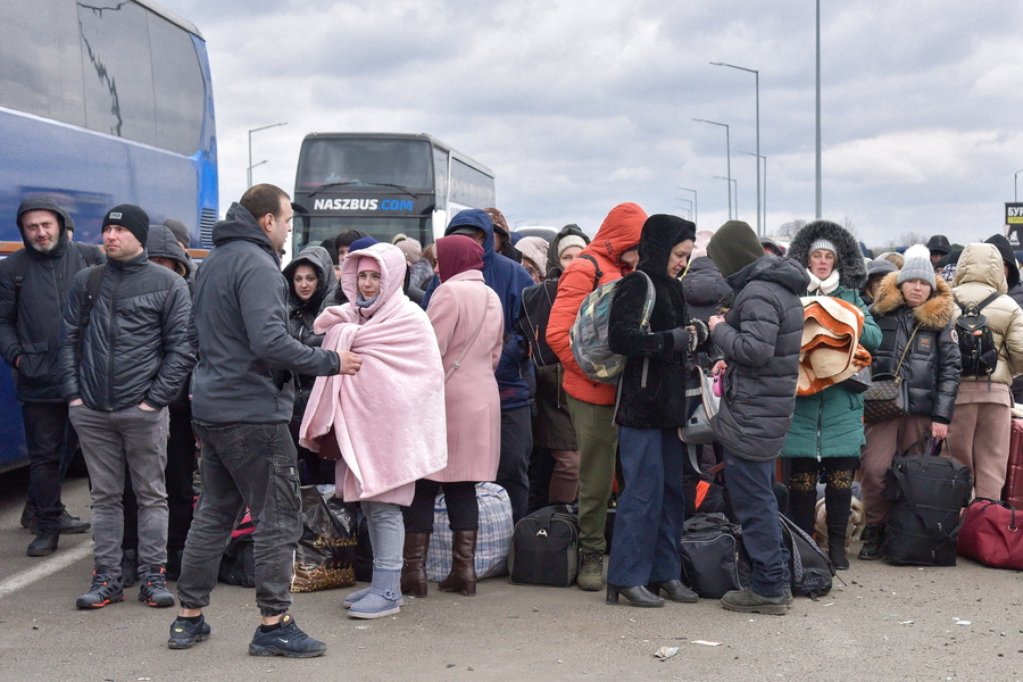
Just three weeks earlier, the European Union had tentatively approved a new pact by which migrants arriving in the southern parts of the bloc -- which are most burdened by a high frequency of arrivals -- would see a portion of those seeking asylum moved to other parts of the EU.
Alternatively, the same mechanism would allow for so-called "solidarity payments" to be made to the governments of the countries that are most affected by migrant arrivals. This would mean that instead of accepting migrant relocations, member states would be allowed to opt out of the scheme by paying a fine, which then would be used to bolster migrant services in other parts of the bloc.
Further details on the migration pact will only emerge later in the year, as the EU is due to discuss various aspects. The final approval lies with the European Council, which is the body that represents the collective of the EU's national governments.
Also read: NGOs criticize EU migration pact, predicting more death and suffering as a result
Political saber-rattling
Reactions to the pact in Poland have been mixed, especially since Tusk had only started his premiership a month earlier. With a fragmented electorate and widespread disagreement on a broad spectrum of social issues across the country, Tusk appears to be trying to consolidate a broader spectrum of support by presenting a harder stance on migration matters.
The prior government under the leadership of the conservative Law and Justice (PiS) government -- known for its anti-migrant stance -- had expressed vehement opposition to the EU plan when it was presented in its earlier stages.
The PiS party has accused Tusk of being willing to accept the pact, after at the European level, Poland provisionally approved that talks be opened on the pact.
PiS claims that Tusk -- who also served as former President of the European Council at the height of the so-called "refugee crisis" of 2015/16, when over a million refugees and migrants reached Europe -- seeks to appease the EU by nominally agreeing to the plan.
Also read: What Poland’s elections and new government may mean for migration
Backtracking on previous statements
As European Council President, Tusk had already overseen an initiative to redistribute asylum seekers across the bloc, which, however, failed in 2017 -- in part due to Poland's refusal at the time (under the leadership of the PiS party) to take part in the scheme. Other governments which opposed that initial relocation plan included Hungary and the Czech Republic.
However, Tusk also took credit for the failure of that initial plan, saying "(i)t was, among other reasons, because I was head of the European Council that this mechanism was never implemented."
Yet by the time the scheme had failed in 2017, 27,695 migrants and refugees had already been relocated according to the European Commission, proving Tusk's claim that the "mechanism was never implemented" as false.
Tusk responds to allegations
Tusk appears not to take the accusations raised by the PiS party lightly. Already during his campaign for last year’s parliamentary elections, he had accused the conservative movement of overseeing the largest migration wave in Poland's history.
This was linked to a political corruption scandal, whereby some migrants allegedly were allowed to pay money to obtain the right to move to Poland. Tusk said at the time of his campaign that in the light of the PiS government’s anti-migrant rhetoric, the so-called cash-for-visas scandal was proof of the PiS party's hypocrisy.
Speaking last week, Tusk doubled down on that statement, saying that "hundreds of thousands of migrants were let in, including through a corrupt mechanism," painting the start of his leadership as "the end of the era" of such practices, pledging that he would introduce "much greater security when it comes to the uncontrolled inflow of migrants."
Also read: Germany: Irregular migration drops due to new border checks
Future direction uncertain
Tusk did not clarify what the consequence of his statements would be -- i.e. whether he would have his government opt out of accepting asylum seekers under the scheme but agree to making the solidarity payments instead.
However, he did refer to the migration pact as an overall "forced relocation system" that was bound to lead to a sense of "forced solidarity."
Also read: UNHCR report: Globally, 1 in every 200 is a refugee