
The Greek parliament on Tuesday approved a new law that will grant around 30,000 undocumented migrants the right to a three-year residency permit and work in Greece. The law is designed to fill shortages of unskilled labor in the country.
Greek parliamentarians voted 262 to 138 in favor of the law on Tuesday (December 19). The law was proposed by the center-right government and is designed to meet shortages of unskilled labor in the country. Particularly in the sectors of agriculture, tourism and construction.
The Greek Labor Ministry says the law will apply to around 30,000 undocumented migrants in the country who have lived in Greece for at least three years. Many of them are agricultural laborers, reported the news agency Associated Press (AP).
The majority of those expected to benefit are from Albania, Georgia and the Philippines. The residency granted, reports the French news agency Agence France Presse (AFP), will "only be valid for a one-off three-year period and applies to those already with job offers from employers."
More rights, more revenue
The law, noted AP, links the right to residence with proof of employment. Many of the people who will benefit from the new law have been working for many years in Greece. Once the law comes into force, this should accord them more rights, have them pay taxes but also hopefully avoid exploitation since they will have legal status in the country.

Unions have also welcomed the move, saying that many of these unskilled jobs are positions unemployed Greeks are not keen to take on.
Prior to the vote, some of the right-wing of the ruling New Democracy (ND) party, including former Prime Minister Antonis Samaras had spoken out against the law. But the Greek Prime Minister managed to get cross-party consensus to push the law through. He also threatened his own MPs with discipline if they failed to back the bill, reported the Greek newspaper Ekathimerini.
Former Prime Minister opposes law
Samaras told the press that "in practice, it legalizes all illegal immigrants who have been in Greece for three years." After being exempted from the discipline imposed on all other ND MPs, Samaras voted against the bill in parliament, reported Ekathimerini.
Samaras says he fears that will essentially act as a 'pull' factor to migrants, who might believe that if they manage to stay under the radar for enough time, they can expect to be legalized and start earning the money they hope for when making the journey to Europe.
Also read: Greece, migration flows and the employment dilemma
After the vote, he told the press: "I have said what I had a duty to say, and anyone who wants to understand has understood."
Blending stricter controls with facilitating legal migration
Back in September, when the plan was first discussed in a cabinet meeting, Migration Minister Dimitris Kairidis told Greek public radio that the government was not intending "to create new incentives for further illegal [migrant] flows because that is the danger."
Kairidis told Greek public radio that the legalization could help with the completion of public works projects, such as the metropolitan transport service in Greece’s second-largest city Thessaloniki. Construction of a new airport on the island of Crete could also begin to speed up again after a slow-down caused by labor shortages.
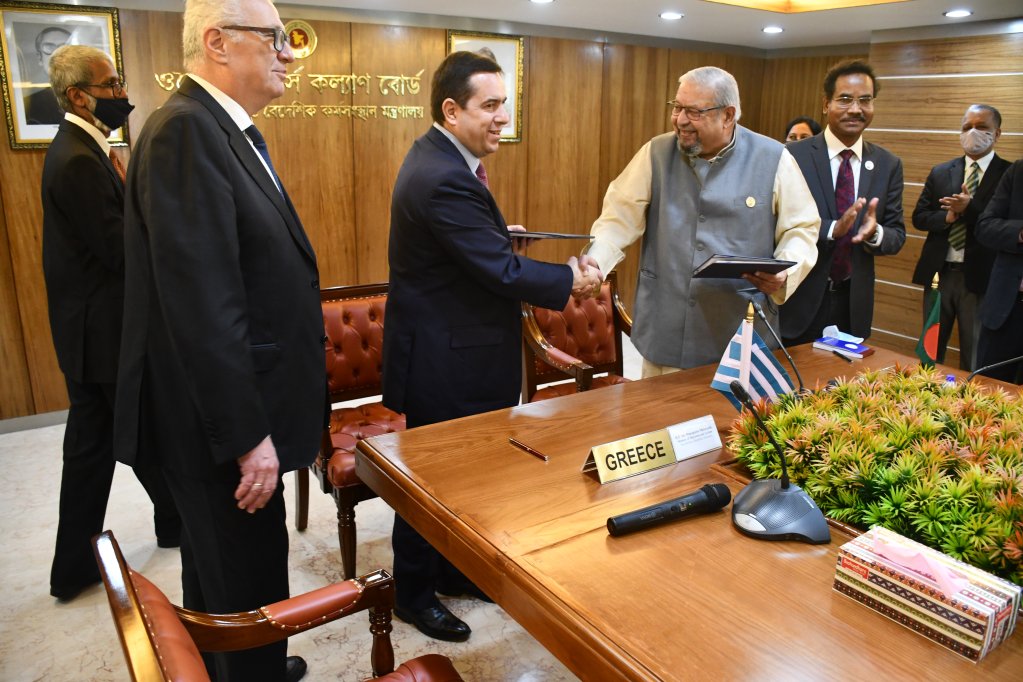
After the vote, Kairidis told the press that Greek migration policy seeks to blend "strict border controls and fighting [migrant trafficking] with facilitating legal migration."
Kairidis also said that the new law would not allow for family reunification rights and that permits issued under the legislation would be contingent on the migrants’ continued employment in Greece.
Also read: Greece to lead migration policy in 2024
He told the UK’s left-leaning newspaper The Guardian that the law would also help with social cohesion in Greece. "This is a small step in meeting the acute needs of the tight labor market and a big step in enhancing public safety. Greece is faced with an unprecedented problem of labor shortages…because of the high growth, the big fall in unemployment and the declining numbers of Albanian [workers.]"
'Positive example of political will'
Greece’s left-wing opposition Syriza party welcomed the new law too. Theodora Tzakri, who heads Syriza’s parliamentary group told the Guardian, "simply because it has proven incapable of confronting the big problem of labor shortages, the government has been forced to adopt [our] proposal and has moved ahead with the rapid legalization of work and residence permits for undocumented migrants."
The UN Migration Agency IOM and the UN Refugee Agency UNHCR issued a joint statement following the vote in which they described the law as "a positive example of political will to lift the barriers that render people invisible and marginalized."
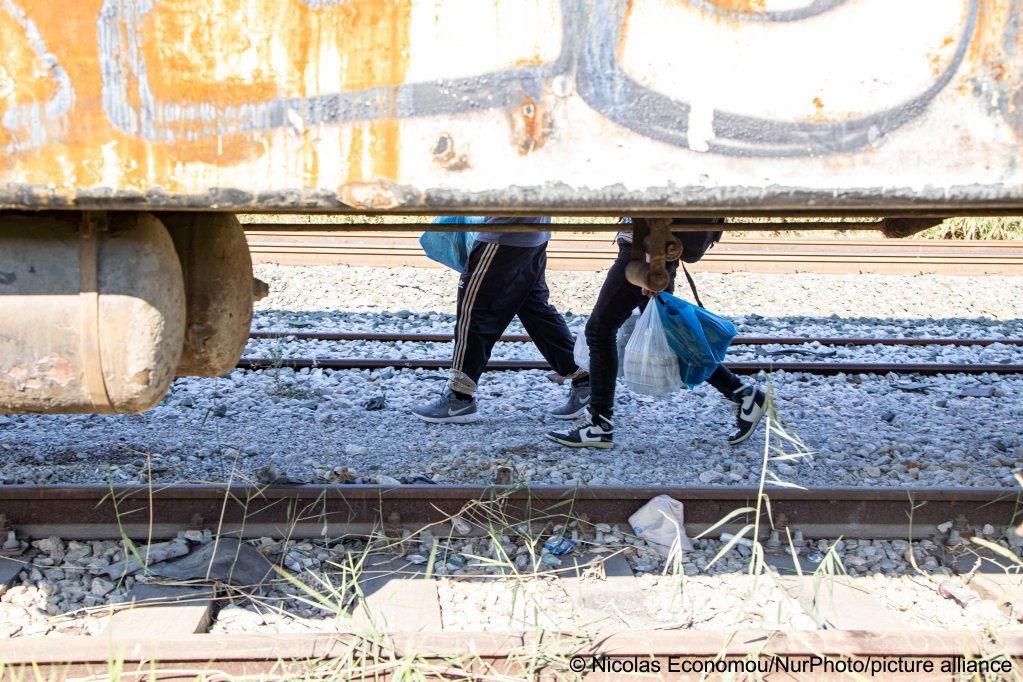
The law will also reduce the waiting time for asylum seekers who want to work in Greece from the current six months to two months.
Arrivals in Greece
Since the beginning of the year, according to UNHCR data, last updated on December 17, 45,995 migrants arrived in Greece. More than 39,000 of them arrived by sea and more than 6,000 arrived by the land border crossing with Turkey.
The number of arrivals this year has exceeded the numbers that arrived in Greece each year since 2020, however, they have not come near the numbers reached in 2019 (more than 74,000) or previously in 2015 and 2016 when more than a million people passed through Greece across those two years.
Also read: Greece, how to apply for a seasonal work visa
The Greek government is also busy signing bilateral agreements with several countries around the world that supply unskilled labor to Greece. Kairidis described these agreements as "labor mobility" pacts to the Guardian, saying they were in the process of signing them with Vietnam, Bangladesh, Georgia and Moldova.
"This will provide the additional manpower our economy needs through a legal and well-regulated process," stated Kairidis.
Ahead of the vote, Kairidis had told MPs that Greece risked losing up to €2 billion from this year’s olive crop without the increased labor the law would allow for.
With AP and AFP