
In July this year, a group of 101 men and boys set off from a Senegalese fishing village on the west coast of Africa. They hoped to reach Spain’s Canary Islands within the week. Instead, they were blown off course and spotted 36 days later by a Spanish fishing boat. Just 38 of them managed to survive.
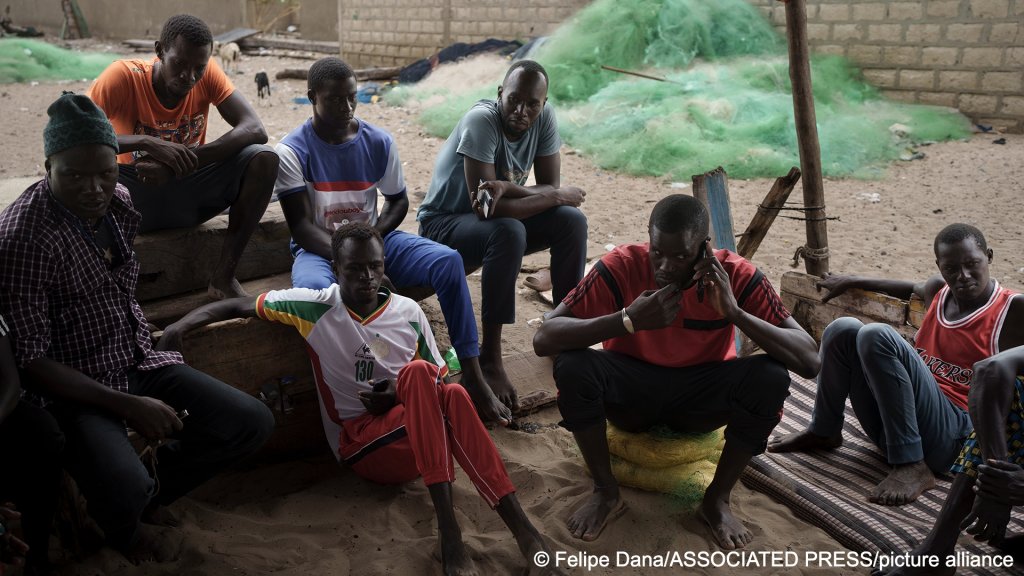
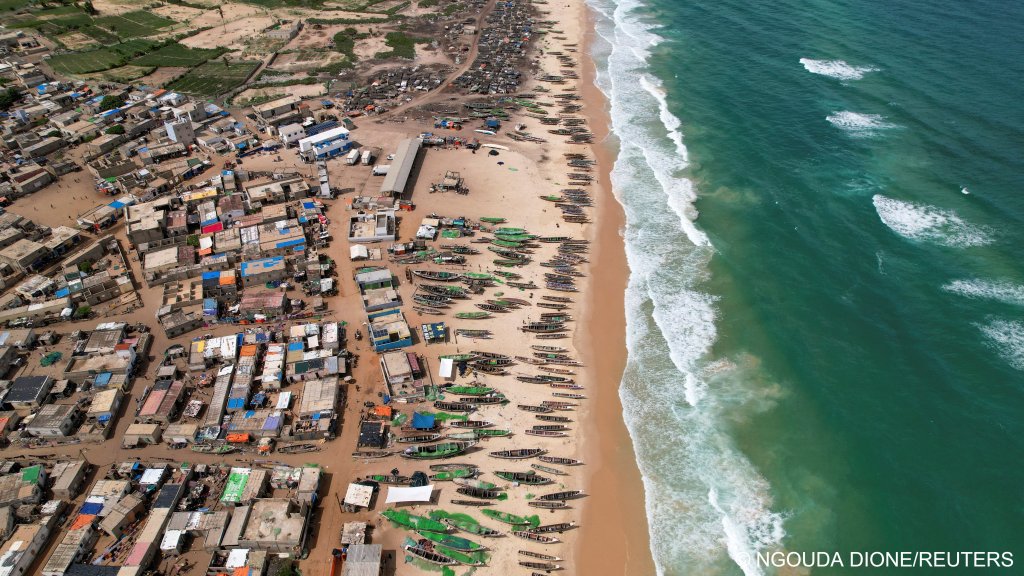
"There are no fish left in the ocean," says Papa Dieye, a 19-year-old Senegalese fisherman sorrowfully. Dieye comes from the fishing village of Fass Boye on the Senegalese coast. The village is struggling, with many unable to survive on their earnings or catch enough fish to support themselves and their families.
According to the news agency Associated Press (AP), whose journalists spoke to dozens of survivors, rescuers, aid workers and officials to piece together this story of death and survival on the Atlantic Ocean, Dieye and other local fishermen like him can expect to earn about 20,000 CFA francs (about €30) per month from fishing.
Also watch: Senegalese migrants attempt dangerous crossing towards Canary Islands
Overfishing, often by large industrial vessels working for European countries, China and Russia have depleted the fish stocks in the area and made life even more difficult for local fishermen, who traditionally would go out to sea on small wooden boats to catch a few crates of fish to sell and eat at home.
Some turn to work in the fish factories and processing plants, but work there is hard and also doesn’t pay well. For many, it feels like there is very little choice but to "try their luck" by jumping on a boat and hoping to make it to the Spanish Canary Islands.
Bad omens from the start
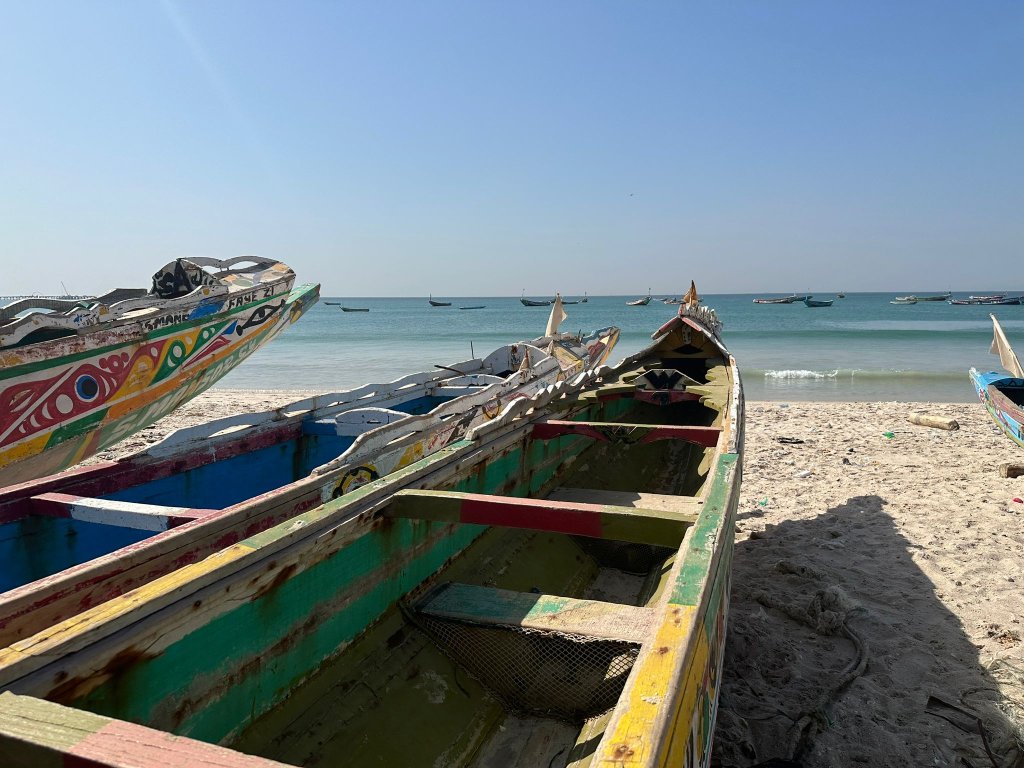
That is exactly what Dieye did on the evening of July 10. 2023, reports AP. After he finished his 5 pm prayers, he and 100 others boarded a brightly painted wooden pirogue. Dieye made his way to sit in the boat’s bow.
"We want to work to build houses for our mothers, little brothers and sisters," Dieye told AP. Most people in the area know someone who made it to Spain and can send back vital remittances to support their families.
Also read: Senegal, where disenchantment and disillusion breeds migration
As someone who knows the sea well, Dieye remembers that the omens even before they started were not good, reports AP. Initially, around 150 people tried to board the boat, which was also packed with fuel, food and water. The boat, he says struggled to depart. "We weren’t even sure we would take off, it was so heavy," he remembers.
Around 50 people were ordered to leave the boat and finally in the evening, 101 were allowed to depart.
'In the middle of the sea, the wind made two oceans'
The first few days were reportedly "slow but smooth." People drank coffee, ate biscuits in the morning couscous and water in the afternoon. They swapped stories of their hopes and expectations for life in Europe.
But on day five, the wind got up and began pushing them back. "We thought the pirogue would break," remembers Dieye. “In the middle of the sea, the wind made two oceans." He says currents were swirling in opposite directions and the captain had to stop the engine several times as they were unable to move forward. They waited for the winds to stop, but "lost six days" in the process.
Also read: Spain spends millions to tackle Canary Islands 'migration flow'
A fellow fisherman from Fass Boye and fellow survivor Ngouda Boye, 30, remembers that during that wait tensions started to bubble up on the boat. Some wanted to return to Senegal, others, including the captain, wanted to press on.
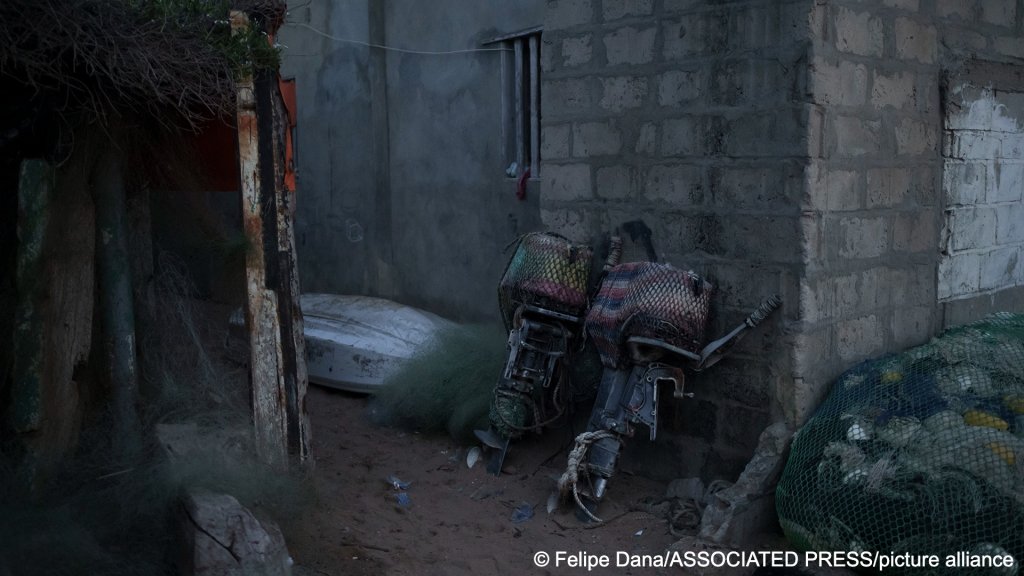
By day ten, the fuel had run out. Dieye says "we could almost see Spain." Boye remembers the "disappointment on all their faces."
Reported missing
Those on the boat tried to make oars out of planks of wood and took turns in rowing. But the north-easterly winds, reports AP, pushed them off course and away from their destination.
By this point, friends and relatives, as well as organizations who work with migrants, had expected to hear the boat had arrived safely, and they began to ask questions. The questions, reports AP, pushed authorities in Spain and Senegal to launch a search and rescue operation.
The brother of one of those on board, who had already made it to Spain, filed a missing person notice with the police. According to AP, their boat had deliberately taken a longer and more dangerous route to try and evade authorities patrolling the West African coasts to try and prevent exactly this kind of migration.
Also read: Tragic deaths at sea as Spain confirms record high migration
No one knows the extent of those who die on the dangerous Atlantic route, since all these boats set off unregistered and some may disappear entirely from view, with all those on board dying. It is only when a few survive or bodies wash ashore that the authorities can register the numbers who may have disappeared. Even here, those numbers are based on estimates of survivors' or relatives' testimonies when someone doesn’t turn up in Europe.
Search and rescue difficult
Search and rescue operations in this area are also difficult. "Imagine looking for a car in an area that’s 1.5 times the size of mainland Spain," explains Manuel Barroso, head of the national coordination center of Spain's Maritime Rescue Service. "We may even fly right over one, but because of the clouds, we cannot see it."
🎧 Also listen: Tales from the Border podcast, crossing the vast Atlantic Ocean
According to survivors, they were often passed by massive cargo ships. The wake of these vessels often shook their comparatively tiny wooden boat, yet not one boat came to their rescue. Dieye remembers. "when we saw them, we yelled until we had no more strength." Boye also remembers those days, when people would think they were about to be saved and then the disappointment as they realized the boats were sailing on past. He says he saw ships flying Spanish, Russian and Brazilian flags. Another survivor Fernando Ncula, says a Chinese-flagged ship almost crushed them.
"I couldn’t believe it. I thought to myself, why didn’t they help us?" Ncula wonderes. He says people were standing on the deck watching them.
The captain was the first to die
The captain was the first to die, say survivors. Unlike many of the others on board, reports AP, he didn’t come from Fass Boye but from another Senegalese fishing town called Joal. Many on board were angry that he had failed to reach their destination, then he began behaving strangely, remembers Dieye.
The captain threatened to "abandon us" remembers Dieye. "He did things like a sorcerer. He spoke gibberish." AP thinks it is possible the captain was hallucinating, due to days at sea with little food or water but a belief in witchcraft and curses is strong in this part of West Africa and some began to believe he was possessed by evil spirits. "Finally they tied him up," says Dieye. "He was the first to die."
Also watch: Senegalese fishermen declare, Barcelona or 'die trying'
By the third week, the water ran out. The survivors diluted the remaining few bottles with sea water, but that was quickly finished too, Dieye recalls. Another survivor 31-year-old Bathie Gaye who comes from Diogo Sur Mer in Senegal says every time he drank the sea water "I threw up."
In fact, reports AP, salt water is harmful to the kidneys and causes even more dehydration. Many who took big gulps of it ended up dying, only those who took tiny sips were able to survive.
Hunger on board
Some survivors said when they were lucky, they would warm the water and mix it with some instant coffee or left-over biscuit crumbs that they had tried to ration. Some tried to catch fish with a small net, but hunger killed more people.
At one point, they tried to catch turtles that swam alongside the boat. Dieye says two men jumped in to catch the turtles, but only one came back, the other wasn’t able to swim back to the boat, and the rope they threw him was blown in the opposite direction by the wind.
Boye says that they caught the turtle from inside the boat but the turtle meat made them vomit and pushed some closer to death.
"Sometimes I sat at the ledge of the pirogue," remembers Gaye. “So if I died, I wouldn’t have to tire the others –they could just push me over."
'I couldn't sleep because I was so scared'
Fernando Ncula, a 22-year-old from Guinea Bissau was one of a few non-Senegalese passengers. He told AP he had been working in the fields of Fass Boye but couldn’t earn enough to support his younger siblings. His family sold cows back home, equivalent to the money he could earn in a year (400,000 CFA –about €609) to pay for his passage on the boat. They saw it, AP reports, as an investment.
Fellow Guinean Sadja Mané was also on board and a friend of Ncula’s. Mané had lived in Senegal for 16 years and so could speak Wolof, the main language of Senegal. Ncula couldn’t and so stuck close to Mané until his death on around day 25. From then on, Ncula could barely sleep for fear that the others would take against him.
"I couldn’t sleep because I was so scared," remembers Ncula.
Eventually, his fears were realized. Some of the other survivors did turn on him. They accused him of being less tired than the rest of him and tied him up. AP reporters say at the time he was interviewed, Ncula still had scars on his back and chest from that episode, his feet were swollen and his joints hurt.
Hard to distinguish between reality and hallucinations
Ncula told the reporters he was left for two days like that, wearing nothing but his boxer shorts. He says he fell in and out of consciousness. But finally an older man took pity on him and cut him loose. That man too eventually died.
The other survivors can’t confirm or deny that Ncula was tied up. They told AP that "it was hard to see and remember everything, and hard to distinguish between reality and hallucinations."
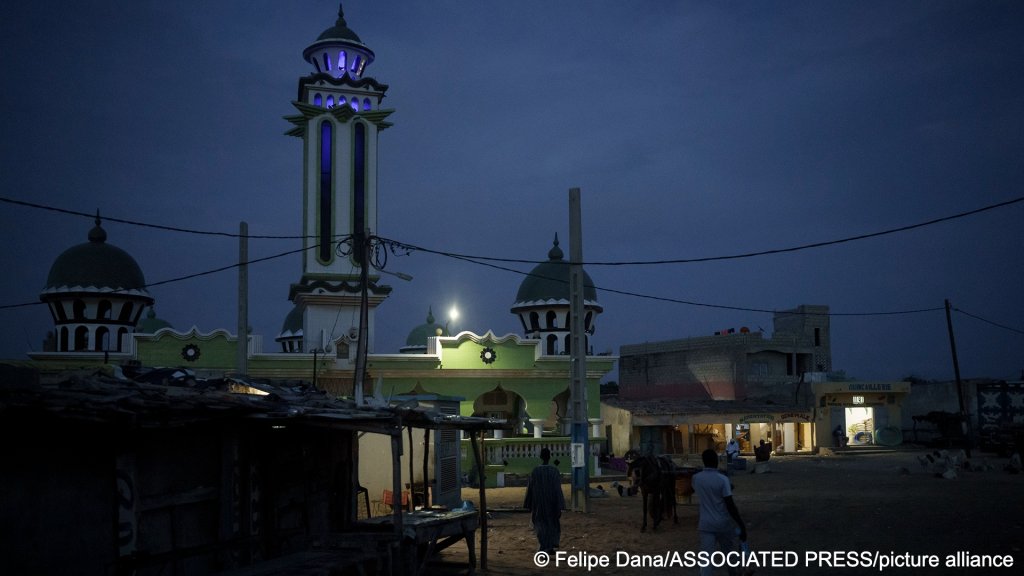
Dieye says although the days were long, hot and punishing, the nights were even worse. The wind howled, interrupted only by cries, screams and the suffering of those on board.
"There comes a moment when you cannot even think of anyone else," Dieye told AP. "You think about yourself, and you prepare to die."
After a month, people began to jump into the sea, either in a desperate attempt to swim to safety or to put themselves out of their misery, reports AP. Dieye thinks all in all more than 30 people jumped into the sea. Ncula confirms this, "they were swimming, saying 'I’m getting out! I’m getting out!' I just sat there because I had no strength left."
Gaye believes many of those who jumped had "lost their minds."
Two lights
Then, in the night two lights appeared on the horizon. The survivors turned their phones on, which they had turned off to save battery because there was no reception in the ocean, and started waving them in the hope of salvation.
The lights, reports AP, belonged to the Zillarri, a Belize-flagged, Spanish owned tuna fishing support vessel. A Senegalese mechanic working on board couldn’t believe it when his colleague woke him to tell him there was a Pirogue out there.

As the sun rose, they could make out people on board. Abdou Aziz Niang, the mechanic remembers, "they were so skinny. I saw their eyes and teeth and only bones." He urged the captain of the boat to go faster towards the pirogue.
Niang spoke to them in Wolof, asking them what they were doing out there. "We left Senegal, but we had problems," they told him. The fishing vessel threw bottles of water to the survivors and the captain alerted Spain’s Maritime Rescue Coordination Center and shared their coordinates. Niang also called the Senegalese navy.
Hours passed, as more died
Hours passed while the captain waited for instructions from the authorities in Spain, Cape Verde and Senegal. In that time, Niang says, he witnessed more people dying on board. Finally they were told to take the ship to the closest port, Palmeira on the island of Sal Cape Verde, which lay around 290 kilometers away.
The pirogue was tied to the Zillarri by rope and was towed towards shore. But the ship began breaking apart, and so the crew of the Zillarri began reeling in the pirogue and pulling survivors on to the Zillarri. One teenage boy died during that rescue.
The survivors were laid out on the deck of the Zillarri and covered in blue tarpaulins. They huddled together overnight, reports AP.
On arrival in Palmeira, some survivors had to be carried off the Zillarri in stretchers. Red Cross volunteers and paramedics gave them IV fluids, a few were taken to hospital. Only seven dead bodies were identified and buried, the rest had been thrown or jumped into the Atlantic.
Repatriated but with a bleak future
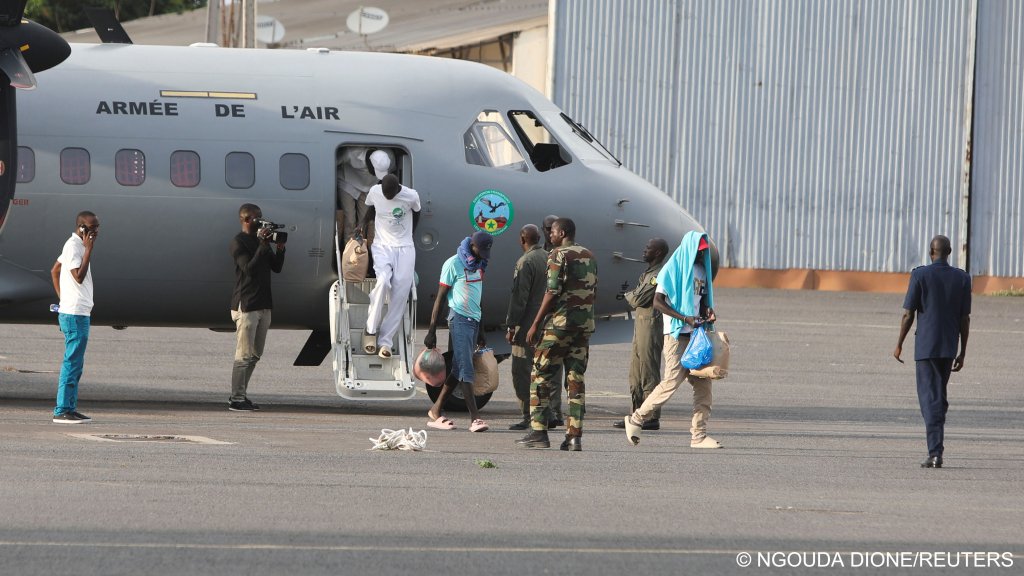
The survivors couldn’t celebrate their rescue. Most of them knew how much money they would owe for their failed attempt to reach Spain. They were locked up for a week on Cape Verde before being repatriated to Senegal. On August 21, they were flown back to Dakar and given 25,000 CFA francs (about €38) and sent home.
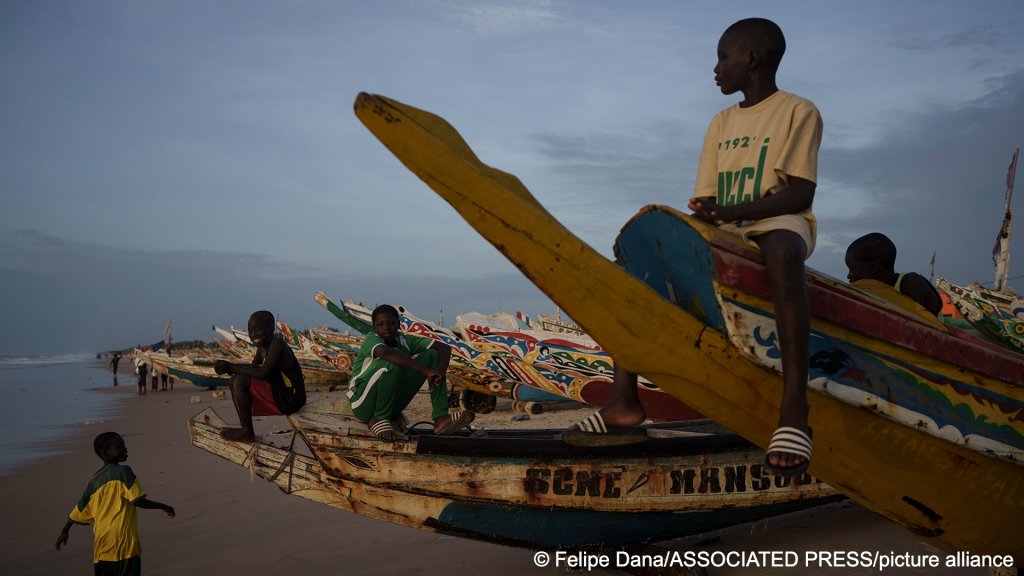
Their story was used as a tale of caution by the Senegalese government. But still people continue to depart. Some, like the father of another survivor, 16-year-old Mor Kandji, believe that if the Senegalese government would help them more, their children wouldn’t be forced to undertake these kinds of voyages. Mor’s father, Gotte Kandji, has 27 children. He complains that in his village Diogo Sur Mer, there are no roads, no electricity and no hospitals or health centers. "We’re fed up," says Gotte Kandji.
Two of his eldest sons migrated to Spain almost two decades ago. One has now become a Spanish citizen. Mor dreamed of following in his brother’s footsteps. Gotte says he didn’t know Mor was going to attempt the voyage but just two months later, four of his older sons had boarded boats to the Canaries, reports AP. Mor is now the only son left at home.
The other survivors don’t feel they have many prospects now they are back home. They see no future in Senegal and still have no job. Many are even considering attempting the voyage once again. Boye, who is married with two children knows that trying again could leave his family in more trouble, but he told AP, "when you have no work, nothing to do, it’s better to leave and try your luck."
This feature was based on a feature from the Associated Press (AP) by journalists Renata Brito and Felipe Dana. AP’s Ndeye Sene Mbengue and Zane Irwin also contributed to this report.
You can hear other tales of migration towards Europe, including tales of those who attempted the crossing to the Canary Islands on our podcast Tales from the Border: The audio feature format consists of nine episodes launched November 11, 2021 on Spotify, Apple Podcasts and other platforms.