
The interior ministers of Germany and Georgia have signed an agreement aimed at "closer cooperation on the subject of migration." One of the measures outlined is an information campaign addressing the low recognition rate of asylum seekers from Georgia in Germany.
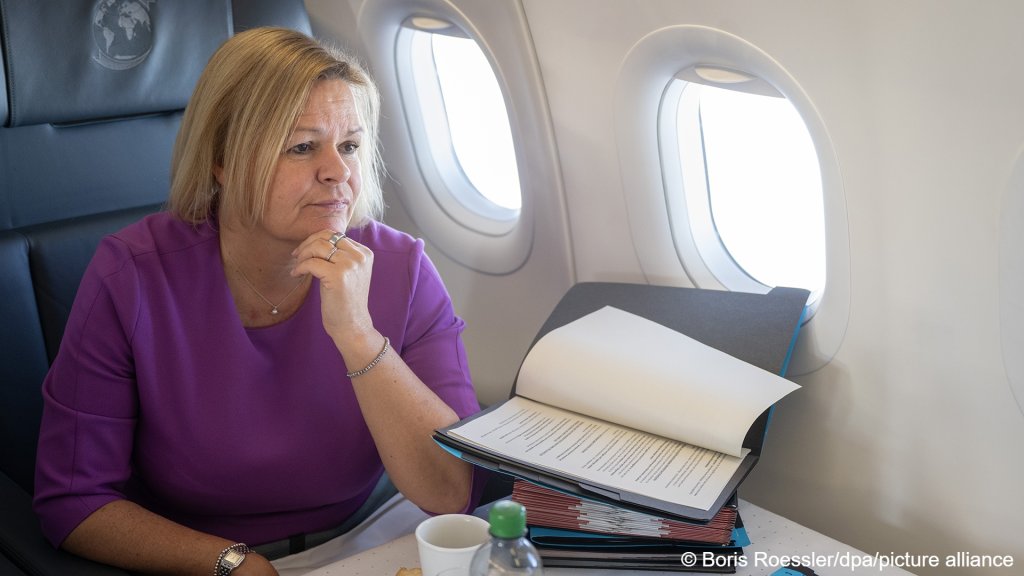
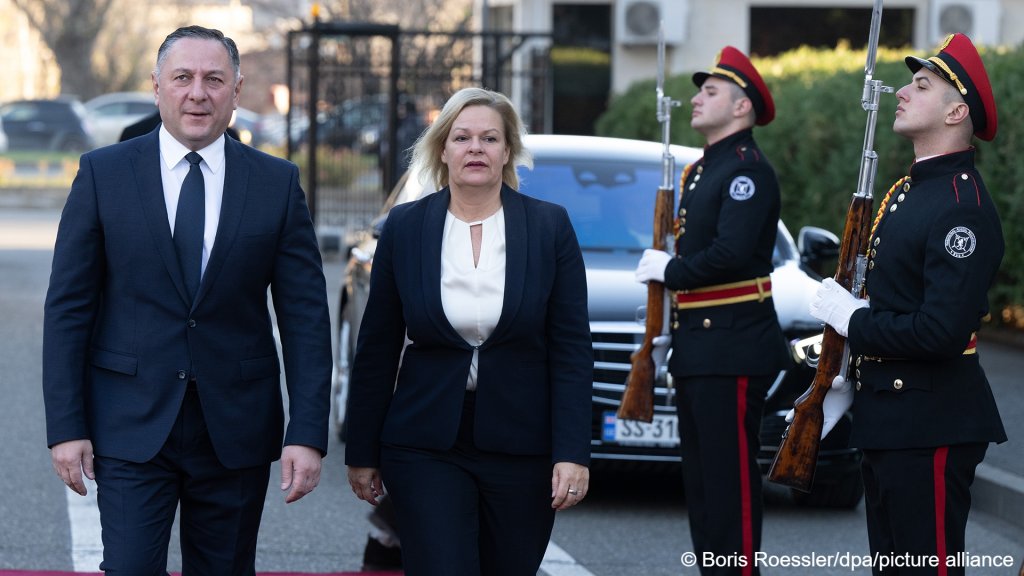
On Tuesday (December 19) Germany’s Interior Minister Nancy Faeser visited the Georgian capital Tiblisi. During her visit, Faeser, alongside her Georgian counterpart, Vakhtang Gomelauri, signed a migration agreement to enable closer cooperation between the two countries on the subject of migration.
As part of the measures, Germany will be supporting a series of information campaigns in Georgia about the very low success rate that Georgians can expect if they attempt to apply for asylum in Germany, reports the German broadcaster ARD.
Germany will also be supporting several reintegration programs for Georgians who have been repatriated from Germany, and the process to apply for seasonal work in Germany will be made easier. In return, the two countries will work harder on improving exchanges between students, people who are undertaking an apprenticeship and researchers.
The agreement with Georgia is the second such agreement that Germany has signed with third countries. India was the first in December 2022.
Low recognition rate
The recognition rate for Georgian asylum claims is already low -- fewer than 1% of claims from Georgians were recognized in 2022 -- but it will get even lower now that Georgia has been placed on a list of "safe" countries by Germany. That measure was voted through parliament in mid-November. Putting Georgia and also Moldova on the list is intended to hinder appeals against the refusal of asylum, reports dpa.
Under the new agreement, those who believe they have a case for appeal can still do so, but in the meantime, Germany has the right to deport them anyway, even if their case has not concluded.
From the beginning of the year to the end of November, around 9,000 Georgians applied for asylum in Germany, according to statistics from the German Federal Office for Refugees and Migration (BAMF). From those 9,000, around 7,900 have been asked to leave Germany and return to Georgia. However, around 5,400 have been issued with a Duldung (a temporary suspension of the request to leave the country), but at the end of October, 2,435 Georgians were due to be deported. However, only 1,179 Georgians were repatriated between January and October.
Georgians account for the sixth most frequent nationality currently seeking asylum in Germany. They follow Syrians, Turks, Afghans, Iraqis and Iranians.
More than 15% of all the asylum applications that are refused by the German state come from Georgians and Moldovans.
While those applications are being assessed, the applicants can apply for German support for several months.
The German government believes that clearing these extra support mechanisms will help free up funds to be used elsewhere.

EU accession candidate
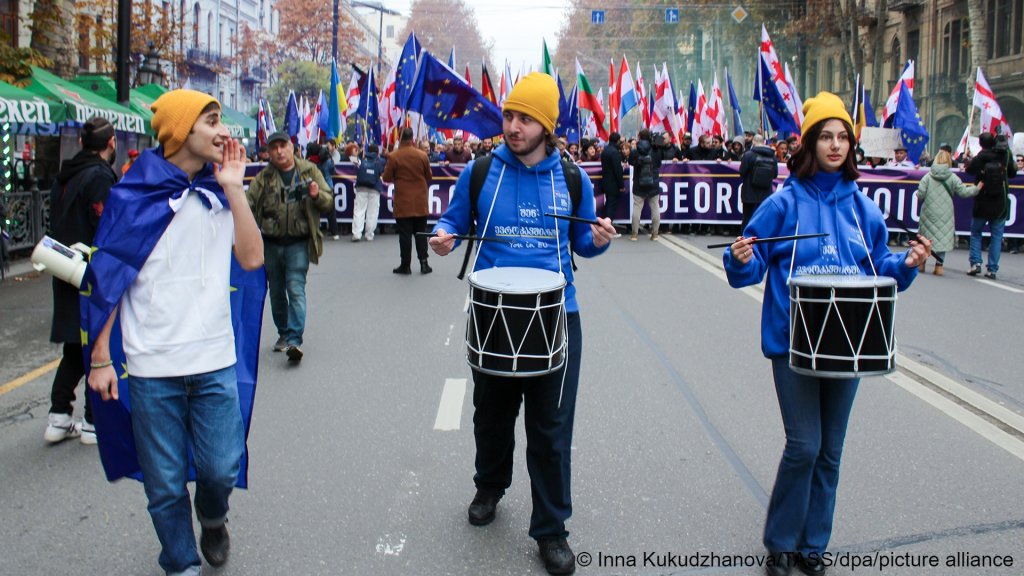
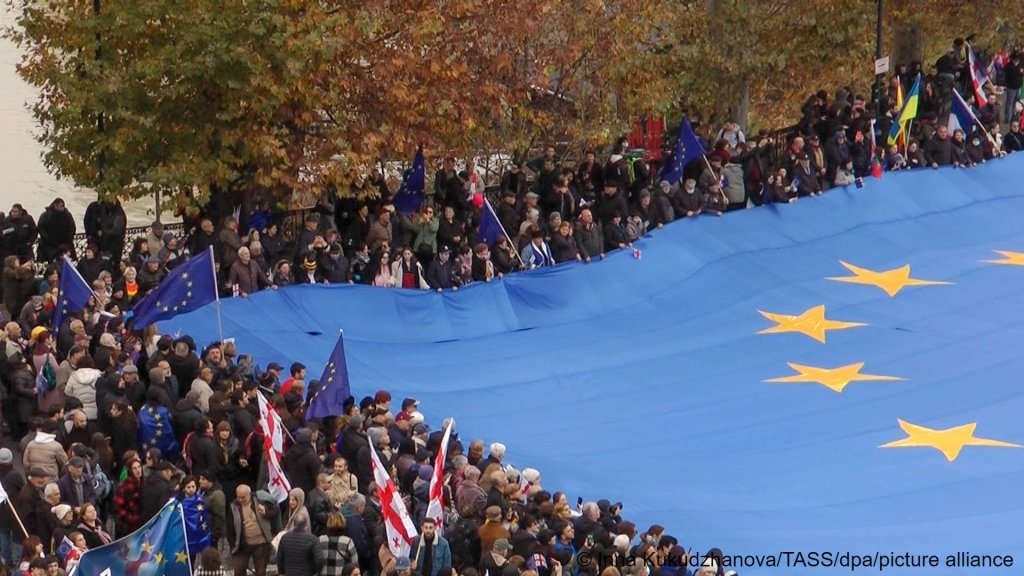
Georgia aspires to become an EU member state. At the EU summit in December, it was decided that Georgia can now officially begin the process of accession. According to ARD, tens of thousands of people celebrated this in the capital Tiblisi. Since 2017, its citizens have been able to enter the EU Schengen zone without a visa for three-month stays.
With the recent agreement, Germany affirms its commitment to supporting Georgia as it embarks on this road, reported ARD, quoting migration expert Gerald Knaus. This signal is also important to keep Georgia oriented towards democratic EU states and away from Putin’s sphere of influence, thinks Knaus.
While Georgia already cooperates in terms of repatriation of its nationals from European countries, Germany is hoping for even faster processes and even better cooperation following the recent agreement between German Minister of the Interior Nancy Faeser and Georgian counterpart Vachtang Gomelauri.
Initially, Germany was hoping to encourage more Georgians to enter Germany via legal routes and fill the country's many vacancies. However, Georgia let it be known that they weren’t so interested in that. The country faces shortages on its own, as many educated Georgians seek work abroad, feeling they have no perspectives in their own country.
Young people worry about lack of perspective
Part of Georgian territory is still occupied by Russia. The war in Ukraine has worried many in the younger generation that their country might, in the future, suffer the same fate.
In some other countries, Georgian carers and lorry drivers are often badly paid and on precarious contracts. Dpa reported that since Germany also needs these kinds of workers in its economy, it might be able to offer preferential routes into Germany for Georgians in these sectors.
Georgia on the other hand would prefer that the traffic is not just one way. Under the new agreement, the process to apply for seasonal work in Germany will be made easier. In return, the two countries will work harder on improving exchanges between students, people who are undertaking an apprenticeship and researchers.
"We urgently need workers in lots of different sectors, and Georgia does too," commented Faeser. "Today’s agreement demonstrates that these kinds of agreements need time to conclude."
Germany seeks to tie up loose ends in asylum process
The German government is under pressure to repatriate more people who reside in Germany without proper documentation and who have been denied asylum. At the same time, the number of asylum applications is rising -- in the first eleven months of this year, more than 304,000 people applied for asylum in Germany, around 60% more than the same period in 2021, reports dpa.
In addition, Germany plays host to around one million people who have fled Ukraine. Under European rules, they don't have to apply for asylum but can come and go as they please. However, all these people, whether they come from Ukraine or other countries, are entitled to support while their status is decided.
Opposition suggests Georgia could be a location for 'off-shoring' of asylum
On December 17, opposition politician Jens Spahn from the conservative CDU party suggested in an interview with the Neuen Osnabrücker Zeitung that in order to solve the migration conundrum facing the government, they should follow the UK and Italy’s example and start trying to offshore migrants during their asylum process. Georgia, as well as Ghana, Rwanda and Moldova were among the countries he suggested could play host.
It was not reported that this is part of the current government’s plan, but Spahn suggested that "we should speak about it with them." Spahn said that "In the Geneva convention, it doesn’t state that EU countries have to offer a safe place for people to stay themselves. They just have to make sure that those people are offered A safe place somewhere, and where they will have access to all the services they need, their rights and are not scared, then we would have fulfilled the aims of the refugee convention."
Spahn, reported the German Catholic news agency KNA, is convinced that if his plan was enacted, along with other European partners and third countries ready to play host to the migrants, the business would be pulled from under the feet of the smugglers and that people would stop embarking on the "dangerous Mediterranean routes."
Future agreements in negotiation now
Spahn added that "this awful dying would stop and the survival of the fittest rule –where it is almost exclusively young men who make it through—would be over. That would then take the wind out of the sails of the radicals too."
Lastly said Spahn, "Germany would then have the power, space and resources to take in those who really need protection. That in my opinion would be a more humanitarian solution."
Germany is now hoping to sign a similar agreement to that it signed with Georgia, with Moldova, reported ARD. In addition, the German government is negotiating with Kenya, Columbia, Uzbekistan, Kyrgyzstan and Morocco.
With dpa and KNA