
Migration has been the subject of intense political and public debate in Europe this year. But some say much of what has been presented as 'fact' contradicts the evidence.
Over the past year we have heard certain statements about migrants repeated frequently by politicians and in media reports: Europe faces 'an influx of migrants'; if countries are made less attractive to would-be migrants they will stop arriving illegally; tackling smugglers who lure people into embarking on migration journeys should be a top priority.
We also heard from fact-checkers that some of the claims made about refugees and migrants are myths that have been repeated so often they have become 'normalized', allowing governments to introduce restrictive policies such as the detention of asylum seekers at borders.
Here are some of the claims commonly heard in 2023, and the counter arguments from those who say they are harmful misconceptions.
There has been an influx of irregular migrants in Europe
There was a strong focus in popular discourse on the rising numbers of migrants arriving in Europe. However, organizations have argued that suggestions that Europe is seeing an influx or being 'swamped by irregular migrants' present a completely false picture.
There is plenty of evidence that most migrants who cross international borders stay in their region. In Western Africa, for example, in mid-2020, there were an estimated 7.6 million international migrants, including over 1 million who had moved from Burkina Faso to Ivory Coast, according to the IOM's Global Migration Data Analysis Center. In 2023, more than five out of eight migrants from Western Africa remained within the region.
It’s also important to keep the number of people who do make irregular journeys to Europe in perspective, says the Robert Bosch Foundation. The vast majority of people who migrate into the European Union do so 'legally' with work or student visas or other kinds of permits, whereas 'illegal migrants' represent about 3 to 3.5% of non-EU migrants to the EU, says renowned researcher on migration Hein de Haas in his book 'How Migration Really Works', published last month.
Building fences and tightening border controls reduces irregular migration
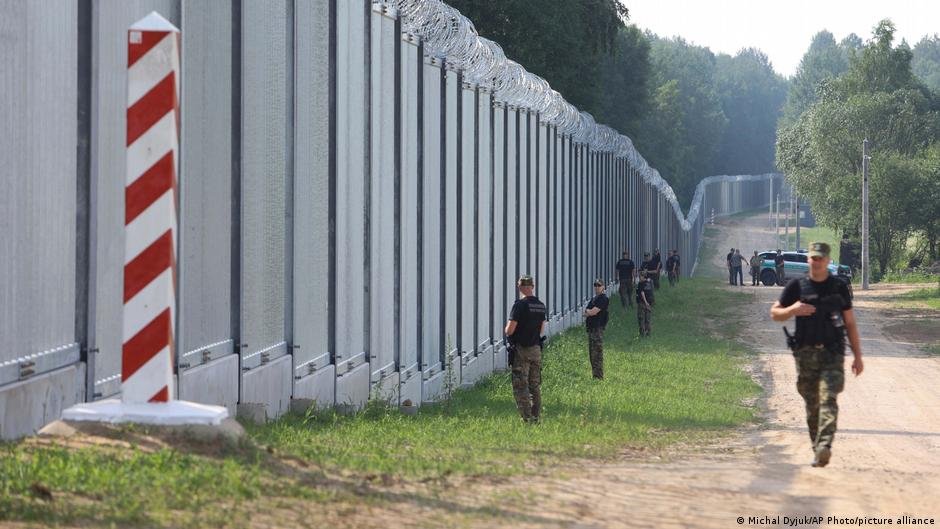
Walls and fences continued to be built and extended at the EU’s external borders, and within the Schengen free-movement area, temporary checks were introduced at borders in order to keep migrants out. Finland closed its border with Russia as the number of asylum seekers trying to enter its territory increased.
The IOM and other UN agencies say that stricter border controls and measures like fences or walls do not reduce irregular migration. Building fences "merely shifts [the refugee influx] to other countries," they state in a joint publication. This is supported by de Haas, who says that enforcing border controls in one area only ensures other routes spring up.
This 'waterbed effect' has led to more traffic on migration routes from West Africa across the Atlantic to the Canary Islands and from Turkey to Italy – by-passing Greece – as restrictions were imposed on routes previously used by migrants.
Creating more difficult conditions for migrants and threatening them with detention and deportation will deter them from coming to Europe
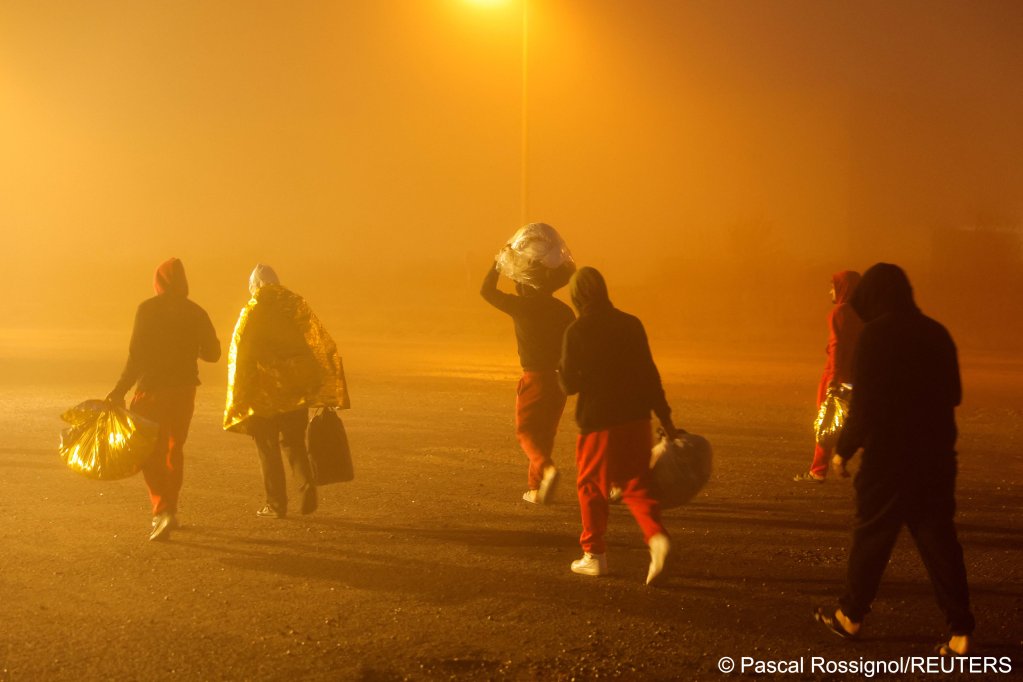
This year we have seen attempts in Europe to implement policies making it easier to deport migrants, and to reduce the rights and benefits for those who remain in the host country.
While the UK and other countries have stated that these policies are explicitly intended to deter migrants, studies have shown that they are unlikely to have their intended effect. According to the Migration Observatory at the University of Oxford, global developments such as conflicts in countries of origin have a greater effect on asylum seeker numbers. Also, migrants are not always aware of what they will face when they arrive. And decisions about whether to migrate are more likely to depend on factors such as the presence of family members than on policy.
Reducing social benefits for migrants in host countries is unlikely to discourage migrants even if they are aware of conditions in the destination countries. According to Tim Müller, a social scientist at Berlin’s Humboldt University, it is factors like the prospective host country’s size, economic strength, social stability and democracy that attract well-informed migrants. In an interview with Germany’s Integration Media Service, Müller criticized a Princeton University study in 2019 that appeared to support the correlation between reduced immigration and less social benefits for migrants in Denmark, saying it failed to take into account the effect of restrictions on family reunion and other important policy changes.
The claim that increased deportations will reduce irregular migration has also been refuted. In an interview with InfoMigrants in May, Marta Gionco from PICUM, a network of migrants' rights NGOs, said there was no evidence to support the claim that returning more migrants to their home countries deters others from attempting irregular journeys.
Smugglers play the biggest role in convincing people to take irregular migration journeys
People smugglers are often said to be responsible for exploiting migrants for profit. Migrants have reported paying very high sums of money to agents, and being lied to and tricked during journeys to Europe.
However, the claim that migrants are lured by smugglers into making irregular journeys has been contested. Evidence based on thousands of interviews with migrants shows that smugglers are not a big influence on people’s decision to migrate, Bram Frouws, Director of the Mixed Migration Center, said in an interview with the Robert Bosch Foundation. Once again, the data show that friends and family at the destination or home countries play the biggest role in decisions about migration, while smugglers are far down the list of importance, at number eight.
Migrants are an economic burden
It is regularly claimed that immigration must be restricted because countries cannot afford to carry the financial burden.
According to an analysis by several UN agencies, including IOM and UNHCR, however, "the proven reality is that migration brings benefits, fuelling growth, innovation and entrepreneurship." Other studies have found that while integrating migrants into labor markets and societies can be expensive at first, it is an investment with a high return. Importantly, migrants contribute to their home countries through remittances, which make up three times as much as official development aid. "Migrants act as bridges between two places, transferring knowledge and skills, all of which can contribute to their home communities," the UN analysis states.
NGO rescue ships in the Mediterranean create a pull factor for migrants
In 2023 the Italian government introduced further restrictions on NGO rescue ships arguing that they act as a pull factor for migrants. This claim has been made by the EU border agency Frontex as well as right-wing parties in Europe.
Following a statement by Maltese home affairs minister, Byron Camilleri, appearing to support the Italian government’s pull factor justification for cracking down on NGOs, the Times of Malta investigated the supposed link, looking at several studies by think tanks, universities and the NGO Doctors Without Borders (MSF). Based on the evidence, the Times concluded that the claim that rescue boats attract migrants was "mostly false".

Fact checking investigations and studies by Doctors of the World, UCL/The Lancet, the Robert Bosch Foundation, The Migration Observatory at the University of Oxford, The Times of Malta, Caritas Italy, the Mixed Migration Centre, Tim Müller and Hein de Haas were referred to for this article.