
Tunisian authorities have stopped and transferred thousands of migrants to Libyan prisons since last September. InfoMigrants collected several eyewitness accounts from deported migrants.
“We were stopped under the olive trees”; “I was stopped at sea”; “We were picked up in the street, near Sfax”. These are just a few examples of messages received by InfoMigrants in recent weeks from Senegalese, Guinean and Sudanese sub-Saharan Africans. They all tell the same story: an arbitrary arrest in Tunisia on land or at sea after an attempted crossing, followed by collective expulsion to neighboring Libya.
These methods are not new. Tunisian authorities rounded up thousands of exiles in southern Tunisia this summer and sent them to the desert region along the border between Libya and Algeria, where at least twenty people -- including women and children -- died of thirst.
Although the government may have evolved its practices -- migrants are no longer abandoned in the desert, but handed over to Libyan forces at the border -- Tunis, which has always denied these practices, has never really changed its methods.
Thousands of migrants deported to Libya since September
"A group of 800 migrants was expelled at the end of September,” said an NGO employee who collected dozens of accounts and who wished to remain anonymous.
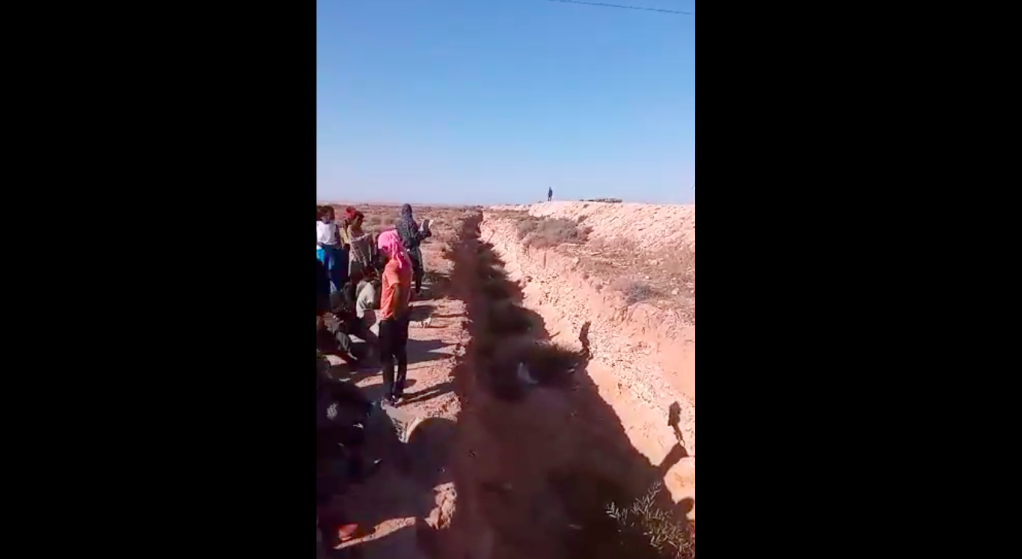
Ahmed* was part of a group of around 200 people sent to the Libyan border in October. Moussa* met the same fate in mid-November along with 400 other migrants. Ibrahima* was deported with at least 150 exiles the same month.
Tunisian police have sent over 1,500 sub-Saharans to Libya since September, according to accounts passed on to InfoMigrants. Deportations of this kind began shortly after hundreds of migrants began arriving in Lampedusa from Tunisia. Around 10,000 people landed on the Italian island during the week of September 11. The number of migrants deported from Tunisia to Libya may be much higher, with collective expulsions often carried out in the shadows.
Also read: Tunisia: More than 100 migrants 'collectively expelled'
The exiles who provided their accounts are now out of prison. Some have fled Libya, while others have remained. Here are their eyewitness accounts.
Two possible paths
Tunisian authorities transfer migrants to Libya along discreet routes in the middle of the desert between the two countries. Tunisian police officers regularly use two routes: one in the north between Ben Gardane and Ras Jdir and another much further south between Dehiba and Nalut.
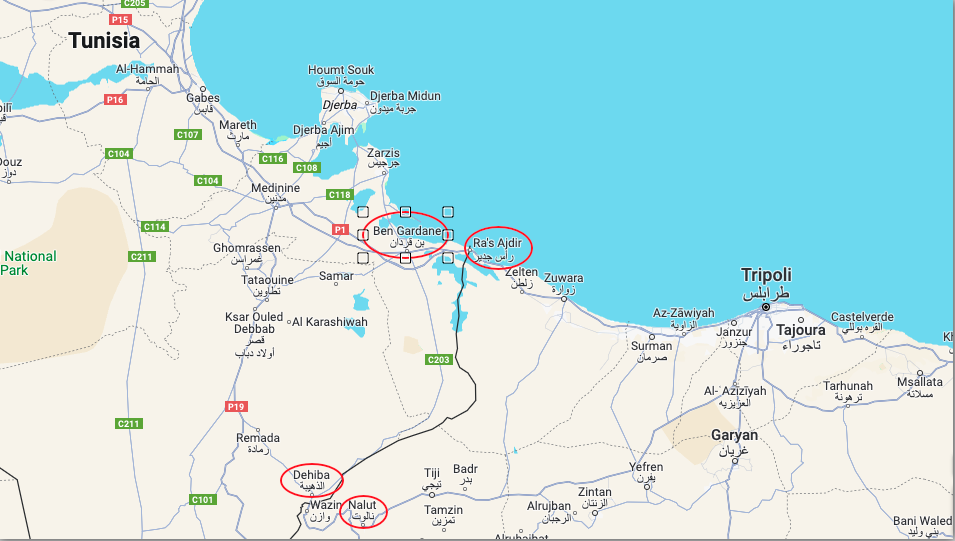
"In Ben Gardane, there is a legal, official, paved road, but the police do not use this road. They take an unpaved path that goes into the desert,” said Moussa, a 30-year-old Guinean.
The journey through the desolate region can take a few hours to several days. Ibrahima, a 23-year-old Guinean, said he spent three nights in a "secret prison” on the Tunisian side of the border, without eating or drinking anything. Moussa said he spent a night in a military building dedicated to training new soldiers. It is impossible to know whether the police kept Ibrahim and Moussa -- the two men do not know each other -- in the same facility.
'Everyone was scared'
The two exiles shared similar details on what happened next. The police forced migrants into trucks – Toyotas like those used by the Tunisian army. They later traveled along the road for around ten kilometers towards Libya before arriving in the middle of the desert, where armed forces surrounded them.
Tunisian authorities handed the migrants taken along the northern route towards Ra's Ajdir to the Libyan border police. In parallel, authorities handed the migrants who traveled along the southern route towards Nalut to the Libyan militia. Several sources affirm it is the Stability Support Authority (SSA) militia, an armed wing affiliated with the authorities in Tripoli.
Also read: Tunisia: Sub-Saharan Africans held captive in school building
The Tunisians pass the migrants into the hands of the Libyans in secret and out of sight. After having traveled along the southern path, Moussa remembered: "The vehicle stopped at a mountain of sand. Libya was on the other side. The Tunisians climbed the mountain to announce their presence. Five minutes later, we heard car horns. The police then pointed their Kalashnikovs at us and said, 'Haya, haya' ['go on', in English, editor's note] while pointing towards Libya. Everyone was afraid."
Ibrahima and Ahmed told a similar story.
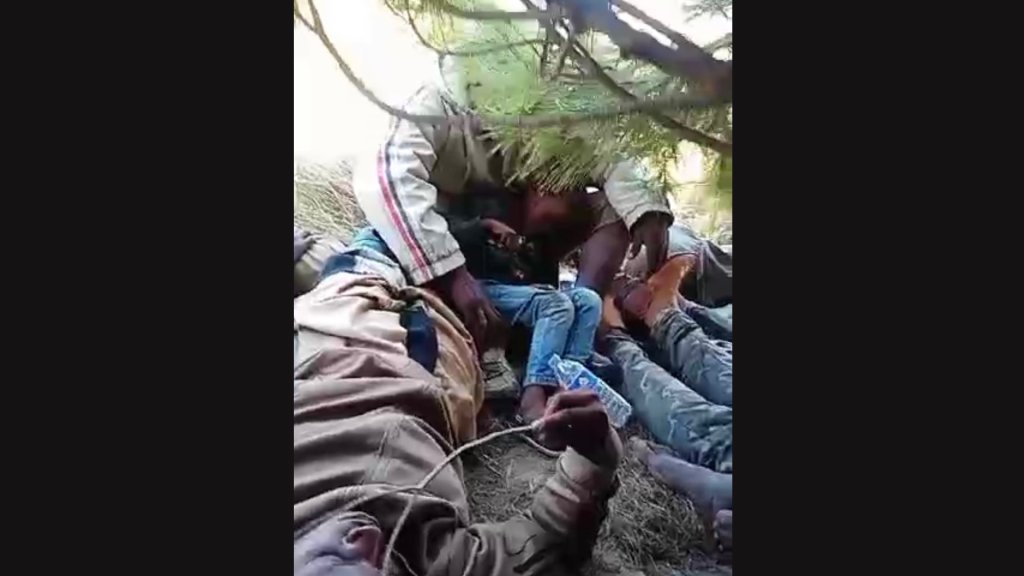
The Libyan forces, heavily armed and hooded, forced the sub-Saharan Africans into their pick-up truck.
"In each car, there were two soldiers, the driver and a police officer,” said Ibrahima. "They were in khaki military uniform from head to toe. They were heavily armed. On the roof of the pick-up, I saw KS-Ks [semi-automatic shotguns, editor’s note],” Moussa said. "We were as ‘protected’ as if the president had been part of the convoy.”
Several witnesses speak of money exchanged at the time of the transfer of migrants from Tunisia to Libya. The Libyans allegedly gave a small black bag of cash to the Tunisians, but InfoMigrants was unable to verify the information.
'I am shocked by these allegations'
Once on Libyan soil, the Libyan authorities placed the migrants in desert prisons for several days. A video shot in October and obtained by InfoMigrants shows hundreds of Africans locked in a small room. "More than 500 people are in one cell. We only eat once a day. It is as if we are not even human. Please save us. We are near Nalut, near a big mountain,” said the person filming the scene.
Ahmed also said he spent time in prison in Nalut, with 250 other sub-Saharan Africans, in a storage building transformed into a prison.
The authorities then send the exiles to official detention centers, managed by the Department for Combating Illegal Migration (DCIM), formally linked to the Libyan Ministry of the Interior.
Moussa spent time in the jails of Al Assa (in northern Libya, about 20 kilometers from the Tunisian border), while Ahmed spent time in the Ain Zara prison in Tripoli and Ibrahima in a prison in Zouara. Their relatives obtained their release in exchange for more than 600 euros.
Also read: Videos of migrants being tortured in Libya published on social media
It is difficult to know if Libya and Tunisia have discreetly signed a migrant deal. A researcher for a Tunisian NGO shared two accounts from migrants, which seems to correspond with the allegations.
"Libyan guards told them there was a new agreement between Libya and Tunisia,” she said.
The Tunisian authorities deny the claims. “I am shocked by these allegations, these remarks are unacceptable,” said Houssem Eddine Jebabli, spokesperson for the National Guard. "Nothing is happening along the border with Libya, there are no deportation operations. We are trying to help the migrants and carry out rescues at sea.”
When InfoMigrants asked The International Organization for Migration (IOM) about the allegations, the agency did not deny the expulsions, but stopped short of confirming them.
“IOM's position is very clear: we strongly condemn any form of arbitrary arrest or expulsion of migrants, anywhere. Respect for international laws and regulations is essential to protect the rights of all migrants,” said the UN agency.
*First name has been changed.