
The Council of Europe has raised concerns over the rights of refugees, asylum seekers and migrants following Finland’s temporary total border closure with Russia. Meanwhile, the BBC has reported that some migrants on the Russian side might be being recruited for Russia’s war with Ukraine.
The Council of Europe, Europe’s leading human rights organization, raised concerns about the rights of refugees, asylum seekers on Monday (December 11) following the temporary closure of Finland’s eastern land border with Russia.
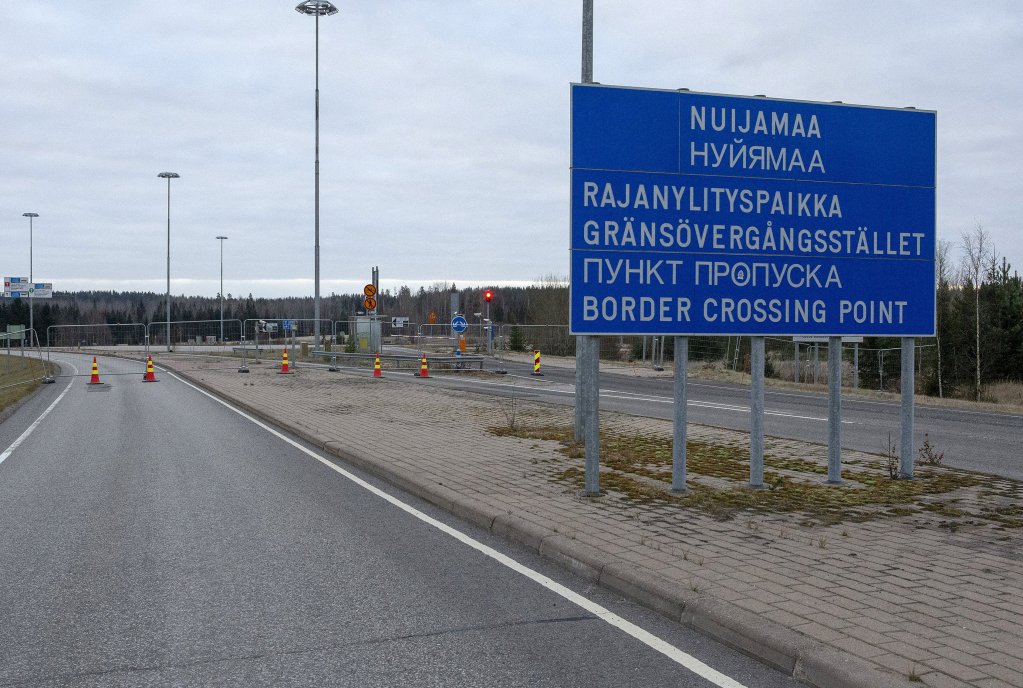
The full closure of the border was announced on November 30.
"It is crucial that Council of Europe member states, even when dealing with challenging situations at their borders, react in a manner that fully aligns with their human rights obligations," the Council's Commissioner for Human Rights, Dunja Mijatovic, wrote in a letter to Finland’s Minister of Interior, Mari Rantanen.
Also read: Stuck at the Russian-Finnish border, 'I feel I will die here in the cold'
Mijatovic said that the decision to close the border entirely "may impact notably on the right to seek asylum, as well as the principle of non-refoulement and prohibition of collective expulsion."
Migrants as 'hybrid warfare'
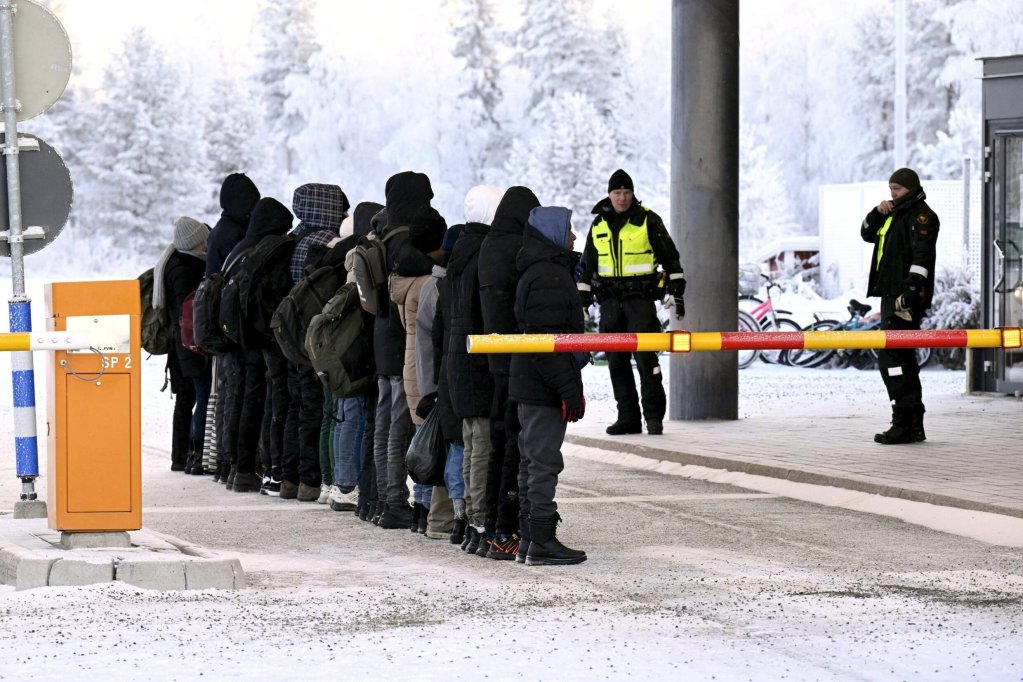
The letter was part of an ongoing dialogue between the Council and Finland's government following their decision to gradually restrict access at the border due to fears Russia was trying to use migrants as pawns in a "hybrid warfare" scheme. Russia's latest actions have been compared to those undertaken by Belarus at the Polish and Baltic states' borders last summer.
Also read: Estonia 'prepared' to shut off border to Russia, following similar measures by Finland
Mijatovic wrote in her letter that "any instrumentalization of migration movements by other states is to be condemned." She added that "such actions place vulnerable people in a humanitarian or human rights emergency, while putting significant burdens on the receiving state."
The Finnish government previously had issued assurances that the rights of migrants, asylum seekers and refugees would still be respected and there would be places where they could apply for asylum. However, Mijatovic said that in the light of the full closure, she was unsure whether there would be "genuine and effective access to means of legal entry in order to claim asylum."
Full border closure jeopardizes rights to seek asylum
The Finnish Non-Discrimination Ombudsman had already raised similar concerns. The earlier decision to close all but one of the eastern land border crossing points "already seriously jeopardizes the right to seek asylum," he said. The UN’s High Commissioner for Refugees Filippo Grandi also expressed similar concerns, noted Mijatovic.
Also read: How asylum seekers pay to cross Russian-Finnish border
Mijatovic asked the Finnish government to provide her with information "about any measures taken to ensure the right to seek asylum, including, for example, whether and how individuals who arrive at the eastern border are being assisted in order to exercise this right."
This would include, noted Mijatovic, providing information about the possibility of applying for asylum in any language and offering legal assistance they could access for this purpose. Mijatovic also seeks to ensure that no pushbacks are being undertaken. In the letter, she asked the Finnish government to explain "any way in which the authorities deal with those who, despite the closure of the border, enter Finnish territory irregularly and then attempt to seek asylum."
Vulnerable people
In addition, although the Finnish government has already provided evidence of making exceptions for vulnerable people, Mijatovic reminds the government that "not all vulnerabilities are visible or self-evident." She said she is seeking information "about the extent to which the Finnish border authorities are both sufficiently trained and have the possibility to carry out any vulnerability assessments, as well as how these may take shape in a practical way at the border."
Also read: Finland's President appeals to EU as tensions rise
The worsening weather conditions, noted Mijatovic, could also cause vulnerabilities in people who become stuck at the border, even if they weren’t vulnerable before they arrived there. The Commissioner wants to ensure that the "horrific incidents which have unfolded after migrants were stranded at the Belarusian border during the winters of 2021 and 2022 ... do not unfold at [Finland’s] eastern border."
BBC reports Russia recruiting migrants to fight in Ukraine
Meanwhile, on the Russian side of the border, the BBC has reported that some of those found in Russia without the correct visas are being recruited for the country's war in Ukraine.
According to analysis of court hearings carried out by the BBC’s Russian Service, 236 people were arrested in the border region of Karelia for staying in Russia without valid visas. Normally these people would be destined for deportation, reported the BBC. But in at least a dozen cases, those charged told the BBC that they were offered a "job for the state" in the pre-deportation center.
The jobs, they say, offered "good pay, medical care and permission to stay in Russia on completing a one-year army contract."
The BBC spoke to one Somali man, Awad*, who was reportedly arrested in mid-November and sentenced a fine of 2,000 roubles (equivalent to about €20). He was then detained pending deportation, which is, reports the BBC, "standard procedure for anyone without an appropriate visa."
From Belarus to Russian-Finnish border
Awad told the BBC that he arrived in Russia in mid-July and traveled to Belarus with the intention of entering Poland. However, by mid-November, he said he realized there might be a better way into Europe: via Russia’s border with Finland.
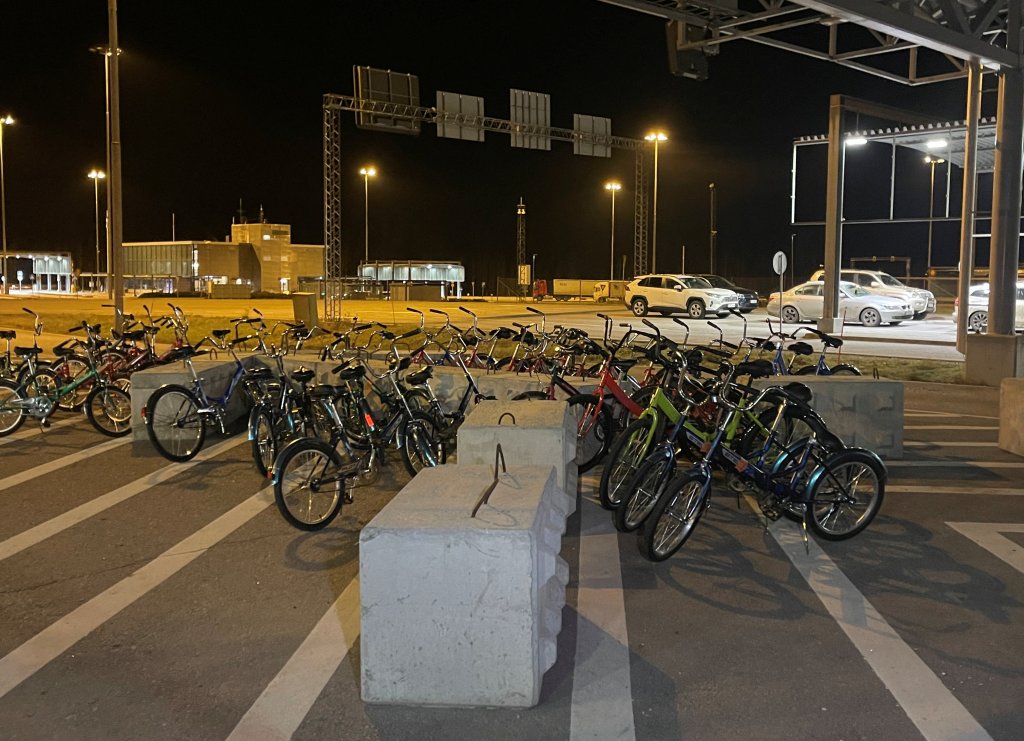
The Finnish authorities were soon reporting "unprecedented numbers" of migrants and asylum seekers attempting to cross their borders. They said Russia was orchestrating the crossings by waiving their normal visa restrictions and even distributing Russian-made bicycles with which to cross the border.
Awad told the BBC that he arrived in Russia on a month-long visa that ran out in August. In mid-November, he hired a taxi from St. Petersburg with another Somali man, hoping to reach the Finnish border. He said he was acting alone and had not hired smugglers to help him.
His taxi was stopped in a police check and he was arrested and sentenced the next day, reports the BBC.
'Army related work'
Awad told the BBC that the job offer was made in Russian, which he doesn’t understand. He assumed he would be doing "army related work" within Russia. "We were not given the contract documents and [they] were not even shown properly. We asked [what the jobs will be] but they told us that it is simple and good," Awad explained.
Awad said he feared being deported to Somalia, where his life had been threatened several times by al-Shabab militants. So, he told the BBC, he signed the offer. He says five other Somalis also signed up, along with five men from Arab countries and a Cuban national.
Afterward, they were put on a bus headed south. The BBC has approached Russia’s interior ministry in Karelia for information on how common this kind of recruitment is, but says it has received no response. The BBC reports they have matched the identities of two of the men they have spoken with with court documents.
Somali radio reports at least eight Somalis signed up to Russian army
Radio Kulmiye in Somalia, reports the BBC, says it knows of at least 60 Somali nationals being held in Russian detention centers who were "being approached by military recruiters." At least eight men, explained a representative of the Somali community in Belarus who spoke to Radio Kulmiye, had signed a contract with the Russian army.
Awad told the BBC his bus ended at the Russian border with Ukraine. They were asked to move into a muddy military tent camp. At that point, Awad told the BBC, "everything we were told was a lie." Awad and his group demanded that their contracts be annulled. At first, they said, they were threatened with long prison sentences for breaching military laws. Later, they were told their job offers would be rescinded and their deportation procedures would resume.
Awad is still in the camp, and the BBC say they have not seen the letters confirming that deportation would resume. Awad thinks he is waiting for a video court session, but doesn’t have details on what the hearing might contain.
Awad told the BBC: "I am an asylum seeker, not a soldier."
*Not his real name, changed by the BBC to protect his identity